Tuesday, August 4, 2026
Home Blog Page 1675

Took a knee? Four House reps refuse moment of silence

12

DRUMMOND, TARR, SPOHNHOLZ, GUTTENBERG SAT IT OUT

Rep. David Eastman asked for a moment of silence for all the babies who had lost their lives to abortion since the passage of Roe vs. Wade 45 years ago.

He made the request during the “special orders” part of the House floor session on Monday, labeling his remarks “On the Topic of Sanctity.” He spoke about the 60 million abortions under Roe vs. Wade, and the sanctity of human life.

Almost all House members stood in recognition — even left-leaning Rep. Scott Kawasaki. Most bowed their heads.

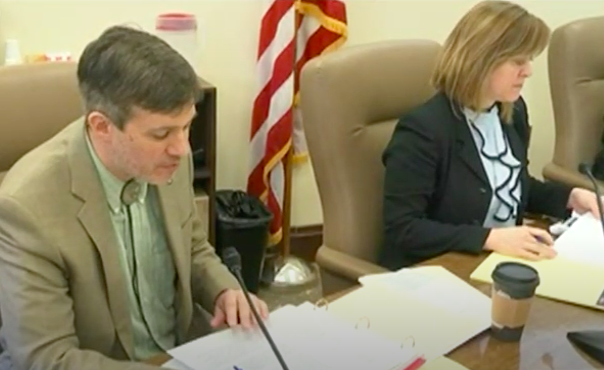
However, Rep. Geran Tarr, Harriet Drummond, and Ivy Spohnholz — the urban women of the far Left — sat unmoved. Rep. David Guttenberg of Fairbanks also sat. Although Rep. Louise Stutes appeared to be encouraging Tarr to be polite, she waved her off.

The moment of silence lasted a full five seconds.

Later, many Republican members of the House and Senate gathered in front of the Capitol for a rally for life, an annual event marking National Sanctity of Human Life Day. Non-aligned Jason Grenn and Daniel Ortiz were not in attendance, while Democrats Rep. Matt Claman and Kawasaki slipped out the side door of the Capitol, so as not to be associated with the group. They headed down the hill for lunch. Neither the governor nor lieutenant governor attended, and did not send anyone in their place.

While Toni Mallott, married to Lt. Gov. Byron Mallott, spoke at the women’s rally on Saturday, she did not attend the life rally on Monday, nor did First Lady Donna Walker.

Listening to Larry

9

OUZINKIE MAN WAS CALM VOICE ON TSUNAMI WATCH

Maybe you just woke up to check the time. Or maybe your phone alarm went off and you saw the earthquake alert some time after 12:32 am on Tuesday.

Or maybe you were knocked out of bed by the rocker of an earthquake that rolled Alaska in the dark of the morning for the longest two minutes of the year. Maybe your house creaked loudly and you popped up with a start. The earthquake was felt strongly in Wasilla and as far as Haines, Alaska.

Back in the day, you might have turned on your ham radio and sought a signal and the voice of pioneer broadcaster Augie Hiebert.

Today, you scrolled to your Facebook feed and looked for live information about the tsunami that was warned to be now heading toward the coast.

And that’s when you discovered Larry on Spruce Island, near Kodiak Island.

You and more than 100,000 other people stayed up through the night watching Larry Pestrikoff’s live video feed on Facebook as he pointed his camera at the Ouzinkie Harbor and the dock lights, and waited. And waited.

It was dark. You could barely make out anything. This is what you saw, although with a handheld camera, it moved a bit, naturally:

Larry was watching from his window for the tsunami, but he wasn’t alone. He was joined online from folks in Australia, Hawaii, Florida, the Phillippines.

Larry was narrating, although admittedly there was nothing much to narrate and as the morning wore on, it seemed less likely a wave of any sort would hit.

Larry answered questions in real time as viewers posted them. He read his tide table. The tide was low. He put on his night vision goggles. He listened to the radio. He checked on his cat. He filmed a helicopter going by. The tsunami alarm in the hamlet sounded for the second time in the morning, and for what seemed an eternity.

Larry was ready — he had his heavy clothes on, gloves in his pocket. And he kept his camera pointed at the harbor. One simply doesn’t go back to sleep in a tsunami-prone place like Spruce Island. There is no safety net in such a place; people are pretty much on their own.

Ouzinke is a small Russian-Aleut heritage village 12 miles north of the city of Kodiak, near Afognak and Port Lions. A fishing village with a small harbor, it is home to about 160 people.

Larry’s house is about 40 feet above the water and there is a hill behind him, so he felt he had a safe retreat. The cat-carrying case was ready.

People in Kodiak and the islands around the Gulf of Alaska take their earthquakes seriously. The region was hit by a tsunami on March 27, 1964, and folks still remember the destruction. Some 20 Alaskans died during that tsunami on Kodiak, including five men aboard a fishing boat heading toward Ouzinkie.

[Read: 1964 earthquake and tsunami]

But Larry was staying put. The village is mainly boardwalks along a waterfront and there was no real way to evacuate other than walking up the hill in the pitch black of the night.

“I’m pretty high up so I’m not too worried, so if it does start rising above our dock here, I’m going up the hill right behind me,” Larry said to the world audience. But it was cold outside and he seemed none too eager to leave.

Fox News contacted him and wanted to use his footage. That made him chuckle.

“Fox News can … Not CNN or NBC or MSNBC, but Fox News can. Maybe Donald Trump’s watching. Hello Mr. President,” Larry said stoically.

Although 15 minutes into the recording there was still nothing to see, the viewers kept coming. More than 115,000 in all came and went through the night with the Native Alaskan, listening to his raw and authentic commentary in the dark of a cold January night on a remote island in the Gulf of Alaska.

“I see people are here from everywhere, it’s amazing,” he said, as viewers arrived. There were people from Nome. Nat Herz, a reporter for the Anchorage Daily News, popped in. Alaska Rep. Charisse Millett was watching.

The narration to his audience was soft, calm, and hypnotizing. Many, including this viewer, went back to sleep to the voice of Larry Pestrikoff.

By the end of the broadcast, some two hours later, Larry went from having 69 Facebook friends to more than 400.  He was ready to finish watching his Netflix movie that was interrupted, and then head to bed.

And the wave? It never came. But the earthquake put the remote fishing village of Ouzinke, Spruce Island, and Larry Pestrikoff on the map, if only for one long, strange night in January.

Can His Mayorship be saved?

3

Leadership addressing Anchorage’s woes isn’t coming from City Hall.

It’s coming from residents who have had enough.

Crime has the community on edge. Even union boss and current school board member Andy Holleman wants a neighborhood watch to address crime in his formerly safe South Anchorage neighborhood.

Holleman put out the call for one on the social media NextDoor.com:

With record-high crime and unemployment, a forward-looking mayor would be all in on job creation and economic diversification. But Berkowitz has had the uncanny ability to just disappear.

  • More than 3,150 cars stolen in a year in Anchorage? That’s nine stolen every day.
  • Thirty-six people murdered in 2017? That’s a murder every 10 days.
  • Even the “Anchorage Fat Bike” forum on Facebook has been taken over by reports of crimes against cyclists. Those who haven’t already had their bike stolen are having their cars broken into at trail heads when they’re out riding the trails.

He said he wasn’t worried about the economic downturn — Anchorage “has tremendous opportunity in front of us — we just need to have the vision to go out and get them.”

AMAZON OPPORTUNITY NOT ENTIRELY LOST

Business votes with its feet, and now Sears has closed its doors and Sam’s Club is shuttered. There’s talk that Target is also thinking about leaving. The mayor has buried his head in the sand and the vision he said he had turned out to be tunnel vision.

But citizens have taken up the challenge.

Amazon is in the middle of a well-publicized hunt for a new headquarters city, which will bring headquarter jobs and investment dollars.

While Anchorage never had a realistic shot at the big prize, a few local small business owners assessed our strengths and smelled opportunity.

After all, Anchorage has flight times of under 9.5 hours to 95 percent of the industrialized world. UPS and FedEx already understand this advantage, and now, thanks to private citizens (not our mayor!) Amazon is getting the picture.

Amazon reached out to Anchorage, even after Anchorage didn’t make the cut for the cities the company is considering for a new headquarters, and our strategic location caught the attention of the growing Seattle-based business; Anchorage still looks attractive for a logistics hub.

Meghan Stapleton and Carmen Baker, the two business owners who hand-delivered Anchorage’s proposal to Amazon headquarters in Seattle, said one of the company’s economic-development team members called last week to say he plans to stay in touch.

“We made another pitch on our call on our merits, making sure that we’re on their radar,” Stapleton told the Wall Street Journal. “That was all we wanted, was to be considered for a place at the table.”

But while citizens are taking it into their own hands in safety and pitching Anchorage as a business center, the mayor has been mailing it in. And it shows.

He hasn’t looked for new industries. He went on a junket to Kansas City and Oklahoma City in 2015 to look at how to end homelessness. Homelessness in Anchorage hasn’t abated as a result of his bottom-up view of the economy.

The last big economic vision Berkowitz had was in 2010, when he ran for governor and tried to sell Alaskans on investing a portion of their Permanent Fund dividends into “Great Alaska Pipeline,” or GAP, as he called it. He was going to build that gasline one Permanent Fund check at a time. He even had sample stock certificates made up for people to purchase:

The election begins on March 13, when ballots are mailed to eligible Anchorage voters. It’s time for voters to judge the current administration on promises made, promises broken, and to set some higher expectations for this city.

“You’ve got to actually lead if you want things to change,” he said, he said in 2015. We agree.

House Speaker Edgmon on historic King Cove signing: Crickets

1
House Speaker Bryce Edgmon

Alaska House Speaker Bryce Edgmon, who represents the people of King Cove in the Alaska Legislature, seems to have nothing to say today about the historic signing of the land swap that will provide King Cove with the route needed for a short road to the nearest airport at Cold Bay. Well into the afternoon, he had issued no congratulatory statement.

When he gaveled the House to order, he also ignored the significance of the day.

The land swap took place this morning at the Department of the Interior, with King Cove community spokesperson Della Trumble, Lt. Gov. Byron Mallott, and Gov. Bill Walker in attendance, along with Secretary of the Interior Ryan Zinke, and many other Alaskans, including Sen. Dan Sullivan, Sen. Lisa Murkowski, and Congressman Don Young.

The swap was important enough to keep Interior staff busy all weekend figuring out how to move it forward even if the government shutdown continued.

The 11-12 mile road has been a priority of the King Cove residents and the entire State of Alaska for decades. A single-lane gravel road would connect to existing roads in the Izembek National Wildlife Refuge and to a life-saving airport.

The road is far from built, but without the land swap between the federal government and the village corporation, it was a nonstarter.

While the community has a viable economy with fish processing, many people have lost their lives and many more have had serious medical complications because they could not get to the airport at Cold Bay during severe weather.

Although Speaker Edgmon remained silent on King Cove’s victory, his challenger William Weatherby, made a statement on Facebook:

William Weatherby

“I am so happy to see such monumental progress happening towards the goal of a much-needed, life saving, road between King Cove and Cold Bay. I was there in 2016 on a stormy couple of days and saw the need first hand. I also heard the concerns of the possible negative impact,” Weatherby said.

“King Cove is a wonderful place for a community. I met some great people there. I applaud their use of hydroelectric power. I wish them safe travels and a prosperous future. I also enjoyed my short stay in Cold Bay. I appreciated so much the great customer service I received at the airport. I plan to return this summer,” Weatherby said.

Edgmon was at work today, but he evidently didn’t have anything to say about this historic day for his district.

Although the Democratic majority has at least five staff members who are assigned to media and messaging, there was nothing from that side of the aisle well into the afternoon.

The Alaska House minority Republicans took a different approach: “Alaskan lives will be saved with this road. Alaska House Republicans all voted ‘yes’ on a resolution urging this action last year!”

Sen. Lyman Hoffman

Senator Lyman Hoffman, who represents the district, also applauded the move:

“It’s about time the federal bureaucracy acted to prioritize the life, health and safety of the residents of King Cove. I am thankful to Alaska’s federal delegation – Lisa Murkowski, Dan Sullivan and Don Young – for their successful efforts in moving this life-saving road project forward,” Hoffman said.

Even Gov. Bill Walker had nice things to say about the Trump Administration’s swift action, which came just a year after Trump took office: “This is a paradigm shift. For decades, the federal government acted in an irresponsible way by placing a higher value on appeasing people who will never get within a thousand miles of King Cove over the health and safety of those who actually live there. Now, federal officials are sitting at the same table and working with us on this issue and many others.”


King Cove Road land swap still on, in spite of shutdown

9

Although the federal government is technically “not in service at this time,” Alaskans from King Cove have travelled to Washington, D.C. to witness the historic signing of the Izembek National Wildlife Refuge land swap.

The land exchange will allow an 11-mile road to be built to access an all-weather airport at Cold Bay. The road would be a one-lane gravel road for emergency evacuations.

With a bit of work and a touch of luck, the signing will go on, although Department of Interior officials may be moving the venue from DOI offices over to the Senate side of Capitol Hill. Perhaps. They are still working out the details. The federal government is largely not operating until House and Senate Democrats agree to move forward on a budget.

Della Trumble of King Cove Village Corporation, Gov. Bill Walker and Alaska’s entire congressional delegation will join Interior Secretary Ryan Zinke and Assistant Interior Secretary (and Alaskan) Joe Balash at the ceremony.

Interior has been working on an agreement with the King Cove Corporation to exchange land.

[Read: Zinke issues first permit for King Cove Road]

Environmentalists call the road controversial, but it’s far from controversial in Alaska. The state has been fighting for the road for decades and at least 18 people have lost their lives because they were not able to be evacuated from King Cove, which is buffeted by heavy weather regularly. The Cold Bay airport, however, is open most of the year.

During the Obama Administration, Sec. Sally Jewell signed a Dec. 23, 2013 decision to deny the road. That order has been reversed by Sec. Zinke.

[Read: King Cove land swap is a ‘go’]

Anchorage: Logan campaign off and running

Anchorage mayoral candidate Rebecca Logan opened her campaign office this weekend.

On Saturday, Logan welcomed more than 75 Anchorage citizens to her open house, located inside a vast building at 329 East Fifth Avenue, near the corner of Fifth and Cordova.

During the three-hour event, visitors dined on fried chicken from the Lucky Wishbone, and picked up her blue and white yard signs, buttons, bumper stickers, and t-shirts.

“Thank you to everyone who turned out on Saturday,” Logan said. “Now let’s roll up our sleeves and get this city back on track. Logan for Mayor is ready for volunteers!”

The media was covering the women’s march elsewhere in downtown and did not attend the grand opening. But the municipal election starts March 13, when all registered voters in Anchorage will be sent their mail-in ballots.

The Logan campaign office is set up to accommodate community forums — events where subject matter experts will give presentations and answer questions for voters who want to learn more about key issues. The sprawling space can easily accommodate such events, with classroom-style seating and a microphone.

Anchorage’s record-breaking crime streak, which has citizens nervous and on edge, is certain to be one such topic.

In fact, Logan reports that several crime victims whom she had never met visited her campaign office out of frustration with what they perceive as an unserious and lackadaisical attitude about crime from the current mayor, who infamously told Anchorage citizens that as long as they aren’t involved with drugs or leave the house after midnight, they have nothing to fear. He uttered those words the day after a beloved family man was gunned down inside his small business in broad daylight.

The incumbent mayor may want to change his story for a couple who visited Logan’s campaign office on Saturday. They told Logan that their car had been stolen three separate times in the course of the year.

Logan reported several people unknown to her walked into the campaign office, told her they were fed up with crime, made a donation, and walked out.

Logan’s campaign office will be open Monday through Friday from 1-5 p.m. beginning Feb. 5. The space will also be used for campaign activities like phone banking. Volunteers are needed and welcome. People interested in helping elect a fiscally responsible candidate for Anchorage mayor can visit loganformayor.com and fill out the volunteer form.

A capital place for shamans and charlatans

6

Juneau has hosted a plethora of New Age charlatans throughout the years.

They come with Buddhist beads and all manner of amalgamated spiritual teachings: Eckankar, aura balancing, crystal healing, astrologers, numerologists, wiccans, warlocks, and Hare Krishna acolytes.

At one time or another, they’ve all traipsed through Juneau, a wealthy and liberal enclave with a weak tether to religious traditions, a place ripe for neo-spiritual movements. They hold workshops and retreats, and then move on.

Brant Secunda is the most recent iteration. He’s from New York and New Jersey, and has been leading shamanistic rituals and workshops for much of his adult life. He and his retreat goers travel the world to commune with nature in the most beautiful places on earth. His teachings allow him to journey, and retreats pay his way.

So naturally, he comes to Juneau, Alaska, home of whales, salmon, and eagles. He comes at the height of summer as he’s done many times before, he says, and in 2018 he will have a retreat once again at a lodge somewhere on the road system in Juneau. A place with cabins and tent camping. That doesn’t leave many choices.

The Aldersheim Lodge would be such a place. It has cabins. It has places for tent camping. It has whales and eagles and salmon.

Last year, Secunda’s Dance of the Deer Foundation advertised his Juneau retreat as the organization’s 23rd annual shamanic retreat in Alaska, where participants could, “Delve into the study and practice of ancient indigenous spirituality to embrace the life force of Mother Earth in one of the few remaining WILD places on this planet. Surrounded by countless eagles, breaching whales, spawning salmon, and the tranquility of the Inside Passage, this is the perfect setting to refocus your intentions and explore the connection between your inner and outer world.”

The retreat promised to deepen participants’ connection with nature, empower their dreams through daily ritual, approach sacred places of power to internalize their energy, connect with the four directions to find their center in the fifth direction, and celebrate life through the Dance of the Deer Ceremony.

It seems pretty standard for New Age offerings.

TLINGITS SAY NO

Except that Tlingit Elder Rosita Worl doesn’t want him to come. She is calling him out as a charlatan who appropriates Native culture and she finds his teachings offensive.

And Worl is a force to be reckoned with, as the president of the Sealaska Heritage Institute. She is telling Secunda to stay out of her people’s territory. The Juneau Empire wrote about Worl’s letter disinviting Secunda from visiting Alaska.

Here is the full statement from the Institute:

It has come to our attention that a foundation called Dance of the Deer is planning a shamanism retreat in Juneau led by a person originally from New York who claims to be a Huichol shaman mentored by the tribe, which is based in Mexico. (http://bit.ly/2DmvetJ).

This person is charging up to $3,735 per person to attend the retreat. Fees include tuition ($1,700 per adult); lodging ($775 to $2,275, depending on whether you opt to camp or book a private suite); and a whale watching excursion ($90).

This is another form of appropriation from Native cultures and societies that began with the taking of our lands and our ceremonial and sacred objects, and now our spiritual practices. Shamans played an important role in our societies in caring for the welfare of the tribe. Shamanism was not a commercial enterprise. SHI will contact this “shaman” and request that he cease the appropriation of the most sacred and spiritual practices of the Huichol Indians. We support the people who have called his practices an exploitation of their people’s ancient traditions and we will request that he not come into Aak’w Ḵwáan, the ancient homeland of the Auk people.

Sealaska Heritage Institute is dedicated to perpetuating and enhancing Tlingit, Haida, and Tsimshian cultures of Southeast Alaska. It promotes cultural diversity and cross-cultural understanding through public services and events, according to its website.

Dance of the Deer Foundation is Secunda’s group, and is associated with the Huichol Indians of Mexico, a 35,000-person indigenous tribe in the Sierra Madres. He’s one of their shamans.

But cross-cultural politics can be perilous, even for shamans. He’s white. And he’s from Jersey.

Secunda didn’t mean to offend Tlingits when he called them “Indians” in some of his retreat promotional material, but that was one of the key offenses that Rosita Worl locked onto. He has since apologized.

Secunda says he is a highly trained shaman. He teaches people about being one with the earth. His events center around the Deer Dance Ceremony, which he says has its origins in Huichol cosmology, dating back to the birth of the sun.

“The dance is a reenactment of creation itself and honors our sacred relationship to the light. Kauyumari (The Magical Deer Spirit) is representative of our super-conscious mind and acts as an intermediary between our hearts and the spiritual world of nature,” his literature states.

Brant Secunda, screen shot from a YouTube interview.

Whatever shamanism is, Secunda has made a career of it. He owns the web site shamanism.com and he associates his work with the legendary (and perhaps mythical) Carlos Castaneda, who wrote about shamanism with the Huichol.

People are attracted to these pseudo-religions out of a desire for supernatural experiences, and some spiritual teachers are gifted at communicating a web of cosmological beliefs in a convincing way.

This is what the New Age spiritualism accommodates, as seekers drift from one vague teaching to the next, from one guru to the next incarnation. It can be dangerous — and expensive — for those who are lightly hinged to reality. From such teachings, cults are born.

Secunda doesn’t exactly say he is quite a healer, a curandero, but he does perform healing rituals. And he doesn’t quite say he’ll use peyote in his rituals, because that would be illegal. But it would also be the Huichol way. He does promise to put on a show for the willing consumer.

Brant Secunda’s Dance of the Deer Foundation would be laughable to most Alaskans, but to Worl, it is a crime against shamanism.

She has the ability to make enough of a stink about it to drive him and his handful of paying participants to some other place, which would cost the local lodge owner revenue.

YELP SAYS BUYER BEWARE

Yelp.com is not normally where spiritual seekers would go to get their shaman reviews, but sure enough, Yelp has write-ups about Secunda. They are mixed. Some called Secunda a fraud, others said he is a true healer. Then again, some Yelp reviewers call the Baranof Hotel “great,” while others call it “run down.”

One reviewer who identified herself as Tlingit, wrote that Southeast Alaska is for Tlingits. She had just read the Juneau Empire article about the kerfuffle over Secunda, and although she had never met the man, added her two cents:

“What Brant doesn’t seem to understand is that Juneau is Tlingit territory. We have lived in Southeast Alaska for thousands of years. Tlingit culture is rich, vibrant and alive!  To have an outsider come with his band of New Age hopefuls to our land and describe us as “Indians” on his website is highly offensive.”

It has come down to this: Sealaska Heritage Institute is claiming shamanism for Southeast Alaska as its area of jurisdiction. No other shamans, real or imagined, need come this way.

In the magical world of shamanism, there are sorcerers and witches, spells and incantations. There is flying through parallel realities and shape-shifting. Will the dispute over shaman territory bring metaphysical warfare to the peaceful hamlet of Juneau? And if so, who will get the reality TV show rights?

[Read: Buddhist Lama to teach workshop in Juneau in February]

Fairbanks: Interior Republicans hear from Hawkins, Chenault

3

CANDIDATES FOR GOVERNOR ATTEND GOP FORUM

More than 70 Interior Republicans gathered at the Monroe High School in Fairbanks on Saturday to hear gubernatorial candidates Scott Hawkins and Mike Chenault describe their campaigns and views on the state budget, economy, crime, and the Permanent Fund dividend, and to say why they want to be governor of the state.

It was the first time the two had met on the same stage to speak to their respective campaigns and visions for the state.

Moderated by Sen. Pete Kelly, the forum was not quite a debate, but did offer a chance for the audience to compare and contrast the two on topics of concern to Interior voters.

Hawkins said he has been a business owner for over 20 years but also has been involved leading political action committees in helping to win campaigns for pro-economic growth conservatives.

He wants a shrinking public sector and a growing private sector, and a restoration of the tens of thousands of high-paying jobs that support Alaska families. He also wants to return the Permanent Fund dividend to a formula-driven amount, and not leave it as a political tool, as has occurred under Gov. Bill Walker.

One of his first acts as governor would be to immediately revise and slim-down the governor’s proposed budget, which would have been developed by Walker for the Dec. 15 deadline.

Mike Chenault speaks during the candidates’ forum.

Chenault said he has been in the oilfield construction business on the Kenai Peninsula and first ran for office at the encouragement of his Nikiski neighbors. He was the longest serving House Speaker in state history.

He said that his years as a member of the House helped him develop the ability to talk with both sides of the aisle in the Legislature, something that he thinks a governor needs to do. He criticized the current governor for not being able to work effectively with the Legislature. Chenault supports downsizing government and putting in place meaningful spending caps. He would make tackling the opioid and heroin crisis a top priority.

Both candidates support operating budget cuts and restoring capital budgets to healthier levels. In fact, they agreed on almost all topics, so it came down to a comparison between the one with years of government experience — Chenault — or an outsider from the private sector who has never served inside the system — Hawkins.

Others who attended the meeting were District 1 candidate for House Bart LeBon, and Lieutenant Governor candidates Edie Grunwald and Steve Wright.

Mike Dunleavy, also a candidate for governor, was not present, as he was attending Republican district conventions in Anchorage. Michael Sheldon, who is exploring a run for governor from Petersburg, didn’t respond to a question about his weekend plans.

Video of the candidates’ forum was captured by Joe Verhagan and is available here.

Tuckerman Babcock, chairman of the Alaska Republican Party, also spoke about the importance of the platform, and the importance and respect for the primary process, and how the two work together.

“The platform states who we are and we try to attract the best people to help represent who we are,” he said. That is the work of 400-500 grassroots volunteers statewide. Then we have a primary election and tens of thousands of voters decide who will represent us in the general election,” he said.

Imploding appointment: Reggie Joule now in line for District 40?

The Alaska Democrats in the House of Representatives have, Must Read Alaska is told, rejected the three names offered by the Alaska Democratic Party to finish out the term of Dean Westlake.

Democrats offered Eugene Smith, Sandy Shroyer-Beaver, and Leanna Mack from the sprawling district that reaches both Kotzebue and Barrow. Gov. Bill Walker has interviewed all three of them. But there are problems.

Smith and Shroyer-Beaver are both from Kotzebue and they have an intense dispute between them over a contract that involves a construction company owned by John Baker.

The issue came to a head over a year ago, when the lucrative construction oversight contract was about to be awarded to Baker, but was withdrawn at the last minute when the math showed it to be far too generous for a public contract.

Smith, who advocated for Baker’s company to get the contract, then lost his job as chief of staff to the borough mayor.

The dispute has become quite ugly between the two in the hub community of Kotzebue.

It’s likely that both Smith and Shroyer-Beaver were too controversial to fill the job of state representative because of that dispute, which has gotten very personal. And Mack, of the city formerly known as Barrow, was too inexperienced.

Leanna Mack, Sandy Shroyer-Beaver, and Eugene Smith


[Read: Candidates for District 40]

Now, it looks like Reggie Joule, the former representative for the district, from 1997 to 2012, is likely to be pressed into service to rejoin the House.

Joule was succeeded by Ben Nageak, also a Democrat, but the Alaska Democratic Party targeted Nageak for removal in 2016, and put in place Westake, who was a known harasser of women.

Westlake’s habits eventually got him booted even from his own Democratic caucus. His forced resignation went into effect on Dec. 25.

Joule is a Democrat and he knows the process of legislating. Since leaving the Legislature, he became mayor of the Northwest Arctic Borough (2012-2015), and has worked on Arctic issues. He is a lobbyist for the Northwest Arctic Borough schools.

In 2008, Joule and two other Bush Democrats — Bryce Edgmon and Bob Herron — began caucusing with the Republicans and Joule sat on the House Finance Committee. Edgmon is now the House Speaker, leading a Democrat-controlled majority caucus with the help of three Republicans, who crossed over.