COLD-BLOODED MURDERER MUST CONTINUE TO SERVE HIS LIFE SENTENCE
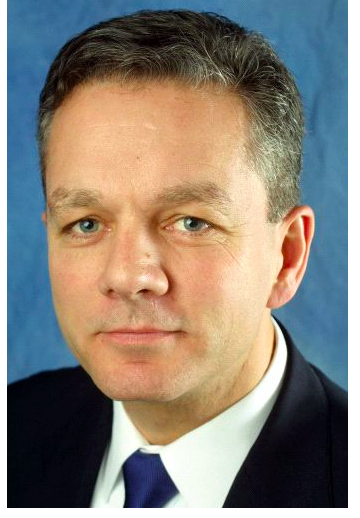
Allen Walunga was denied parole by the Alaska Parole Board today.
On Dec. 10, 1972, he strangled and raped Juneauite Jody Stambaugh in her University of Alaska Fairbanks dorm room, where she had been sleeping. Walunga had a history of sexual attacks, and had snuck into her room, where he watched her sleep for 10-30 minutes before killing her.
Stambaugh had graduated from Juneau-Douglas High School and was studying home economics at UAF.
Walunga has applied for parole over the years, forcing the victim’s family to remain vigilant. Her brothers, now both retired, continue to attend every hearing that comes along.
September 1987 – applied for a hearing and was denied
December 1989 – requested a commutation of his sentence and was denied
October 1991 – applied for a parole hearing and then waived the hearing
September 1992 – applied for a parole hearing and was denied
November 1997 – applied for a parole hearing and then waived the hearing
August 1998 – applied for a parole hearing and was denied
April of 2008 – applied for a parole hearing and it was denied in November of 2008
Today’s parole hearing kept Walunga behind bars to continue serving what is a life sentence.
The parole board received 215 letters from Alaskans and they were packed into three-ring binders on the table at Goose Creek Correctional Institute.
Stambaugh’s brothers attended the hearing — one in person and the other by telephone. The other victim who was also strangled but who survived the attack attended, her husband at her side.
DeeDee Jonrowe, mushing legend in Alaska, also attended the parole hearing. She was a resident assistant in the dorm when Walunga killed Stambaugh. An advocate from the Office of Victims Rights was there as well for the entire hearing, which took less than a half an hour.
Walunga made his statement, saying he is not the same person he was 45 years ago. The victim’s family members and associated Alaskans made their statements. The parole board excused them from the room, and only took a few minutes to reach their decision to deny Walunga parole, and then told the group who had attended.
The original story of the gruesome case Must Read Alaska is here:
ConocoPhillips announced an update to its operating plan for Alaska yesterday, including spending $2-3 billion over the next four to five years to access oil discoveries in the Greater Willow Area.
In an upbeat report, the company confirmed that recent discoveries are estimated to be between a half-billion and 1.1 billion barrels (gross) of oil resource.
The 2016-2018 exploration and appraisal efforts in the In the Greater Willow Area resulted in finding enough resource to justify a stand-alone hub, which is a major investment for any company.
Over the past few years, ConocoPhillips has reduced its costs and advanced its technology in the Arctic. In addition to its find of oil in the Greater Willow Area, a more competitive tax system in Alaska led the company to plan for significant investment here, while other companies have continued to balk at the ever-changing tax structure.
ConocoPhillips estimates its 2016-2018 exploration and appraisal campaign discovered 400-750 million barrels of oil equivalent, gross resource. The company is preparing to launch the Willow permitting process. First oil can be achieved by 2024-2025, and then will ramp quickly to full production.
After the initial investment, the company estimates an additional $2-3 billion of cumulative drilling capital will be spent over several years to maintain production at this facility and drill out the field.
The company’s legacy asset base consists of a non-operating interest in the Prudhoe Bay Field, an operating interest in the Kuparuk Field and an operating interest in the Alpine Field/Western North Slope assets.
In 2018, the company acquired additional interest in the Alpine Field/Western North Slope assets and announced it entered into an agreement to acquire additional interest in the Kuparuk Field, subject to regulatory and other approvals.
These legacy assets are expected to yield approximately 225,000 barrels of oil equivalent per day in 2018.
The cost of supply of the new resource is estimated to be less than $40 per barrel, the company announced. It has a 100 percent working interest in this resource.
In addition to exploration in the Greater Willow Area, the 2018 exploration campaign included the drilling, coring and flow testing of the Putu and Stony Hill wells in the Narwhal trend south of Alpine.
The company expects another active exploration and appraisal season in 2019.
“We believe that the company’s Alaska plan aligns with our disciplined, returns-focused strategy, supports Alaska’s economy and creates significant value for shareholders,” said Ryan Lance, chairman and chief executive officer. “Alaska provides competitive investment opportunities and will generate profitable growth from diversified investments with significant exploration upside. We are proud of the value we create for the State of Alaska through the revenues we generate, the jobs we create and the community investments we make. Our shareholders realize the advantages of ANS-priced oil, competitive cash and earnings margins from our operations and our years of expertise and sound stewardship. We plan to continue to strive to safely unlock the energy potential of this world-class oil province for years to come and play an active role in Alaska’s economic future.”
A find this size, within 28 miles of existing infrastructure, is significant. On federal land, the oil would go through the Trans Alaska Pipeline System and be subject to royalties and taxes that the State of Alaska and local governments like the North Slope Borough would receive. Alaskans would get their share of royalties through their Permanent Fund dividends.
The development phase of Willow will bring potentially thousands of jobs online. Much of that would spin through the currently faltering Alaska economy and, especially, the heavily battered oilfield services industry.
KYUK public radio in Bethel reports that two more Native villages voted to oppose the proposed Donlin Mine in Western Alaska.
The station, without attributing it to a specific person or providing a link to a supporting document, said the villages of Napakiak and Kongiganak passed resolutions last week against the mine, claiming it would damage their subsistence way of life.
KYUK has been providing information to listeners on how to get involved in protesting the mine.
Both tribal councils, and two that passed resolutions earlier this month, live on subsistence, government checks, and dividends that come from their Native Corporations. The biggest employers in these villages are typically the public schools. The villages are relatively primitive in nature, with weather-worn housing and bucket toilets called “honey buckets” instead of western-style sanitation. Many in the area speak Yup’ik.
The population of Napakiak and Kongiganak are 354 and 439 respectively. The two other villages that passed resolutions were Tuluksak Native Community Village Council and Orutsaramiut Native Council.
In April, Gov. Bill Walker issued a statement praising the proposed mining project at Donlin, and lauded its “engagement, commitment to highest environmental and regulatory standards.”
The U.S. Army Corps of Engineers is due to issue its record of decision in August on the environmental impact statement, which will outline any mitigation needed to protect the watershed.
“This is great news for Alaska, a major step toward development of a gold mine that would bring jobs to the Yukon-Kuskokwim region and help utilize Alaska’s vast natural resources,” Gov. Walker said in April. “The Donlin Gold project still has a long way to go in the permitting process before construction and operations can begin, but the company has already proven its commitment to engage local stakeholders and make sure all development is responsible and minimizes impacts on nearby communities and the environment.”
Walker has, however, opposed the proposed Pebble Project, a couple of hundred miles away, which is still in the permitting process. Walker said that the review process for Pebble should be suspended altogether due to the lack of economic feasibility studies, which drew a public statement from the company’s CEO Tom Collier, who said, “We find it incredibly disappointing that the governor’s request to suspend the NEPA process is nearly identical to that brought forward by the anti-Alaska, anti-development Natural Resources Defense Council. We expect this type of stall tactic from ENGOs opposed to any kind of development but not from the Governor of Alaska and especially when the project is on Alaska land. Frankly, the governor does not make a compelling case to suspend the NEPA process.”
In April, the Natural Resources Defense Council indicated it has Donlin on its action list, writing, “Although Donlin Creek has received less public opposition than the controversial Pebble Mine project near Bristol Bay, indigenous communities and state environmental groups are speaking out against the mine.”
At that point, no community had spoken out against the proposed mine, which is estimated to provide thousands of jobs during construction and over 1,000 jobs during its operations, which is expected to last for decades.
The Anchorage Daily News has new standards for candidates’ commentaries that appear on its pages. Today it revised its guidelines to specify that in general it will not publish links to campaign material from candidates’ columns or letters to the editor.
Last week, several newspapers around the state ran a column from Gov. Bill Walker that encouraged people to watch a three-minute video produced by his campaign specifically to be used as a link to his free commentary on the editorial pages of the newspaper and other newspapers around the state.
The Fairbanks News-Miner still has the video link in the op-ed. That newspaper is a for-profit entity owned by a nonprofit organization.
Must Read Alaska flagged this last week as the equivalent of a corporate contribution that would be a violation of Alaska Public Offices Commission regulations, although such an instance has never been tested in Alaska, to our knowledge.
Under new ownership of the Binkley Company, the ADN has also returned to the policy of endorsing candidates and ballot initiatives. The parameters of the endorsements are below. As the largest news outlet in the state, the ADN’s new guidelines are worth reviewing for any candidate running for public office:
“We will aim to provide a platform for candidates and their supporters on all sides, particularly those running for local and statewide office. The above guidelines apply, and we reserve the right not to publish any submission for any reason.
“Candidate-written pieces: For state offices, starting on June 1 of the election year, ADN will consider publishing up to one commentary per month per candidate. Candidates for governor and lieutenant governor are considered separate candidates. Our strong preference is that commentaries be issue-focused and not a general ‘Here’s-why-I’m-running.’ In general, we do not publish links to campaign literature in op-ed columns or letters to the editor.
“Third-party endorsements: We’ll publish no more than one per week for any candidate/ticket, and reserve the right not to publish submissions. Submissions must be original. We’ll make an effort to provide balance in space given to the respective campaigns.
“Letters to the editor: There’s no limit on letters to the editor beyond our standard one-per-month-per-person limit, but we do not have space to publish all letters we receive. What we publish will be a representative sampling of what we receive.
“Candidate endorsements: The ADN will consider endorsing candidates or positions on ballot measures that in the judgment of the Editorial Board have been deemed to be in the best interest of the state or city. Guests are invited to editorial board meetings and will be scheduled on an first-come, first-served basis with priority given to statewide elections and ballot initiatives. Candidates for statewide election will be allowed one ed-board meeting per election (once before the primary, once before the general). All other candidates are only eligible for one meeting. For more info, please contact Opinions Editor Tom Hewitt.”
The news program, Alaska Fish Radio, a production of Laine Welch, published an action alert to its followers on Facebook, advising commercial fishers to re-register as undeclared or nonpartisan voters. She wants them to vote in the Aug. 21 primary, and vote against Mike Dunleavy — but for Mead Treadwell.
Alaska Fish Radio, heard on 30 radio stations, has received awards for public service programming from the Alaska Press Club. On its official Facebook page, it routinely bashes President Donald Trump. Now it’s is going after Mike Dunleavy with a fillet knife.
Sponsors of Alaska Fish Radio include the Alaska Seafood Marketing Institute (which gets $1 million from the State of Alaska each year), the nonprofit Alaska Marine Safety Education Association, and the nonprofit Northwest Trade Adjustment Assistance Center. Ocean Beauty Seafoods is also a sponsor.
Welch writes a column called Fish Factor, which appears in newspapers across the state.
Here is the alert, in full:
Action alert for Alaskans:
Mike Dunleavy would be a disaster for Alaska fishing communities and the fishing industry!! Any AK voter who is registered as Undeclared or Nonpartisan can vote in the August 21 primary where voters will choose between Dunleavy and Mead Treadwell as the candidate who will run against Walker (Independent) and Begich (Democrat).
If you want to vote in the Republican primary (even if you do not intend to vote for a Republican in the Nov. general election) you must change your registration to U or N by July 20.
An economic and conservation disaster is unfolding on the Kenai River, says the Kenai River Sportfishing Association. But Cook Inlet commercial fishery is proceeding as if everything is normal.
The group is calling on the governor to stop further set net fishing until more kings and sockeye salmon enter the Kenai River.
Sport fisherman, guides, and outfitters say the season has been nearly a complete loss for them.
“Consistent with salmon management plans for Cook Inlet, the Board of Directors of Kenai River Sportfishing Association (KRSA) respectfully asks you to direct the Commissioner of the Alaska Department of Fish and Game to stop further commercial set net fishing until more kings and sockeye salmon enter the Kenai River. Failure to do so now could jeopardize sustainability of future returns and will further jeopardize an already failing sport fishing and tourism economy on the Kenai Peninsula,” the group wrote to Gov. Bill Walker on Friday.
“Escapement goals are not yet assured and while commercial fishermen have harvested almost one half million sockeye salmon and 1,700 king salmon so far this season, the public fisheries are offered almost no harvest opportunity because of the low numbers of fish entering the river,” the group said.
Commercial set netters have harvested more than 10 times the number of large-size king salmon than have sport anglers, according to KRSA. Commercial fishers have harvested 1,816 king salmon as of July 9.
“Upper Cook Inlet ADFG commercial fishery managers are now considering whether or not to deploy any or all of the commercial fishery this Saturday or Sunday. Managers must resist the temptation to fish even some of the gear available. We need those fish in the river. Keep the entire set net fishery on the beach until there are more fish in the Kenai River!”
ADF&G issued a sportfishing restriction for roadside streams starting Monday, with gear restricted to one unbaited, single-hook, artificial lure. The restriction runs through the end of the month due to low kings among returns.
Sockeye harvest numbers are lagging, with the commercial fleet landing 307,086 sockeye by July 9. Last year, the fleet had caught nearly twice that.
As for the river, by last week just 51,308 sockeye had passed the sonar on the Kenai River, half of what had appeared in 2017.
U.S. Sen. Dan Sullivan spoke on the Senate floor on Friday about the president’s trip to Europe, pointing out some inconvenient truths for German critics of the U.S. president:
“The President also highlighted a big national security issue that is in Europe that doesn’t get a lot of attention, but that should get a lot of attention, and that is the issue of energy, particularly natural gas and how Russia feeds a lot of Europe–particularly, in this case, Germany. That undermines energy security and national security in Europe and in NATO. It is a controversial topic. A lot of countries in Europe don’t like the fact that Germany is spending so much to import Russian gas when NATO is actually focused on defending Europe against Russia. I think the President also did a good job highlighting this issue and how we need to focus on this.
“We are seeing some Europeans protesting the visit of our President, but I will state this–and you don’t read about this a lot: There has been no Western leader who has done more to undermine Western interests and Western national security and European energy security than the former Chancellor of Germany, Gerhard Schroeder. He was the Chancellor of the Federal Republic of Germany, and when he left office, what did he do? He immediately went to work for Gazprom and Vladimir Putin to sell natural gas to European countries, including his own government and his own country, Germany.
“To me, that represents a remarkable betrayal of Western values, NATO security, and European energy security. It doesn’t get highlighted, but, for our German friends–and they are our good, close allies–it is one thing to protest our President, but take a look at your former Chancellor. He is doing more damage to the national security of Europe and the energy security of Germany and our allies than probably anybody else in Europe.”
WATCH 15-SEC DRAMATIC VIDEO OF MAN BEING SLAMMED LIKE RAGDOLL
Joe Riggs, a candidate for House District 26 and professional-level kitesurfer, last week led a group in rescuing a fellow kitesurfer in trouble on Turnagain Arm.
The wind was strong, he said, blowing at 50-60 mph, and the waves were 10 to 12 feet high, what Riggs calls “double-head high,” a surfing term to indicate about twice the height of an average human.
Turnagain Arm is the kind of kitesurfing conditions best left to people with his skill set. It’s not the place for beginners, but Riggs is a regular at Windy Point. He and his friends wear safety gear that includes helmets, ear plugs, impact vests, floatation devices of thick neoprene, and they all look out for each other. They are all sponsored by kitesurfing manufacturers. Riggs represents Switch Kites.
“We always theorized what would happen if someone had to eject from their kites out there, but we never could practice it because it is so dangerous,” Riggs said.
The surfer who suddenly needed rescuing last Sunday was off of Windy Point, on the road side of Turnagain Arm. One of the waves touched his kite, and toss him like a rag doll into his tow lines, which are cords that connect the surfer to the kite.
Then, the unthinkable happened: The kite filled with wind again and took off, as the man struggled underwater to untangle his neck and body from the lines, which were becoming tighter around him. It all happened in an instant, as shown in this video taken by a bystander:
The surfer, still bound by his lines, was tossed 20 to 30 feet into the air, within less than a second, and them slammed onto the water, where he once again struggled to untangle himself. Just as he was nearly free, the kite powered up again, and slammed him a second time. Then a third.
The man wasn’t able to get to work his safety release, Riggs said, and he was flipped up again, with the kite moving into a pattern Riggs calls a “death spiral,” where it whipped around and around, dragging the man behind it. He was finally able to work the safety release.
“We saw it happen, and we came toward him on our boards. In a minute, he went over a big wave and we lost him, even though he was in a bright orange vest. We were trying to find him, and we broke into a grid pattern. About 10 minutes into it, someone called 911, and in 20 minutes one of our guys found him over near Hope (across the body of water).
“Three of us got around him, and one of the kiters got rid of his board and was just hanging onto the guy, trying to drag him into shore. But the wind was too strong, and the current was too strong, and our kites were just too small to fight the currents. We were dragging him, but we were headed toward Girdwood.”
Kitesurfing on Turnagain Arm.
They weren’t making progress against the wind and current, and the man was being dragged through the 50-degree water, which was flushing through his wet suit. That was a recipe for disaster.
So Riggs made the decision to go back to the other side of the arm and get a bigger kite.
“I headed back to the beach. It took me about 20 minutes. My five meters of fabric just wasn’t enough to tow him with me so I got my next kite, about 10 meters of fabric –massively overpowered. It took two guys to hold onto my harness so I didn’t get dragged down the beach.
“I fought my way back over, and it took every bit of skill that I had. I managed to get to him and — I could barely control this overpowered kite — I had a rope to tie him, because he was too cold, he just couldn’t hold on that well at that point. I just kept talking to him all the way across. That kite was so overpowered even with the two of us, we went so fast we were skipping over the water like we were being towed by a ski boat.”
There were mud-sand bars and channels to cross on the road side of the arm, so the two had to walk through the mud and then relaunch the kite to get across the channels. They worked together and then finally, Riggs was able to walk his friend up to the Seward Highway, where the fire department checked him out.
Joe Riggs kitesurfing — and wiping out — on a calmer day.
A paramedic and firefighter for 10 years, Riggs knew that hypothermia was stalking them both.
“He was extremely cold. It took 15 minutes to walk him out but during that time he recovered,” Riggs said.
“The paramedics checked the kiter out at the scene and he’ll be okay, but it was a close call. I’m grateful for everyone who participated in the rescue – in all likelihood, their efforts saved his life,” Riggs said.
“Don’t forget, it just wasn’t me out there.We had a team working the problem and he always had two other kiters with him once we found him.”
All three men who are vying for District 26 as Republicans are heroes — Laddie Shaw is a retired Navy Seal, and Al Fogle is retired from the U.S. Army, serving in the infantry in Iraq.
But none is as expert on a kiteboard as Joe Riggs, who might find that politics is actually a lot less intense, and maybe even a bit more mundane than an average day on Turnagain Arm.
The Tuluksak Native Community Village Council voted 5-0 to oppose the development of the Donlin Gold Mine. Tuluksak says it opposes the mine due to the “extreme ruin, destruction and danger it should pose to the Yuuyaraq health and welfare in the Indigenous Tribes and the people of the Yukon-Kuskokwim Delta Region.”
The council voted on July 5, becoming the second Native tribe in the region to oppose the Donlin mine. The Orutsaramiut Native Council had protested, for nearly identical reasons.
On July 7, some Calista Regional Native Corporation shareholders spoke their concerns about the mine’s impact on subsistence at the corporation’s annual meeting. To support them, the Yukon-Kuskokwim River Alliance has emerged as a rallying cry against the proposed mine, putting Calista and Kuskokwim Corporation in awkward positions, since they own the subsurface mineral rights, but have leased those to the project. The alliance says it is planning more protests and organizational activities in the region.
The environmental impact statement for the proposed mine has been completed and a record of decision on the permit is due in August. The opposition to the mine has come after the public comment period closed.
Donlin Mine is in area to the north and west of another proposed mine — Pebble. That project, whose name is a household word in Alaska, has been mired in controversy, lawsuits, and even federal embargoes for years. Gov. Bill Walker has come out in opposition to Pebble since he became governor, although in 2013 he was in favor of the permitting process. He has not stated where he stands on Donlin.
Donlin sits on one of the biggest undeveloped gold deposits in the world. Owned by Novagold Resources and Barrick Gold USA, the joint venture with Calista is 12 miles from the Kuskokwim River and is capable of producing 1.5 million ounces of gold during the first five years of operation, leveling off to 1.1 million ounces during the rest of the mine’s life, which is expected to be 27 years.
The project could bring 3,000 construction jobs and up to 1,400 operational jobs to the region.