Wednesday, December 24, 2025
Home Blog Page 1489

Bryce Edgmon reregisters as ‘Undeclared’

8

EDGMON MAKING PLAY FOR SPEAKER’S GAVEL

Lifelong Democrat Rep. Bryce Edgmon of Dillingham quietly reregistered as an “undeclared” yesterday, Division of Elections records show.

It may be part of a plan Democrats and three Republicans are hatching to nominate him as Speaker of the House, allowing him to return for another two-year term.

Today, two Speaker nominees were turned down by House members. Republican Dave Talerico failed on a 20-20 vote, and then Republican-in-name-only Gary Knopp, who has flipped to work with the Democrats, also failed to get the votes.

With the Republican side in disarray today, Edgmon’s change of party status appears to be the next move to organizing the House.

Edgmon is said to have consulted with Democrats in his heavily partisan district, and won their nod of approval to change his party in order to build a bipartisan coalition.

His official page at the Alaska Legislature still lists him as a Democrat.

When you come to Juneau, the only thing you have is your word

Rep. Gary Knopp took the mask off today. He went back on his word and turned his back on his fellow Republicans once again. This time, he tried to become Speaker of the House himself.

For weeks, he told the public that he wanted a to craft a bipartisan leadership team in the House, a 50-50 power-sharing plan with Democrats. Nothing he came up with was acceptable to both sides.

On Monday, he committed to several people to voting for the Republican nominee, Dave Talerico.

He told his Republican colleagues he was tired of fighting and although he thought a Republican caucus could not hold together, he would be the 21st vote for the originally established majority, which was Dave Talerico as Speaker.

Knopp knew that he had three meetings in his home district on Friday, and time is running out for him before he has to face the music with voters.

On Monday, he told his Republican District Chair, Neal DuPerron, that he was coming back over to the Republican side, with Talerico as chair. That happened just as his district was voting for him to “rejoin or resign.”

Today, after all he had promised, he flipped, and voted against Talerico.

It went further: He voted for himself as Speaker.

Here’s how it went down in the House today, a day that many long-time political observers say was unprecedented in its bizarre twists and turns.

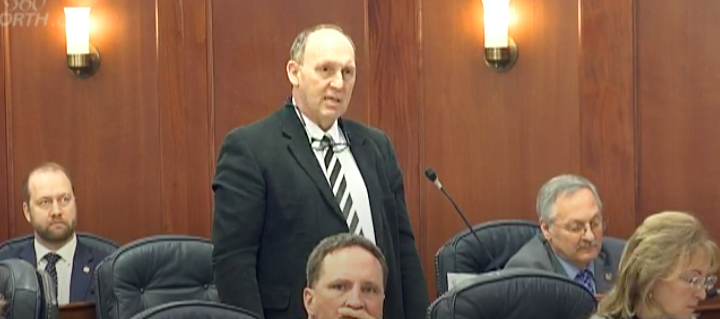
As agreed to by the Republican caucus, Rep. Chuck Kopp nominated Rep. Dave Talerico as Speaker. The Republicans were stunned when instead of 21 votes, Talerico only had 20.

For the third time, Gary Knopp had voted against Talerico, denying Republicans the majority and going back on his word.

Rep. Louise Stutes nominated Gary Knopp, and then Rep. Daniel Ortiz of Ketchikan stood and made the motion to vote on Knopp as Speaker.

The Democrats were all on board, along with the two Republicans who caucus with the Democrats — Rep. Louise Stutes and Rep. Gabrielle LeDoux.

Evidently this had been brokered on behalf of the Democrats the night before by Stutes, who had dinner with Knopp.

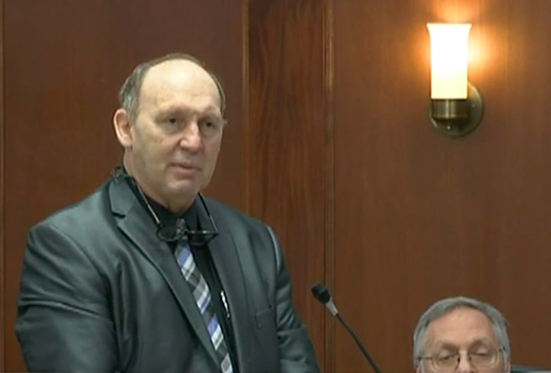
Rep. David Eastman asked that before the vote, Knopp should speak first about why he had refused to vote for Talerico, when the day before he said he would.

“I never said who I would support,” Knopp said in response. He said that he was approached the night before and he admitted the move was no doubt unexpected, acknowledging he pulled a surprise on his Republican colleagues.

“I am supporting a Republican nominee: myself.”

The scheme, however, didn’t go according to plan. The vote went  20-20, with his Republican colleagues denying him the chance to take over the Speaker’s gavel. They had been double-crossed.

TRUST BROKEN IN REPUBLICAN CAUCUS

At this point in the Republican caucus, there’s so much mistrust that it’s hard for this longtime observer to see how the Republicans put together their organization.

They now know that Knopp, who for weeks worked as the “broker” between Republicans and Democrats, was never an honest broker. Also, many of them have made power deals that have since fallen through, and some of those deals would have put Democrats firmly in charge.

[Read: Knopp refuses to show up to vote for Speaker]

Everywhere Republicans look in their caucus, they see people who have made deals for power that throw the rest of the Republicans — and Republican principles — under the bus.

On the Democrats side, the trust is still intact; their caucus is working in lockstep.

[Related: Bryce Edgmon reregisters as undeclared]

Back on the Kenai Peninsula, angry voters are now calling for a “resign-or-recall” of Gary Knopp. But Knopp is standing firm.

In a note Knopp sent to one of his constituents, he tells the complaining constituent that he is too dense to understand what is going on in Juneau:

“Ed, let me make it very clear for the last and final time; not a chance in hell that I’m going to resign!

“I think you are smart enough to know there is no grounds for a recall. What you might do before you start wasting yours and everyone else time is to get a legal opinion. It is armchair quarterbacks like you who disrupt the entire process. I am trying to make the house successful.
“It maybe a little over your head to understand what is going on here but, you should at least try instead of trying to be so disruptive.”
Getting a budget bill through the House is going to be difficult without a permanent Speaker. But a former legislator’s words rang true this morning, when he said, “When you come to Juneau, the only thing you have is your word.” There’s very little solid “word” to be found in Juneau at the moment.
Or, as Rep. Sharon Jackson of Eagle River put it, there’s an “inconsistency of truth.”

‘Defend the Sacred’ goes Antifa-style on ANWR drilling

16

(3-minute read) ‘I WILL F—ING OWN YOUR SCALP!’

The Defend the Sacred group has been running the agenda of the public meetings on the Arctic National Wildlife Refuge 1002 Area drilling plan.

They showed up and disrupted the Fairbanks meeting last week with drumming, chanting, and yelling. They took over the meeting and federal officials barely managed to contain order.

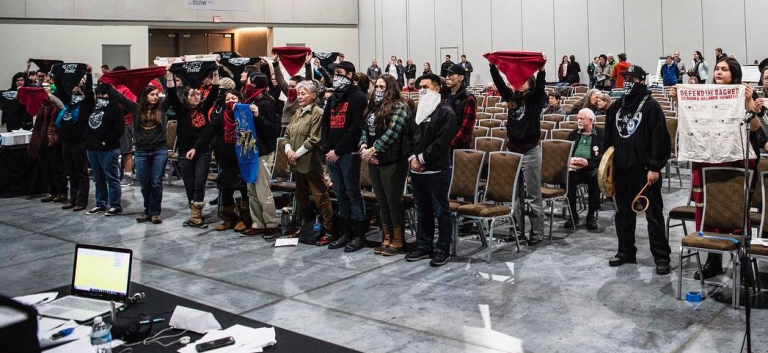
On Monday, many of them showed up in Anchorage wearing Antifa-style bandanas, covering their faces. There were a lot of F-bombs thrown and extended middle fingers. Lots of signs and banners were raised, too.

They have a perspective: The Arctic National Wildlife Refuge, drawn by Congress, is sacred to the Gwich’in people and their relationship with caribou, which they also consider sacred.

But they have a problem. The land doesn’t belong to them and it’s 150 miles away from their lands. It is an inconvenient fact.

When Power the Future spokesperson Rick Whitbeck spoke on behalf of resource development and the distance the drilling site is to Gwich’in land, he was shown the middle finger by some protesters, was booed by others and received at least one terroristic threat:

“I’ll will f–ing own your scalp!” one of the protesters said to Whitbeck as he closed his presentation.  “F– you, white man!”

Another protester made the case that if you drill a hole in the permafrost, it’s like driving an ice pick into her heart, and that an ice road is like slitting her wrists. She said if there’s drilling, she will commit suicide because she will have no more reason to live.

Teaching the children the art of Antifah protest, members of Defend the Sacred used young Native Alaskans in the protest against drilling in the 1002 area.

BLM officials originally planned an open house format so that people could gather actual facts before they state their opinion for the record.

But “the people” of Defend the Sacred were not in a mood to gather facts. About 50 of them turned their backs to a BLM representative as he explained the regulatory framework around drilling on the coastal plain, the only area in ANWR set aside for oil development.

Another group was outside the meeting room at the Dena’ina Center, however. They were about as large, and they were in favor of drilling. They were Inupiaq people from the North Slope. The two groups had a few words with each other during the day-long meeting.

The meeting was the last to be held in Alaska. A public meeting in Washington, D.C. on Wednesday will conclude that part of the public process, but comments will be taken until March 13 on the draft environmental impact statement.

Between 60-70 percent of Alaskans favor drilling in the 1002 Area, surveys show. At the Anchorage public meeting, the comments were roughly 50-50 for and against. But the most visible and loudest point of view was the one of the radical Defend the Sacred group.

Knopp tells reporters, district leaders, he’ll stick with Republicans

HOUSE STALEMATE MAY COME TO AN END

Rep. Gary Knopp told Republican District 30 Chair Neal DuPerron tonight that he will vote for the Republican Speaker nominee, Dave Talerico of Healy.

If he follows through on his word, that means the House of Representative’s stalemate will end on Tuesday, and a fragile 21-member Republican majority will organize, with Rep. Cathy Tilton as Rules Chair, and Lance Pruitt and Tammy Wilson as co-chairs of Finance. Chuck Kopp would be majority leader.

This is essentially the same leadership team that formed the day after the General Election on Nov. 6.

The tide seemed to be turning the opposite direction earlier today, with four Republicans forging an agreement with Democrats to put Democrat Rep. Bryce Edgmon back in as Speaker for the next two years.

The House floor session, originally scheduled for 11 am, was postponed after polling data was made available to House Republicans, showing broad support for the governor’s plan to build a budget that Alaska can afford, and then ask Alaskans how they want to pay for additional spending.

The Republican House members engaged in an internal debate about whether or not they should even see the information. In the end, most of them went to the presentation.

That polling information turned out to be what Republicans needed to find their mojo and start working together for a 21-member majority.

Although Knopp was not in attendance at the public opinion presentation, he was getting his own dose of public opinion information. Tonight, his District Republicans voted 10 to 8 to send him a letter telling him to either rejoin the Republican majority or resign.

Knopp was also having to face a scheduled Chamber of Commerce breakfast in Kenai/Soldotna on Friday, and a town hall meeting on Friday evening, where local conservatives were activating.

The struggle to establish control has been not only about who gets which committee. The party that the Speaker is a member of also gets to choose one person for the upcoming redistricting board, which will adjust political boundaries after the next U.S. Census in 2020.

The House is scheduled to gavel in at 10 am on Tuesday.

Honest budget: Sustainable, predictable, affordable

17

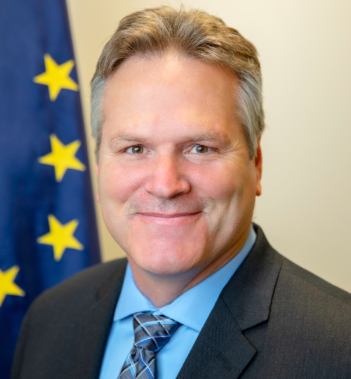
By MICHAEL J. DUNLEAVY
GOVERNOR OF ALASKA

One promise I made to Alaskans was to present you with a permanent fiscal plan, one where we tackle our economic challenges and start bringing fiscal responsibility to Juneau. Combined with a series of legislative proposals and constitutional amendments, a major element of that commitment is addressing the State’s out-of-control spending.

This year we’re presenting the Legislature with an annual budget that takes an open and straightforward approach. Rather than starting with the bloated budgets of the past and asking ourselves “where do we cut,” we did exactly what Alaskan families and small businesses are forced to do when faced with financial hardship. We started from the ground floor and built an annual budget where the amount we spend aligns with the amount we bring in; an approach that built a budget up, rather than reducing a budget down.

As we’ve all seen, for too long politicians haven’t been honest when it comes to the numbers and the seriousness of our fiscal woes. We’ve seen misleading figures, confusing budget tactics; we’ve relied on massive amounts of savings and Alaskan’s PFD’s to grow the size and reach of government – all while never seriously tackling the issue of spending. Today I’m here to say: those days are over. We can no longer spend what we don’t have and we can’t pretend otherwise.

The economic outlook Alaska faces today is dire. After burning through nearly every dollar in the State’s savings account – over $14 billion over the last four years – we are faced with another billion and a half dollar deficit, and less than a year in reserves. The gradual glide path approach, which lawmakers called for repeatedly since the rapid decline in oil prices, never came to fruition. Oversized budgets and outmatched spending continued with little recourse.

In building this budget, my team and I worked across government to identify efficiencies, duplications, and cost savings to restore the core principles of government responsibility. We built a balanced budget where expenditures do not exceed revenues; a budget that shows Alaskans the realities of where we are and the tough choices that have to be made. We looked for logical constraints on government and built a budget based on these core tenets:

  • Expenditures cannot exceed existing revenue;
  • The Budget is built on core functions that impact a majority of Alaskans;
  • Maintaining and protecting our reserves;
  • The Budget does not take additional funds from Alaskans through taxes or the PFD;
  • Sustainable, Predictable, and Affordable.

The foundation to my budget is based on the principle that expenditures cannot exceed revenues. For the first time in decades, our budget will match the money we spend as a state with the revenues we bring in as a state. This year, based on the revenues we have identified and the dollars made available through previously enacted law, we built a budget based on $4.6 billion in revenues. The differences in funding, the consolidation of core services, and the changes to programs take a serious approach to our financial situation, while reflecting a sincere commitment to put the full amount of the Permanent Fund Dividend back into the hands of Alaskans.

 Our focus also prioritized the core functions of government, functions that impact a majority of Alaskans.  This truth-in-budgeting-approach examined required state obligations, the size and scope of government, services and needs, and resulted in a budget that for the first time gets our fiscal house in order. It includes a number of government-wide initiatives to improve effectiveness and refocus spending, including constraints on government travel, limits on top-tiered government wages, reforms to government procurement, and reorganization of staff and departments. While some will describe these and other reforms as drastic, I say to them: show me a proposal that stops our unsustainable spending trajectory and accounts for our current financial dilemma.

In order to protect what little savings remain, we have prioritized maintaining and protecting what little we have left in reserves. The days of spending everything we have and avoiding the tough decisions for our future must end. If this spend-at-all-cost mentality is allowed to persist, Alaska’s economic outlook will only grow darker and the future of the Permanent Fund Dividend will diminish by the day.

Based on the will of the people, and a sincere belief that we can’t tax our way out of these fiscal challenges, my budget proposes no new revenues from Alaskans. While some wish to ignore Alaskans and propose billion dollar taxes and PFD grabs to close our financial gap, I’ve made clear that this is out of line with the core beliefs of most Alaskans and the promises I made on the campaign trail.

And finally, our budget takes a sustainable, predictable and affordable approach.We must reset the spending clock and realign expenditures with the realities we face today. We must transform government at its core, right size spending, eliminate duplication and prioritize programs to match our reality. Though we’ve been blessed financially in the past, we must establish a government that can weather the storm of low oil prices and save for the next generation of Alaskans.

As your governor, I will always be honest with you. I will treat the people’s money with the care and respect it deserves. As the details of my budget proposal are unveiled over the coming days, I ask all Alaskans to consider the alternative. Continuing down the path of oversized budgets, outsized spending, and out-of-line priorities will only jeopardize the future of our state.

For those demanding more spending, including those in the Legislature, we must respectfully insist: Where will the money come from?  We must be honest with ourselves and align our spending with our revenues in order to bring about a brighter future for the Alaskan people.

Kimberley Strassel now writing from … where?

7

THE LAST FRONTIER, THAT’S WHERE

One of the most respected conservative political writers of our time, Kimberley Strassel, now writes her weekly Potomac Watch column for the Wall Street Journal from her home in Wasilla.

Wasilla? How is it that one of just six members of the Wall Street Journal’s editorial board lives in Wasilla?

The short answer is: The Oregon-born, Princeton-educated writer met and married an Alaskan, then moved here from Virginia, where she had been residing for many years.

Strassel is so down-to-earth, it’s no wonder she’s been able to remain fairly anonymous in her new home.

Although Strassel has lived in Alaska for going on two years, she’s flown under the radar. Few people recognize her when she shops, dressed like a mom, at Fred Meyer.

She gets up at 3 a.m. and starts her work day, writing three of the “unsigned” editorials that appear in the Journal each week, as well as her own column, “Potomac Watch.”

She also co-produces the Potomac Watch podcast three times a week with editorial page editor Paul Gigot and writer Bill McGurn, who writes the Journal’s “Main Street” column.

Strassel travels back and forth from the East Coast a lot, as her sources and the subjects about which she writes are primarily in the nation’s center of power, Washington, D.C. and New York City.

Kimberly Strassel signs copies of her latest book for people who attended the Alaska Policy Forum evening conversation.

On Saturday evening, Strassel shared a conversation with Must Read Alaska editor Suzanne Downing, as part of a donor thank you event for the Alaska Policy Forum, a public policy think tank that focuses on education, economy, and individual freedom. About 30 people attended.

Strassel and Downing discussed everything from the investigation into Donald Trump’s alleged campaign ties to Russian operatives (Strassel believes the investigation is coming to an end), to the latest emerging socialist political phenomenon, Rep. Alexandria Ocasio Cortez,  the wild-eyed congresswoman who represents New York’s 14th District, (who Strassel has described as a secret weapon for the Republican Party.)

“The Democrats seem oblivious to its power. And the GOP needn’t lift a finger for it to work. All Republicans have to do is sit back and watch 29-year-old Rep. Alexandria Ocasio-Cortez . . . exist,” she wrote last week.

[Strassel’s column is linked here. Wall Street Journal requires a subscription.]

The pair of writers — one who focuses on Alaska issues, and one who writes about the center of world power — also discussed the increasing trend toward bias in mainstream media reporting. Strassel is the author of “The Intimidation Game, How the Left is Silencing Free Speech.”

On Saturday, Strassel also mentioned the importance of state policy and governance, and said that’s one reason why she agreed to spend her Saturday evening with 30 thought leaders in Alaska. While her main beat is 4,300 miles away in D.C., she wanted to communicate just how relevant public policy is when it is closer to the people.

Seattle snow snarling Alaska travelers

1

SOME FLIGHTS CANCELLED IN SNOWMAGEDDON

With a new weather system on the way, additional snow is expected in the Seattle and Portland areas starting Sunday evening and continuing through Tuesday morning.

Earlier this weekend, many flights in the Seattle Tacoma Airport were cancelled due to to the heavy snowfall.

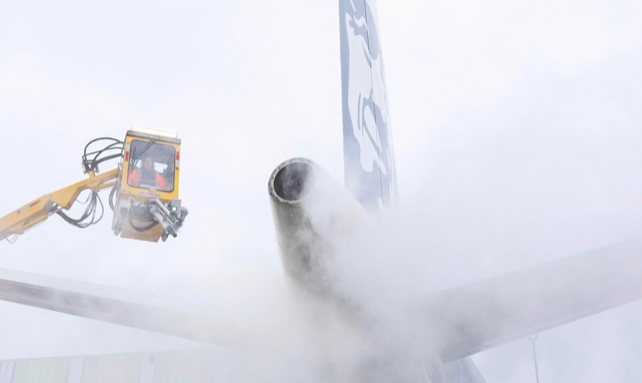
Alaska Airlines reports it still is evaluating its flight schedules to determine how much air traffic Sea-Tac airport can handle with both limited visibility and the deicing requirements to operate safely.

“Safety is our number one priority, and we are planning to pre-cancel some flights on Monday. We will continue to evaluate the schedule and evolving weather conditions. Impacted guests will be notified of any cancellations and their travel rescheduled,” the airline stated online.

Alaska Air has also extended its flexible travel policy for customers through Monday for anyone wishing to change flights in/out Seattle and Portland as the winter weather conditions extend through the weekend.

Thousands of Alaskans travel through the SeaTac Airport every day. Alaska Airlines is not the only airline impacted, although Seattle is the major hub for the airline. Spokane and other regional airports have also has numerous flights cancelled over the weekend.

Tough week ahead for Knopp on Kenai?

35

REPRESENTATIVE WILL FACE HIS CONSTITUENTS FRIDAY

Back in his home district on the Kenai Peninsula, folks are talking.

For political activists in this largely Republican district, where 5,200 registered Republican voters outnumber the 1,163 registered Democrats, this has been the winter of their discontent.

This is Trump country, here in Kenai/Soldotna.

Soldotna voters went 70 percent support of Trump and Kenai totaled 66 percent in 2016. Both results are far more than the 51 percent of the vote that Trump received statewide.

District 30’s representative, Gary Knopp, has gone against the prevailing winds. He ran unopposed last year and made statements that show him at odds with Gov. Michael Dunleavy.

In November, Knopp joined the Republican caucus that formed up immediately after the election, but by December, he left the group and has since held up confirmation of House Speaker for 26 days, since the House gaveled in on Jan 15. Knopp wants a bipartisan power structure — 50-50 Democrat and Republican, about 28 strong, not the 21 fragile caucus that he left.

His reason was, he said, David Eastman, the representative from District 10, whose votes so often go contrary to his fellow Republicans. Knopp just couldn’t see himself in a caucus with Eastman. A caucus of 21 would give Eastman too much power.

So instead, Knopp became the 21st vote, and he held out. On Friday, after Republicans nominated Dave Talerico for Speaker for the third time, the Republicans came up with just 20 votes. Knopp just disappeared, rather than vote. Republicans needed him, but he just wasn’t there.

[Read: Knopp refuses to show up to vote for Speaker]

The session is now one third over and the House hasn’t gotten organized, largely because Knopp has, since December, played Democrats against Republicans, trying to squeeze a deal for himself in some sort of power organization.

In a response to a story in Must Read Alaska, he said the Republicans keep trying to pull shenanigans.

“Because the Republicans constantly are pulling their shenanigans on the house floor, the speaker pro-Tem has began the process of recessing instead of adjourning in order to stop the disruptions on the house floor,” he wrote.

Those shenanigans are House Republicans insisting on holding a vote for Speaker.

[Read: A flurry of letters between Knopp, constituents]

REPUBLICANS ARE MEETING MONDAY NIGHT TO DISCUSS KNOPP

Last week, two Republican women’s clubs in his district called on Knopp to rejoin the Republican majority, writing a joint letter to him. But Knopp says that the letters are running 10-to-1 in his favor.

Recently, it came to light that Knopp had been a registered Democrat for the majority of his adult life in Alaska, only turning Republican when he ventured into public office.

That got folks talking where they gather at Ammo Can Coffee, where the local Republican district is holding a meeting on Monday evening at 6 pm to discuss the Knopp crisis.

[Read: Knopp was a Democrat for decades]

This may be the week of Knopp’s political reckoning. On Monday night, will his district Republicans simply ask him to rejoin the majority and vote for a Republican Speaker? Or will they ask him to resign?

The answer may depend on what Knopp does on Monday in Juneau. Will he have another sick-out? Or will he put his vote for or against a Speaker on the record?

And then there are other meetings in his home district, to which he is expected to attend.

Knopp is the featured speaker at a special Kenai/Soldotna Chamber of Commerce breakfast on Friday at 8 am, where some of his fans and critics may gather to hear him explain why he has held up the House organization.

Later on Friday, he is scheduled for a town hall meeting at Kenai River Suites Area Room from 5:30-7 pm.

HERE’S KNOPP’S ESCAPE HATCH

Knopp’s timing for his trip home to the Kenai may be part luck, part planning. The stars may align for him. Here’s why:

The delay of the House organization went according to the Democrats’ plan — hold off forming a leadership caucus until the budget is released and people get weak-kneed.

By Friday, the conversation across Alaska will be remarkably different from Monday’s chatter, because the governor’s budget will be released on Wednesday. It will, Dunleavy’s office has indicated, reflect spending that is no more than the actual revenues that Alaska has: around $4.6 billion.

Liberals will gnash their teeth and even conservatives will catch their breath at the smaller government footprint. That Alaskans will receive a $2,861 Permanent Fund dividend may not be enough to salve the wound of smaller government spending.

The Dunleavy budget is predicted to be about $1.6 billion less than the $5.7 billion Gov. Walker proposed in his December budget, which was a deficit-spending plan that was $330 million higher than Walker’s budget for the current year.

Knopp will likely tell his constituents that he opposes the Dunleavy budget. He’ll tell the Chamber of Commerce and town hall attendees that he’s going to fight those cuts on their behalf.

Knopp won’t necessarily say what budget number he would support, or how he would pay for it, but he will say what he is against — Dunleavy’s balanced budget.

By Friday’s public appearances, Knopp’s months of obstructing a House organization may be eclipsed by the discussion about where to find the money for everything Alaskans want.

For a man in his shoes, a Democrat who is now a false-flag Republican facing a possible recall, Knopp will have the Dunleavy budget as a foil, allowing him to focus the lens of public opinion away from his activities in Juneau.

“You’re going to have that bloc of legislators who are going to support the governor’s agenda and a bunch of us who are not,” Knopp said in December.

He hasn’t moved from that position and he has until his Thursday night flight home to form up a caucus based on opposition to the Dunleavy budget.

A positive step for Juneau’s waterfront

0

ARCHIPELAGO PROJECT MOVES AHEAD IN SPIRIT OF COOPERATION

By WIN GRUENING
SENIOR CONTRIBUTOR

With the controversy surrounding the cruise industry lawsuit over the use of cruise passenger fees, it was gratifying to see the City and Borough of Juneau Assembly and the industry working together cooperatively to gain city approval of the long-planned Archipelago Project.

Indeed, the components of this project should help address concerns about managing increasing numbers of cruise passengers as well as pave the way for a major private investment on the Juneau downtown waterfront that will create jobs and a more welcome destination for visitors.

The project is supported by the cruise industry and championed by City Manager Rorie Watt and his staff as a way to improve visitors’ experience and reduce congestion. Watt believes that “cruise ship tourism is a really important part of our economy, and with the growth of passengers we need to have more room on the waterfront for all the activities.”

The approved ordinance allows Juneau to enter into an agreement to purchase property from Archipelago Properties LLC, a private company (a subsidiary of Morris Communications, the former owner of the Juneau Empire), while simultaneously selling municipal property to Archipelago resulting in a net cost to Juneau of $922,175.

The land proposed to be purchased and sold (exchanged) will result in a mutually beneficial property configuration. Following the closing of the land transaction, CBJ and Archipelago will be able to pursue their separate but integrated development plans.

The ordinance was supported by a heavy majority of the Assembly – passing 7-2, with Assembly members Loren Jones and Rob Edwardson objecting.

The transaction with Archipelago will add slightly under half an acre of land to city ownership adjoining the new cruise ship docks – allowing public development of mostly un-utilized submerged tidelands thereby creating more open space for visitors, transportation staging, and community amenities.

The city portion cost of the project including land is approximately $20.5 million and will be funded primarily through fees collected from cruise passengers.

The private development by Archipelago, in which CBJ isn’t involved, is located on the uplands side adjacent to South Franklin Street.  While it is currently an unimproved parking lot, Archipelago plans major improvements including around 20,000 square feet of commercial space – 75% of which would be designated ground floor retail for a variety of tenants as well as kiosks for local food vendors and other small businesses catering to tourism.

The Downtown Business Association and a number of neighboring property owners have publicly supported the project and it should not impact rental rates significantly as it only represents an estimated seven percent increase in the surrounding rental market inventory.

The project is an integral part of the 2018 Marine Park to Taku Dock Urban Design Plan – finalized and developed with the input of Juneau stakeholders and residents during community workshops, stakeholder meetings, and intensive public outreach, including seven public meetings last year.

The city portion of the development includes a transportation staging area and a large public plaza built on an expansive decked-over space on pilings.  A modestly sized shelter structure for seasonal cruise passenger use that could also be available for community events in the off-season is envisioned in a later phase.

This should result in less pedestrian and vehicle congestion on downtown streets, add over $10 million in new taxable commercial property to Juneau’s tax rolls, and generate additional sales taxes for city coffers.

CBJ and cruise industry support of the project was facilitated through mutual negotiation and a skillful allocation of funding sources by city staff.  The use of cruise passenger fees from prior years avoided further litigation while CBJ and CLIA discuss a settlement to determine how future cruise passenger fees are to be spent.

Everyone concerned seems optimistic that issues surrounding the lawsuit can be resolved.

It’s a hopeful sign that negotiations are progressing beyond legal questions involving expenditures and are now focusing on how necessary services and upland improvements benefiting both the city and the industry will be funded going forward.

If the Archipelago Project foreshadows a mutually agreeable settlement between Juneau and CLIA on the larger issues raised in litigation, both sides deserve credit for getting there.

Win Gruening retired as the senior vice president in charge of business banking for Key Bank in 2012. He was born and raised in Juneau and graduated from the U.S. Air Force Academy in 1970. He is active in community affairs as a 30-plus year member of Juneau Downtown Rotary Club and has been involved in various local and statewide organizations.