Wednesday, April 29, 2026
Home Blog Page 1456

A rational solution for the dividend program

36

By TOM WILLIAMS
GUEST CONTRIBUTOR

To solve the deadlock over the 2019 Permanent Fund dividend amount and the FY 2020 state education budget, the Legislature and the governor should agree to legislation during the upcoming second special session that would do four things:

  1. Modify the criteria for a Permanent Fund dividend, limiting payments to only adult Alaskan residents who are U.S. citizens eligible to vote in Alaska who have not been absent from Alaska for more than 90 days in the prior calendar year;
  2. Multiply the calculation formula for the dividend by a factor of 72 percent, the percentage of 2017 eligible applicants who would meet the new eligibility criteria;
  3. Appropriate the amount calculated under the revised eligibility formula to those 2019 applicants who qualify under the revised formula; and
  4. Repeal the “forward funding” appropriation for the 2020 education budget enacted during the 2018 legislative session and replace it with a current appropriation for the 2020 education budget from the earnings reserve account of the Permanent Fund.

This solution would:

  1. Return the dividend amount to the current statutory calculation for eligible Alaskan voters who were present in Alaska for at least three-quarters of the eligibility year, providing eligible Alaskans a “full’ dividend consistent with the original PFD program;
  2. Retain a significant vested interest for voters to protect the Permanent Fund from being raided by our politicians, an original intent of the PFD program;
  3. Avoid sending money to people who spend a significant amount of time outside of Alaska, regardless of the reason, thereby improving the likelihood that most PFD payments will be spent in the Alaskan economy where they will have the most local impact;
  4. Significantly reduce the cost of administering the PFD program;
  5. Direct the amount of the PFD’s that would have been otherwise paid to children toward the cost of their education, or other child related programs, and thereby avoid paying dividends to children while using other scarce funds to pay for their education; and
  6. Avoid a costly and time-consuming court battle over the question of forward funding programs like the education budget, while adequately funding the 2020 education budget.

So how much money paid for children’s dividends could be re-directed to their education or other children services?  Using the most recent information published by the PFD division in their 2017 Annual Report, 175,207 children were eligible for a 2017 PFD, resulting in a payout of just under $193 million at the $1,100 reduced amount.

If the $2,389 statutory amount had been paid in 2017, over $418 million would have been paid to children.  Those funds could have been directed toward funding the education budget, school bond debt reimbursement or other children’s programs.

This solution strikes a rational balance between the need for the PFD program and the need to use earnings from the Permanent Fund to help fund basic government services.

Tom Williams of Juneau is a 42-year resident of Alaska. He’s worked for aviation-related companies for the past 19 years, was director of two Department of Revenue divisions, including the Permanent Fund Dividend Division, and served on the staff of the Senate Finance and Legislative Budget and Audit committees.

Hit and run now considered homicide

1

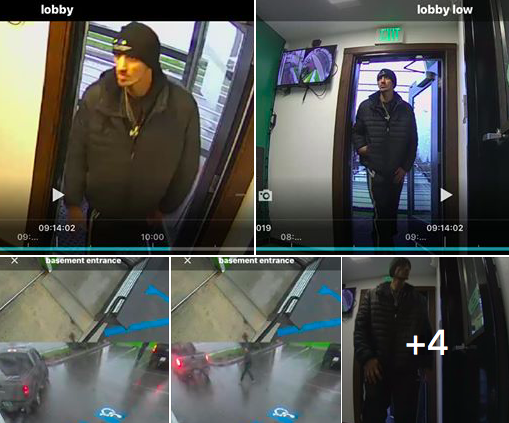
A hit-and-run resulting in a dead man and his downed motorcycle in the southbound lane of Minnesota Parkway at 15th Avenue is now being investigated as a homicide. Police aren’t saying much, but are asking the public for help.

In the original investigation, police said a stolen 2004 Chevy Tahoe was chasing a white and green motorcycle. The driver of the motorcycle was found dead on on the Minnesota Parkway, and the suspect vehicle continued south and exited at Hillcrest Drive. The Tahoe was later found abandoned in the Turnagain area near Lynn Ary Park. Police say the vehicle had been stolen from the Port of Anchorage on Tuesday night.

Detectives are asking witnesses to come forward with any information and are looking for surveillance video from these places and times:

  1. Port of Alaska on Tuesday between 6:30 p.m. and midnight.
  2. Area of Minnesota Parkway/L Street/15th Avenue on Tuesday between 11:30 p.m. and midnight.
  3. Turnagain area near Lynn-Ary Park between Wednesday morning midnight and 12:30 a.m.

A traffic camera shows the Tahoe dragging the motorcycle for a distance.

Anyone with information, including surveillance video, should call Dispatch at 311, or to remain anonymous call Crime Stoppers at 907-561-STOP.

By MustReadAlaska‘s count, this makes the 19th homicide in Anchorage this year.

Ambition above the law: Quintillion former CEO sentenced to five years

The former CEO of Quintillion, a fiber optics cable company in Alaska, has been sentenced in a New York federal court to 5 years in prison for defrauding investors in New York of more than $270 million. The company reported her behavior to federal authorities after discovering a pattern of fraud in 2017.

Elizabeth Ann Pierce had pled guilty earlier this year before the same federal judge who imposed the sentence today.

[Read Quintillion’s Interim CEO describe how the company has been recovering from the Pierce fraud]

“Elizabeth Ann Pierce, the then-CEO of Quintillion, placed her ambition above the law.  In order to raise over $270 million to build a fiber optic cable system in northern Alaska, she repeatedly lied to her investors and forged the signatures of her customers’ executives on fake revenue contracts.  When her scheme started to unravel, she tried to delay exposure with yet more lies and forged documents.  She will now serve five years in prison for her crime,” according to a statement made by U.S. Attorney Geoffrey S. Berman.

[Read: High crime: Quintillion executive now charged with wire fraud]

Pierce was, until the summer of 2017, the chief executive office of Quintillion, which built, operates, and markets a high-speed fiber optic cable system known as the “Quintillion System,” which includes a subsea fiber optic cable under the Arctic Ocean north of Alaska, and a land segment running north to south along the Dalton Highway. The two systems are connected to a land-based network, and the system is now connected to the Lower 48 through other existing networks.

Between May of 2015 and July of 2017, she induced two New York-based investment companies to provide more than $270 million of construction money the Quintillion System. She convinced the companies by providing them with eight forged broadband capacity sales contracts and related order forms under which Quintillion would obtain guaranteed revenue once the Quintillion System was built. The court calls these “fake revenue agreements.”

Under the fake revenue agreements, four telecommunications services companies made binding commitments to purchase specific wholesale quantities of capacity from Quintillion at specified prices.

The cumulative value of the fake revenue agreements was approximately $1 billion over the life of the agreements, which had been forged.

While some of the fake agreements never existed, others were falsified versions of genuine revenue agreements.

Pierce fabricated the terms of the false versions of the agreements to make them more favorable to Quintillion and, therefore, more appealing to investors than the genuine agreements.

For example, under one of the fake agreements, the customer purportedly agreed to buy from Quintillion increasing quantities of gigabits per second of capacity over a period of 20 years.

That agreement, if genuine, would have assured Quintillion hundreds of millions of dollars in future revenue.

In reality, negotiations over that deal had ended unsuccessfully, a fact that Pierce never disclosed to the investors.

Under another fake agreement, the customer purportedly agreed to buy a fixed, predetermined amount of capacity from Quintillion regardless of subsequent market conditions. In reality, that customer was not obligated to buy any capacity.

Pierce forged the agreements, and then went back to the companies and tried to negotiate agreements identical to the ones she had forged. She was generally unsuccessful. When Quintillion and the investment companies ultimately caught onto the fraud in mid-2017, they learned that the real contracts would generate only a fraction of the anticipated guaranteed revenue of the fake, forged agreements.

Pierce also swindled two individual investors out of a total of $365,000 by leading them to believe that they would acquire ownership interests in Quintillion when, in fact, she used half of one victim’s money and all of the other victim’s investment for her own personal benefit. These individuals have received no shares and none of their money back from PIERCE.

After the terrestrial system was built, Pierce attempted to prevent the discovery of the fake agreements by accelerating the timing of incoming payments under genuine agreements to make those payments appear to be based on the fake agreements.

She also sought to prevent Quintillion from invoicing one of the customers that had no real contract with Quintillion by fabricating email correspondence that gave the impression she was terminating a contractual relationship, when in fact no such relationship existed.

One of the customers of Quintillion disputed an invoice it received from Quintillion, and the unraveling of her scheme began. Pierce resigned and Quintillion reported its former CEO’s conduct to the Department of Justice.

Pierce, now age 55, lives in Austin, Texas. She’ll serve five years in prison, and three years of supervised release, and she has been ordered to forfeit $896,000 and all of her interest in Quintillion and property she owns in Texas.

Pierce is still subject to a yet-to-be determined restitution order to her victims.

[Read: Who is Leonard Blavatnik and why is Gov. Walker helping him out?]

They did what?

So, with lawmakers ignoring a law they passed cutting off their $302-a-day per diem if they failed to pass a budget in 121 days, it will be revealing to see who applies for the pay.

The optics of some legislators pushing to cut the Permanent Fund’s statutorily calculated dividend of about $3,000 for each Alaskan while not passing a budget in the regular session and then ignoring the law to take per diem payments for the ensuing special session apparently is lost on our betters.

It took the Legislature’s 14-member Legislative Council, the Juneau Empire reports, only four hours and nine minutes after the Legislature adjourned its special session to vote 12-2 to approve the payments.

The law cutting off the per diem, House Bill 44, was passed only last year after Outside interests started an Alaska Governmental Accountability Act initiative petition. The proposed law supposedly was aimed at things such as curbing lawmakers’ conflicts of interests and contacts with lobbyists. For good measure, and we suspect to make it more salable to Alaskans, it would have made per diem contingent on lawmakers passing a fully funded budget during the 121-day regular session.

Legislators passed mirroring legislation to head off the initiative, even including the ban on per diem payments.

If all 57 lawmakers who do not live in Juneau were to claim the $302 daily per diem for the special session it took to pass a budget, the tab would be more than $450,000.

Read the rest of this editorial at Anchorage Daily Planet:

http://www.anchoragedailyplanet.com/159892/interesting-indeed/


Satanic invocation opens Kenai Assembly meeting

For the second time in three years, the Kenai Peninsula Borough Assembly meeting has been opened with an invocation from satanist Iris Fontana, representing the Satanic Temple.

After the borough lost in a lawsuit filed by the ACLU on behalf of three non-Christians, it must allow just about anyone to give an invocation.

This was Fontana’s second trip to the microphone to invoke the name of Satan over the local deliberating body. During her 2016 invocation, Fontana closed her remarks with “It is done. Hail Satan.” That was the phrase that changed the borough policy, an action that resulted in a lawsuit. The entire controversy has made national news.

The current invocation policy is here.

This time, a few in the room walked out before the invocation, including Assembly members Norm Blakeley and Paul Fischer, Chief of Staff James Baisden. Mayor Charlie Pierce showed up late. Several audience members walked out. As before, Fontana closed her invocation with “It is done. Hail Satan.”

Local media posted a photo of Mayor Pierce with his head bowed, but in fact, he was not in the room.

Listen to Fontana’s invocation here.

Later, during the public comment section of the meeting, Nikiski residents Michele Hartline and Paul Huber offered Christian prayers as their comments. A protest outside attracted about 25 Christians who objected to Satan being offered a seat at the proverbial table.

The July 2 meeting will be opened by Greg Anderson, who warned that his message would also be challenging. In September, Barrett Fletcher, of the Church of the Flying Spaghetti Monster, will offer an invocation.

Earlier this year, Carrie Hansen, member of a local atheist group, offered the invocation.

MRAK Almanac: Food bloggers converge on Juneau

PRODUCED BY KOBE RIZK

The MRAK Almanac is your place for political, cultural, and civic events, events where you’ll meet political leaders or, if you are interested in getting to know your state, these are great places to meet conservative- and moderate-leaning Alaskans.

Denali Climbing Report:

As of yesterday evening, there have now been a total of 449 successful summits of Denali this season, up over 200 since this time last week. We can tell the climbing window is beginning to close, as 350 climbers are currently on the mountain. It’s the lowest number of in-progress climbs since the May 17 report by the National Park Service.

6/19: Eaglexit meeting and presentation at the Eagle River Lion’s Club, beginning at 7 pm. Come to learn more about Eagle River’s pitch to separate from the Municipality of Anchorage, and potential plans for a new local government. Bring a neighbor or two.

6/19: The University of Alaska Board of Regents will hold a special meeting in Fairbanks for an update on the FY20 operating budget and how it is set to impact the university, should it be signed by Governor Dunleavy.  Begins at 9 am, read the full agenda here.

6/19: June edition of Coffee with a Cop in Anchorage. This monthly event is sponsored by Anchorage Cops for Community and the Anchorage Police Department Employees Association. Come enjoy free treats, coffee, and good conversation with our great local law enforcement officers. Facebook event here.

6/19: Chugiak-Eagle River Chamber of Commerce lunch with UAA Chancellor Cathy Sandeen. Registration required, details here.

6/19: Alaska Bikers Advocating Training and Education (ABATE) general membership meeting at La Cabaña restaurant in Anchorage, starts at 7 pm. More info on the Alaska Harley-Davidson website here.

6/19: The Federal Subsistence Management Program has released their weekly Alaska Fisheries Update. Read it here.

6/19: Need to brush up on your Alaska wildlife track ID’s? Alaska Department of Fish and Game education specialist Mike Taras will be giving a free lecture on animal track and sign identification in the Murie Building Auditorium at UAF beginning at 7 pm.

6/19: Juneau Assembly meeting as “Human Resources Committee” to consider applicants for the Eaglecrest Board of Directors, 5:30 pm, City Hall.

6/19: Homer City Council meeting, including executive session on agenda. City Hall at 4 pm. Agenda is here.

6/19: Kenai City Council, Kenai City Council Chambers at 6 pm. Agenda is here.

6/20: Fairbanks’ Alaska Goldpanners baseball team is celebrating their 60th season of summer baseball this June. The first of their three-game stint against the Seattle Studs this week will begin at the Growden Fields at 7 pm—and don’t forget about the annual Midnight Sun Game on Friday night. No artificial light will be required. See the Goldpanners’ schedule here.

6/20: Interested in joining the Department of Corrections? The Alaska DOC will hold an informational recruiting workshop at the Mat-Su Job Center in Wasilla beginning at 1 pm. Read more here.

6/20: Ketchikan City Assembly meeting. Discussion of plastic bag ban ordinance. Discussion of Ward Cove cruise ship dock development. 7 pm.  Agenda is here.

6/20: The Alaska Board of Agriculture and Conservation will hold a regular public meeting in Palmer at 8:30 am. The board is set to review several new loan applications and discuss ongoing delinquencies. Further details here.

6/20: The Alaska Gasline Development Corporation will hold a regular board meeting beginning at 9 am at the Atwood Building in Anchorage. There will be an opportunity for public participation, and citizens unable to attend in Anchorage may participate via telephone. Further details here.

6/20: The Anchorage Enterprise and Utility Oversight Committee will meet at City Hall at 11 am. They’ll be discussing this item: ASCENT PGM/Northern Compass (Mark Begich) Contract. Read the agenda here.

6/20: Block Party hosted by the Downtown Association of Fairbanks. Gather along the banks of the Chena River and enjoy the many vendors and food options available in downtown Fairbanks while enjoying live music and lots of family fun. More information here.

6/20: The Alaska Division of Retirement and Benefits will host an AlaskaCare Town Hall meeting. This is a good opportunity for Alaskan retirees to share their thoughts and questions about their AlaskaCare health plans. Division staff will be on hand to answer questions and give detailed responses to comments and concerns presented. All retirees and dependents are invited to attend, but registration is required at least an hour in advance. Read more here.

6/20: The Petroleum Club of Anchorage will host their Summer Rides Car Show & BBQ, with the latter being available for $10 a plate. This event is open to both members and non-members of the Petroleum Club. Read more at the Facebook link here.

6/20-6/23: The International Food Bloggers Conference will take place in Alaska’s capital city of Juneau. Over 250 food bloggers, techies, and culinary enthusiasts of all stripes will assemble at this unique gustatory gathering. Read about the conference here.

6/21: Summer Solstice is at 7:54 am to be exact. But expect all kinds of festivities in Alaska, where it is a high holy day.

 Alaska History Archive:

June 19, 1865 – 154 years ago: Union soldiers, led by General Gordon Granger, arrived in Texas to share news that the civil war had officially ended in the union’s favor, and that all remaining slaves were officially free. The symbolic move represented a decisive end to slavery in the United States, as Texas was the last remaining state to preserve the practice after President Lincoln’s Emancipation Proclamation in 1863. The commemoration of this event became known as Juneteenth Day, and all but five states recognize it as an official holiday. Alaska Governor Mike Dunleavy issued a proclamation in celebration of the day last week. Read it here.

 June 20, 1977 – 42 years ago: Oil began flowing through the Trans-Alaska Pipeline for the first time. The well-known steel pipeline carries Alaska’s economic lifeblood through 800 miles of rugged Alaskan wilderness, and remains to this a day a striking example of human achievement and engineering. The 48-inch diameter pipe weaves around mountains, cuts through rivers, and crosses three mountain ranges on its journey from Prudhoe Bay to Valdez. The first oil to be sent via pipeline from Prudhoe Bay took 38 days to arrive in Valdez, and traveled at an average speed of 4 miles per hour.

Accused of thrill killing, Schilmiller, Brehmer now indicted for child porn

In addition to being accused of planning and executing a vicious, cold-blooded murder, there’s the child porn issue.

Federal investigators have now pinned those charges on Darin Schilmiller and Denali Brehmer.

U.S. Attorney Bryan Schroder announced today that the two have been indicted on federal child pornography and child exploitation charges, arising from the investigation into the murder of Cynthia Hoffman, age 19.

According to Schroder, Darin Schilmiller sometimes went by the aliases of “Babe, or “Tyler.” He is 21 and lives in New Salisbury, Indiana, a small town in Harrison County. Schilmiller attended North Harrison High School and graduated in 2017.

In texts to Schilmiller, Denali Brehmer, 18, sometimes went by the name “Angel.”

Both are named in the federal indictment charging them with conspiracy to produce child pornography, production of child pornography, receipt and distribution of child pornography, and coercion and enticement of a minor.

Their porn exchanges came to light after June 3, when Anchorage Police received a report that Cynthia Hoffman had not returned home the night before. The 19-year-old was missing. The next day, police found her body in a creek at Thunderbird Falls in Eagle River. She had been executed with one bullet hole to the back of her head.

A search of Brehmer’s telephone for evidence relating to Hoffman’s death revealed child pornography embedded in text messaged that occurred between Brehmer and Schilmiller from June 2 to June 4.

The text string included Brehmer and a contact listed as “Babe.” During an interview with Brehmer, police learned that “Babe” is also known as “Tyler.”

Detectives used phone records to link the number to Schilmiller in Indiana. The federal charging documents allege that, at Schilmiller’s direction, Brehmer produced videos depicting sexually explicit conduct involving a minor and sent them to Schilmiller.

[Read: Who is Darin Schilmiller and how is he connected to the murder of Cynthia Hoffman?]

If convicted, the two face a minimum of five years and up to life in prison. Under the Federal Sentencing Guidelines, the actual sentence imposed will be based upon the seriousness of the offense and the prior criminal history, “if any.”

Of course, the “if any” part is still to be prosecuted.

Police say the evidence shows that texts between Schilmiller and Brehmer contain messages that show Schilmiller asked for Hoffman’s murder and video evidence of that murder. It appears to have been a thrill killing, with Schilmiller accused of offering an extraordinary sum of $9 million for the murder — more than an average 21-year-old could likely manage to acquire legally.

[Read: Investigators: Indiana man offered $9 million for death of Cynthia Hoffman]

[Read: Alaska is ‘catfishing’ capital of America]

According to the court records, Brehmer recruited four of her friends: 19-year-old Caleb Leyland, 16-year-old Kayden McIntosh, and two juveniles. She promised them a huge chunk of cash for their part of the murder.

Brehmer’s “best friend” Cynthia Hoffman was to be the victim. As the five took Hoffman to Thunderbird Falls, duct taped her, McIntosh shot Hoffman in the back of the head, and dumped her in the river, while Brehmer was sending Schilmiller SnapChat photos and videos.

Court records say Schilmiller told investigators he and Brehmer also planned to murder someone else, and that he blackmailed Brehmer into raping people. Brehmer is also accused by authorities of rape and child sexual assault.

Last Friday, a grand jury indicted Schilmiller and five others in Hoffman’s murder. Schilmiller will be extradited to Alaska to face those charges.

Breakthrough: GCI going big with 5G

11

GCI is going where no Alaska telecom companies have gone before: It’s investing tens of millions of dollars into technology that delivers lightning-speed data, cutting download times in half.

It’s called 5G, and there aren’t all that many places in the world that have it.

Ron Duncan, CEO of GCI, made the announcement today, saying that a partnership with Ericsson, one of the world’s top providers of 5G technology, will making it possible for the homegrown Alaska company to bring a 5G network first to Anchorage, and later to other urban centers such as Fairbanks, Mat-Su and Juneau.

It’s a sign that the company has “cautious confidence” in Alaska’s economy, Duncan said. “I will say it’s an improving level of confidence. We are gradually becoming convinced that we are at the bottom (of the recession) and are slowly crawling out of it. We are comfortable that the state is on an improving trend.”

Starting this summer, the company will deploy Ericsson’s 5G New Radio hardware and software to 82 macro cell sites from Girdwood to Eklutna, an area larger than the state of Rhode Island.

GCI’s metro fiber network will provide backhaul services to these sites, which include both towers and building locations.  The project will be completed in 2020 with initial 5G service coming online in the first half of the year.

“We are committed to providing superior 5G wireless service to the residents of Anchorage just as we already provide the fastest internet service,” Duncan said. “We are bringing all our assets – fiber, spectrum, wireless footprint, Alaska expertise – to bear on that commitment.”

GCI’s 5G deployment will support local Anchorage’s efforts to grow the nation’s northernmost smart city. Anchorage already uses a “light grid” to improve efficiency for municipal street lights and is exploring programs that rely on automated systems and connectivity to deliver services more efficiently.

5G is new — so new that only large cities have it, at this point, according to HowtoGeek.com. In fact, Anchorage will be the smallest U.S. city to have those 5G bragging rights.

GCI controls more low/mid-band mobile radio spectrum than any other wireless provider in Anchorage and more macro cell sites in Anchorage than any other Alaska wireless provider.

“The combination of our assets and Ericsson’s industry-leading 5G solution will increase the capacity of our Anchorage wireless network by 10 times or more and also provide better coverage,” Duncan said. “All of our customers will benefit from this increase in capacity.”

The announcement was made at a joint press conference attended by Ericsson President and CEO Börje Ekholm and members of the company’s leadership team who traveled to Alaska to be present at the announcement.

“The result will be a wireless/wireline experience that will provide our customers nearly ubiquitous data connectivity. We are making these investments here in Anchorage because it’s our hometown, and we know how to deliver service to Alaskans better than any other provider.  Anchorage will serve as the model for our network modernization efforts in other Alaska cities,” Duncan said.

For more information about GCI and its 5G network, visit https://www.gci.com/.

Historic run: Salmon strong at Russian River

Sockeye salmon are back in droves on the storied Russian River. So much so, that an emergency order has come from Alaska Department of Fish and Game last night: The Russian River/Upper Kenai bag limit has been increased to nine per day starting Wednesday at 12:01 am, with 18 in possession.

Folks in the region can’t remember a time when this happened in the past. It’s an historic run.

This is the first run of sockeye on the Kenai, and they are typically smaller fish, but these salmon are coming in at about 7 or 8 pounds, said Ben Mohr, executive director of the Kenai River Sportfishing Association.

“This shows that if there is an abundance of fish, and opportunity, Alaskans will come and harvest those fish with hook and line,” he said. “It’s been busy down here, but this speaks to who we are as Alaskans, and the desire to provide for your family off of the abundance of the land.”

Reports to Must Read Alaska say fishers are catching their limits within just a few hours.

“I encourage people to carpool down, and give yourself plenty of time because there is construction on the highway, be a good neighbor with other Alaskans out there. And there are also bears, so follow recommendations they have there: Keep your fish on a stringer, and keep your backpack within reach,” Mohr advised.

He also recommends because of the historic nature of the run, the increased limits, and with so many Alaskans fishing for them right now, that fishers don’t fillet their fish on site. Instead, head and gut your catch, cut up the discards, and throw it into fast-moving water, then put your fish on ice and fillet it when you get home.

Over the past few days, between 5,000 and 8,000 fish a day have been seen crossing the sonar on the Lower Kenai River. This means fishing should be good on the Upper Kenai and Russian Rivers for at least the next week, he said.