Sunday, December 28, 2025
Home Blog Page 1439

Wheels up? Why did amphibious plane crash land in water?

7

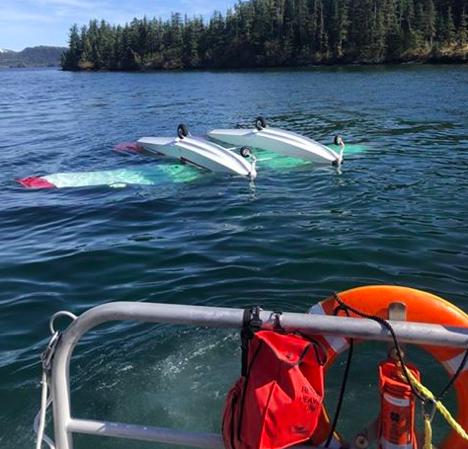
The crash of an amphibious plane in Prince William Sound left one passenger dead, and pilots around Alaska scratching their heads: Why were the wheels down on the plane, as shown in the photo provided by the U.S. Coast Guard? Should they not have been retracted?

The Cessna A185F crashed in Cascade Bay, between Whittier and Valdez in Prince William Sound. The pilot, Scott Johannes of Wasilla, was attempting to land on the bay but was unsuccessful, according to the U.S. Coast Guard. 75-year-old Dr. William Resinger of Palmer died after being trapped in the plane, which had flipped. The pilot and the other passenger escaped; all three were retrieved by good Samaritan boaters in the area.

The report came into the Coast Guard at 2 pm on Tuesday, stating that a Cessna A185F Skywagon had crashed. Two Coast Guard boats responded and transported the occupants to medical facilities.

Amphibious planes have wheels that retract and the planes can land on an airstrip or in the water. The Cessna 185 Skywagon seats six and can be fitted with floats, amphibious floats or skis.

It’s been a rough May in Alaska’s tight-knit aviation community. Six people died in a mid-air collision in Ketchikan on May 13, and two people died when a floatplane cartwheeled in the water near Metlakatla on Monday. The Cascade Bay crash on Tuesday brings the death toll to 9 in the span of eight days.

Crime lab chief moves on

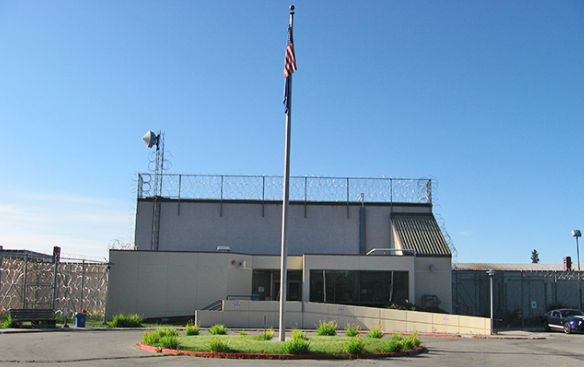
Orin Dym has resigned from heading up the Crime Lab for the Department of Public Safety, Must Read Alaska has learned. David Kanaris is serving as the interim chief of the forensic lab, which is in Anchorage.

Must Read Alaska is told that Dym is in the running to lead the Bexar County Crime Lab in San Antonio, Texas, where he has interviewed for the job. Dym has led the crime lab in Alaska since 2007.

Must Read Alaska was provided by a confidential source the names of no less than 13 employees who were driven out because of Dym’s management style, which was viewed as heavy-handed.

Group up and running to recall Rep. Gary Knopp

The first petitions to recall Rep. Gary Knopp are now circulating in Kenai and the “Recall Gary Knopp” group has received an important clarification from the Alaska Public Offices Commission on how much people can donate to the campaign to unseat the renegade legislator.

The group began circulating the petition two weeks ago. It’s essentially an application to the lieutenant governor to allow them to conduct an official recall election of Rep. Gary Knopp, who has fallen out of favor with his Republican base in Kenai, House District 30 for leading the effort to hand the control of the House to Democrats. Knopp was elected as a Republican.

[Read: Trouble for Knopp: Two opponents, a possible recall, party sanctions]

The petition, which needs 1,000 signatures, is available at Ammo Can Coffee in Soldotna.

That initial signature gathering is a request to the lieutenant governor to issue official petition booklets with the actual Division of Elections language, which would lead to a special recall election. The lieutenant governor’s office must decide if the group has established enough “cause” to call for a special election with just that question on the ballot, for just that district.

The group has a website that is largely functional. While still thin on content, the donate function is working. The group told Must Read Alaska that at this point, people can donate as much as they like to the campaign — usual limits do not apply, so donations can exceed $500.

“If they give now, they don’t have to fill a form 15-5 with Alaska Public Offices Commission,” said Christopher Kurka, who has been asked to run the petition drive.

Kurka says the group will submit the application to the lieutenant governor as soon as it reaches 1,000 signatures of people in the district.

District 30 is very conservative. It has 1,120 registered Democrats, 5,129 registered Republicans, 6,378 registered undeclared, and 2,128 registered nonpartisans. According to some analysts, District 30 is considered to be one of the most conservative districts in the state.

Israel to test missile intercept from Kodiak this fall

Israel is likely the most high-profile customer to date that will use the Alaska Aerospace launch facility in Kodiak. A launch is on schedule for later this year, as Israel tests that nation’s advanced missile-defeating system.

The test was to be conducted last year but was delayed, according to the Jerusalem Post, due to a technical issue involving the communication system.

The launch of the Arrow-3 interceptor will test how it can defend Israel against long-range ballistic missiles, according to the newspaper. It can take out a nuclear warhead at high altitudes.

Although the date for the launch is a secret, a Must Read Alaska analysis of prior launches indicates it is likely to be in the early fall, rather than summer or winter.

Tensions in the region between Israel, Iran, and the border of Syria continue, even as the civil war in Syria appears to be coming to a close. Israel worries that Iran will establish military bases in Syria, for the purpose of launching nuclear weapons.

“The exercise, which is to be carried out in cooperation with the US Missile Defense Agency, was due to take place on the Alaskan island of Kodiak, where the system would have been tested against targets similar in behavior to advanced ballistic missiles being developed by Iran,” the Post wrote.

Moshe Patel, director of the Israel Missile Defense Organization, alluded to the upcoming test during a panel at a pro-Israel conference in Washington D.C. in March.

“Arrow 3 is too big for the state of Israel, [to test locally]” Patel said, as quoted by Voice of America. “It is supposed to be good against nuclear threats that are coming from Iran. (But) we have limitations in our arena to conduct flight tests because of safety.”

In January, a dummy missile simulating a long-range ballistic missile was launched off the coast of Israel and was intercepted by an Arrow-3.  Because of the daily commercial air traffic in the Mediterranean region, testing the Arrow-3 over the Pacific Ocean from the Alaska Aerospace Launch Facility makes more sense.

“This is the reason that, with a lot of help from the U.S. administration, Congress and of course, AIPAC, we succeeded to receive a budget to conduct a flight test in Alaska and the plan is to do it in the near future,” Patel said during the panel discussion.

CEO CRAIG CAMPBELL RETIRES

As Alaska Aerospace readies itself for the Arrow-3 interceptor launch, its longtime CEO Craig Campbell will be retiring at the end of this month. Campbell has been serving in a transition role after announcing his retirement last fall.

“Craig was instrumental in leading the transformation of Alaska Aerospace during some extremely tumultuous times,” stated Dr. Robert McCoy, chairman of the Alaska Aerospace Board of Directors.

Under Campbell’s leadership, the agency secured a multi-year, multi-launch contract with the Missile Defense Agency, which was established under the Reagan Administration.

The agency also conducted its first international operations, and it signed contracts with numerous small and commercial spaceports.

Campbell’s efforts led to federal infrastructure funding for the Pacific Spaceport facility to support the National Security Space Program; and returned Alaska Aerospace Corp. to profitability without state funding support.

“We are a much stronger company today, with a more secure future, because of Craig’s vision and leadership,” McCoy said.

Mark Lester, who joined Alaska Aerospace in October 2018 as President, is the interim interim chief executive officer.  Read his bio here.

HB 49: Getting tough on classification and sentencing

House Bill 49 was passed by the House of Representatives and now awaits action by the Senate. It returns most criminal justice laws to how they were prior to SB 91, the law that is blamed for fostering a crime wave in Alaska.

Until HB 49 is signed by the governor, SB 91 is still in effect in Alaska.

This is the third in the series.

[Read about how HB 49 gets tough on sexual assaulters]

[Read about how HB 49 gets tough on drug dealers]

Here is how HB 49 impacts classification of crimes and sentencing:

Misdemeanor Sentencing: HB 49 removes the 30-day presumptive sentence for Class A misdemeanors and returns discretion to judges to impose 0-365 days. It also increases the sentencing range for B misdemeanors from 0-10 days to 0-90 days at the discretion of the judge.

Threats: HB 49 creates a generalized “terroristic threatening” statute to address threats of harm, such as school shootings.

Judicial discretion: HB 49 returns discretion to judges so they can evaluate the seriousness of the threat to public safety as they consider releasing a person before trial.

Felony sentences: HB 49 returns felony sentences to where they were before July, 2016, when SB 91 took effect. The sentencing section of HB 49 completely repeals that section of SB 91.

Probation lengths: The bill increases the maximum probation length for sex felonies to 25 years, and 10 years for all other offenses.

Failure to appear: HB 49 removes the 30-day grace period for failure to appear in court, to ensure better enforcement for defendants appearing in court for hearings and trials.

DUI Mandatory electronic monitoring for first offense: HB 49 eliminates electronic monitoring or house arrest as being mandatory for first time DUI, returning discretion to the Department of Corrections.

Rap sheet: HB 49 allows the APSIN (rap sheet) to be used at grand jury when an element of the offense requires proof of prior convictions.

Involuntary commitments: HB 49 requires the Alaska Court System to transmit information regarding involuntary commitments that have occurred since Jan. 1, 2011 to the Department of Public Safety. This is an update to the system.

PRETRIAL

Presumptions for release on bail: HB 49 removes the need for finding by clear and convincing evidence before monetary bail can be imposed.

Pretrial risk assessment: HB 49 moves the pretrial supervision under probation and eliminates the requirement to consider the person’s pretrial risk assessment score.

Bail review hearings: Although the inability to pay bail is removed through this bill, it allows a person to receive one bail review hearing if they cannot post the required bail and they made a good faith effort.

Increase use of video-teleconferencing: HB 49 encourages the use of videoconferencing for all pretrial court hearings to save the state money.

Next in the series: Changes to probation and parole.

Must Read Alaska milestone: Zooming past 5 million visitors

A BRIEF TOUR THROUGH THE ACCOMPLISHMENTS OF THIS SITE

A moment to reflect on the three-year anniversary of this website:

Must Read Alaska, the news site you’re reading now, has reached a new milestone:

The number of visits reached more than 5 million on Sunday.

To put it into perspective: That’s two-and-a-half times the number of tourists Alaska saw last year; it’s more than seven visits per year for every man, woman, and child who is an Alaskan.

Who are these readers? Primarily Alaskans. But they’re also reading MRAK from Seattle, Washington, D.C, Hawaii, and Australia. They read Must Read in Houston, Texas, Cottage Grove, Ore., and New York. They all have a tie to this great state and they’re all curious about how things are going up here in the land they love.

FUN FACTS ABOUT THIS SITE


The “Unique Visitor” Profile for the past 28 days; 99 percent of traffic is from real people, not bots:


MORE FUN FACTS

  • 61 percent of readers are reading on their mobile device, 28 percent on a desktop, and the rest on a tablet.
  • The majority of MRAK readers are in the Southcentral region. Seattle ranks #2, then Juneau, Fairbanks, and Kenai.
  • 62 percent of readers are men, 38 percent women.
  • 60 percent of readers are 45 years and older.
  • 55 percent of visitors are returning visitors.
  • Over 14,662 comments posted by readers.
  • 16,843 sites in the U.S. get more traffic than Must Read Alaska.
  • For perspective, 6,734 sites in the United States get more traffic than the Anchorage Daily News.
  • NRA.org ranks just ahead of Must Read Alaska for overall visits at 15,998.

In this analysis, the low number wins for traffic ranking, making ADN at the top for traffic. Must Read Alaska is the green line. That puts MRAK at #3 statewide for online news and commentary, a bit behind KTUU but closing steadily.


THANK YOU FOR YOUR SUPPORT

This site is supported by dozens of Alaskans, and I’d like to take a moment to thank each one of you. You are quiet supporters of journalism that’s done with a conservative reader in mind. You are the cheering section that keeps Must Read Alaska going every day with your enthusiasm and financial support.

Thank you so much for your support.

Now, back to work creating the most interesting and engaging website in Alaska.

Be sure to subscribe to the newsletter for more exclusive content.

MRAK Almanac: Ramping up for Memorial Day weekend; who’s on Denali this week?

The MRAK Almanac is your place for political, cultural, and civic events, events where you’ll meet political leaders or, if you are interested in getting to know your state, these are great places to meet conservative- and moderate-leaning Alaskans.

By KOBE RIZK

Reminder: Memorial Day weekend is this weekend. Plan early and remember to check out Friday’s edition of the MRAK Almanac for Memorial Day events across the state.

Denali Field Report: As of the May 20th National Park Service report, there were 369 climbers currently on Denali, with a total of 40 completed climbs this season. By the end of the day Monday, conditions had moved from clear and sunny to stormy with wind and snow. No team had summited. 

May 1-31: The month of May is the application period for the road lottery in Denali National Park. Winners of the lottery (notified in mid-June) are granted special permission to drive the entire park road (92 miles total) during a four-day window in September. Application fee is $15, and your chances of getting it are around 1 in 7. Link to apply here.

May 22: Meeting of the Kenai Planning & Zoning Commission. Open to the public. Details here.

May 22: Alaska Industrial Development and Export Authority  (AIDEA) & the Alaska Energy Authority (AEA) will hold board meetings starting at 10 am. Open to the public. Location, agenda, and details here.

May 22: The Alaska Gasline Development Corporation will hold a regular board meeting at 9 am. Open to the public. Location and details here.

May 22: Wasilla Air Show Committee meeting at 6 pm in City Hall. Details here.

May 22: Need a job? Copper River Seafoods summer processing recruiting event in Anchorage. Will be conducting in-person interviews. Details here.

May 22: Need a career? Juneau Police Dept. will hold their annual Test Prep Open House for those interested in becoming police officers in Alaska’s capital city. More info here.

May 22-23: Alaska VA Healthcare System forums in Homer and Kenai. All veterans and family members are encouraged to attend these town hall format meetings to share their perspectives on the VA Healthcare System in Alaska. Details for Homer event here and Kenai event here.

May 22-23: Alaska Permanent Fund Corporation Board of Trustees meeting. Details, agenda.

May 23: Brave Conversations May Edition in Anchorage. A space for disagreeing parties to civilly discuss issues and come to resolutions. Bring someone you disagree with. Details on their Facebook page here.

May 23: University of Alaska support rally in Fairbanks. Facebook event here.

May 23: Gun Raffle Fundraiser and dinner at the Seward American Legion to support Marathon Wrestling Club. Raffle tickets for rifle drawing are twenty dollars. Info here.

May 23: Seward Civic Engagement Meeting. Non-partisan education series to learn more about local government and exercising your voice as a voter. More info on their Facebook event page here.

May 23-27: Join the Kodiak community for the Annual Kodiak Crab Festival. Visit their Facebook page here.

May 24: Dessert with Sen. Dan Sullivan in Kodiak. Campaign fundraiser at Kodiak Motors from 7-8pm. All are welcome.

May 24: Are you an alumnus/alumna of Alaska Pacific University? APU will be holding a free alumni event in Anchorage, with entertainment and hors d’oeuvres provided. Find out more here.

ALASKA HISTORY:

May 22, 1964: Alaska Sen. Ernest Gruening publicly called for a fact-finding investigation into U.S. involvement in South Vietnam. According to the New York Times, Gruening had been concerned that the president had kept information from Congress “not for security reasons, but to cover up bureaucratic bungling.” Gruening was notably one of only two senators to vote against the 1964 Gulf of Tonkin Resolution authorizing expanded American presence in Vietnam. It is the 55th anniversary of his stance against the conflict.

May 22, 1986: U.S. Marine Corps Colonel Archie Van Winkle, Alaska’s only Medal of Honor recipient, died in Ketchikan at age 61. In 1952, President Harry Truman awarded Van Winkle the military’s most prestigious decoration for his bravery during the American advance to the Chosin Reservoir in Korea in 1950.

They’re for abortion, and they stood proud

It was a beautiful Tuesday in Juneau, with five cruise ships in town, and the locals gathering at the Capitol to protest, as they do so often.

But this time they were in shorts, t-shirts, and wearing sun protection. There were no puffy jackets or rain gear. You could count the children present on one hand.

This time, they were not protesting for education funding, but protesting a bill that is likely already stillborn — Rep. David Eastman’s “Life Begins at Conception” bill, HB 178, which is the kind of bill that is introduced every year without much debate, since these bills rarely get heard.

Also known as the Abolition of Abortion Act of 2019, HB 178 would define a child as a person from conception until age 18. Killing such a child would be considered murder. Murder is a felony, even under SB 91.

But although the bill, filed during the last hours of the regular session, isn’t going anywhere, some 300 people held signs — many of them provided by Planned Parenthood — and chanted at what is these days nearly an empty Capitol building, since lawmakers are without most of their staff during this Special Session.

At the Legislative Information Office in Wasilla, a few protesters gathered for a rally as well, with the same message and on the same topic of “my body my choice,” Protests against HB 178 also took place in Anchorage and Fairbanks over the weekend.

Rep. Ivy Spohnholz of Anchorage, a staunch pro-abortion Democrat, has sworn the bill will never get a hearing in its first committee of referral, Health and Social Services, which she chairs. Rep. Bart LeBon of Fairbanks said he doesn’t support the bill; he is a Republican member of the Democrat-led caucus.

A small group of abortion protesters were also out today in Juneau, but were in the role of quiet observers.

On Monday, Eastman posted on Facebook, “‘I’m so glad I was aborted’…said no one, ever.”

‘Friendly lawsuit’ in the works between Legislature, governor

The House and Senate are indicating they’ll see the governor in court over the legality of appropriating Education before there are actual revenues to fund it.

In Senate Finance today, Senate members asked a liaison from the Department of Law and a budget analyst from the Office of Management and Budget if the governor would veto the education funding in the current 2020 budget, which appropriates education funding for 2021 — but not for 2020. The 2020 fiscal year starts July. The Legislature says it funded the 2020 budget last year

The answer was yes.

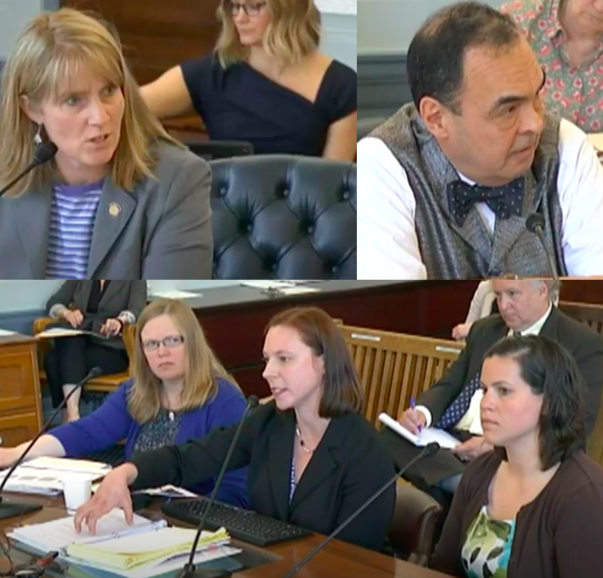
If there’s no money in hand, the Legislature can’t appropriate it and the governor can’t release it, said Cori Mills, speaking on behalf of the Department of Law, which issued the decision through Attorney General Kevin Clarkson.

With the governor likely to veto what he and Clarkson see as unconstitutional forward-appropriation,  the Office of Management and Budget also indicated that unless resolved, funding won’t go out to the districts in July “without a valid appropriation.”

That would mean pink slips unless the court moves with haste.

Sen. Natasha Von Imhof was not convinced of the invalidity of the appropriation done in 2018 for the 2020 budget.

She mentioned the money in the Constitutional Budget Reserve and the Permanent Fund Earnings Reserve Account. “There’s a lot of money in there right now. If the markets tank, there will not be a lot of money in there. If this body decides to move a good portion of the funds into the principal, there will not be a lot of money. So there’s a lot of unknowns at any given time. Whether it’s this body and your assumptions of where the money’s going to come from … So to sit there and say we did not have the money a year ago, we certainly did, and still do.”

Sen. Donny Olson asked if the Fiscal Year 2020 budget is funded by 2020 revenues or are those revenues from 2019. Lacy Saunders  of Office of Management and Budget answered that funds for the 2020 budget come from revenues received in 2020 fiscal year, unless they are drawn from savings.

Sen. Bill Wielechowski asked Cori Mills of the Department of Law why, in the years between 2006-2015, with all the various attorneys general Alaska has had, none of them had ever flagged forward funding as an issue during the multiple bill reviews that have occurred.

Mills responded that those forward-funding bills were different because “they took surplus revenues, put them into the public education fund, and it then sat in the fund, and basically the fund was overfunded for two years worth of education funding, using the revenues that came in that forthcoming fiscal year. It wasn’t the case that it had a future effective date where you are taking future revenues past that forthcoming fiscal year.”

“Why is that different?” Wielechowski asked.

“Because the Constitution envisions an annual process where the Legislature looks at the revenues that are going to be coming in in the forthcoming fiscal year, and they have the responsibility on how those are supposed to be spent,” Mills said. “If they want to overfund the public education fund and have it available for multiple years, that’s fine, but you can’t tie the hands of a future legislature and future governor on revenues that are going to come in past that forthcoming fiscal year. That’s taking revenues that aren’t even on the table yet and setting them aside.”

Mills said that when the Department of Law looked back 10 years, it could not find another example of a Legislature appropriating funds with the same set of facts.

“I think we have an honest disagreement as to the appropriating powers vested in the Legislature that has not been clarified by the third branch of government, which is the courts,” said Sen. Bert Stedman, cochair of the Finance Committee.

“Having a friendly lawsuit…probably makes sense,” said Sen. Von Imhof.

Meanwhile, today representatives from the Governor’s Office toured sites in Wasilla in anticipation of a second special session, which would be called to hammer out unfinished business, such as the amount of the Permanent Fund dividend and, perhaps, education funding.

The sites being looked at are Wasilla Middle School and the Wasilla Sports Complex. Along with Jeremy Price, deputy chief of staff, was a computer/information technology person and Wasilla Mayor Bert Cottle.