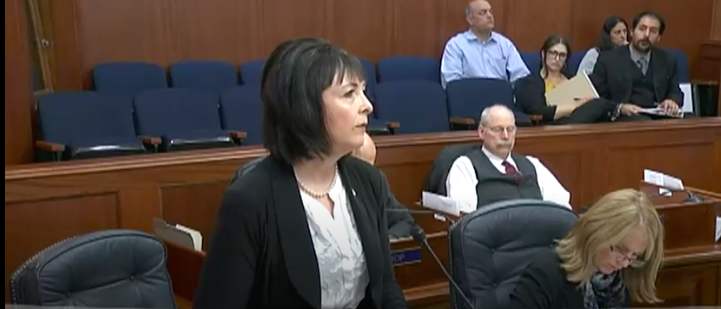
Today’s vote was a bust in the Senate for SB 1002, the bill that would have set the Permanent Fund dividend for this year at $1,600, the same as last year, or even $3,000, the amount it was amended to on the Senate floor.
Sen. Shelley Hughes offered the amendment to make the dividend whole, and her amendment passed, 10-8, increasing the dividend to $3,000, the amount that it would be if the Legislature followed the statutory formula.
Then the bill, as amended, went for the vote of the body, but even winning 10-8 there were not enough senators in the chamber. The Senate needed 11 votes to pass a bill. Both Sens. Tom Begich and Mike Shower were excused.
Shower announced last week he had to return to his job as pilot as he was out of leave time. He is scheduled to return on Friday. The Senate can then rescind its vote and take it up again.
The Legislature has been in special session since May 16 and has yet to pass an operating budget, capital budget, Mental Health budget, the Permanent Fund dividend amount, and has also not included fiscal year 2020 education funding in the budget — that item is heading for a lawsuit against the governor, who insists that the Legislature must appropriate the funds in order for him to distribute them.
Meanwhile, Gov. Michael Dunleavy said earlier this year that the dividend should be $3,000 and he offered a constitutional amendment to the Legislature that would be voted on by the people, setting the formula permanently and removing it from becoming a political football.
The vote failure in the Senate prompted Speaker Bryce Edgmon to take advantage of the situation and say it wasn’t the House Majority’s fault that there is not PFD.
“Today’s vote in the Senate perfectly illustrates why an operating budget has not yet been enacted: debate over the amount of year’s Permanent Fund Dividend is consuming the Legislature. This is why we believe the Legislature should first pass a responsible budget to provide students, elders, and business leaders certainty in the critical services they rely on. Then we can focus on the many important questions surrounding the future of the Permanent Fund,” Edgmon said.
House Minority Leader Lance Pruitt took a more pointed approach, poking back at Edgmon:
“Two months ago, we offered multiple amendments during the budget process that would have ensured that we would avoid costly special sessions. Those amendments were not taken up. Instead, we still stand without an operating budget, a capital budget, a mental health budget, and K-12 education funding,” he said. “The House Majority’s refusal to discuss what’s best for Alaska is doing long-term damage. It is well past time for the 24-member House Majority to pass a dividend, an operating budget, and fund education, as is required by the Constitution.”
House Finance Co-Chair Tammie Wilson said today on Facebook that she supports a full dividend: “I made an effort to bring the discussion on whether or not it was time to look at the formula. The answer was basically no. So until the formula is changed, I will be voting yes on what is currently in law,” she wrote, in response to public criticism of her HB 1002.
First, thank you to all the many folks who have kept me in their prayers and sent well wishes.
Surgery has been scheduled for mid-June to repair and fuse several of the damaged vertebrae in my neck and we feel confident with the medical team and treatment plan for a positive outcome.
Second, all the emails and contacts my office has received just bring home the huge disappointment I have with fellow members of the Legislature who committed to their constituents to be their voice in Juneau. Those legislators have turned their backs on their own constituents and the people of the state to vote on their own personal agenda.
Alaska State Chamber and recent Legislative polls show, in virtually every district in the state, overwhelming support for the full payout the Permanent Fund Dividend and that any changes to the structure of Permanent Fund Dividend only happen with a vote of the people.
Shame on them for not doing as they promised and for not being the People’s voice on the People’s floor.
State Rep. Mark Neuman Proudly serving and supporting my constituents in District 8
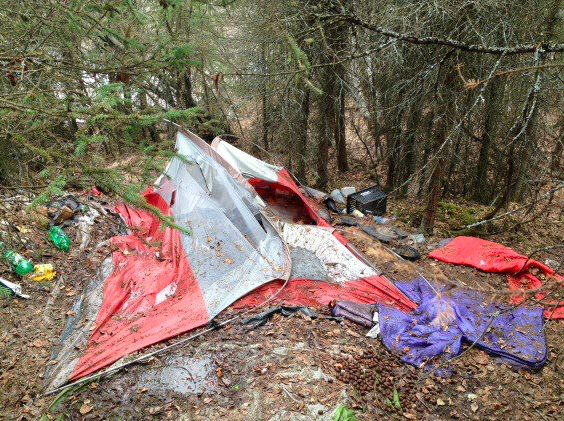
Wow! This out-of-control homeless camp problem on Anchorage’s public lands must be far worse than we thought. Even Democrat lawmakers are teeing off on Mayor Ethan Berkowitz and Police Chief Justin Doll.
In a letter signed by Anchorage Democratic state Reps. Zack Fields, Geran Tarr, Chris Tuck, Harriet Drummond, Matt Claman, and Republican Sara Rasmussen, along with Senate Democrats Sens. Tom Begich, Bill Wielechowski, and Elvi Gray-Jackson, they vigorously slap Berkowitz and the chief around.
“We are writing to urge the Municipality of Anchorage to use its full legal authority to clean up the city’s parks.” the letter states. “Each year, the number and size of encampments with semi-permanent structures, fires, chop shops, and drug paraphernalia continue to grow. These encampments pose an existential threat to our community’s economic future. Based on our understanding of the options available, we feel the city has not used its full authority to clear camps by removing structures and other materials.”
Read the rest of this editorial at the Anchorage Daily Planet:
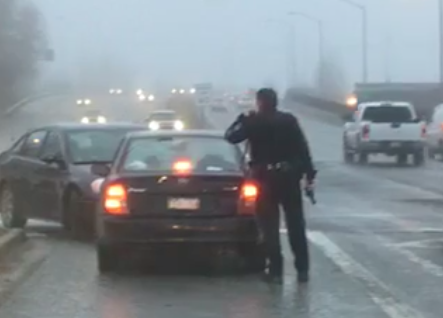
It’s not just anecdotal: Anchorage is so crime-ridden that even the U.S. Department of Justice thinks it’s a crisis. Alaska’s biggest city has joined a list of 9 others added to the National Public Safety Partnership Initiative, due to the city’s sustained levels of violence that far exceed the national average.
Attorney General William P. Barr announced the news on Monday. The cities are:
Police Chief Justin Doll applied to have Anchorage named to the initiative, which will bring substantial crime-fighting resources to his department. To qualify, cities cannot have declared themselves “sanctuary” cities. Anchorage has not quite gone that far, although Mayor Ethan Berkowitz is on record pushing sanctuary initiatives.
But because Anchorage has not officially declared itself as such, it was included in the safety partnership, which provides funding for more aggressive investigation and pursuit of violent criminals, especially those involved in gun crime, drug trafficking and gang violence. Baltimore had previously been disqualified because it had self-identified as a sanctuary city, a safe harbor for illegal immigrants.
“I congratulate Chief Doll and the Anchorage Police Department for their successful application to the PSP program,” said U.S. Attorney Bryan Schroder in a statement. “APD’s dedication to seeking all available resources to help stem violent crime in Anchorage is impressive.”
‘NOTHING TO REPORT’ BERKOWITZ
Mayor Berkowitz issued no statement acknowledging the crime-fighting initiative, which comes as a result of the 2017 executive order by President Donald Trump, charging the Justice Department to lead a national effort to combat violent crime. In June, 2017, the Justice Department announced the formation of the National Public Safety Partnership initiative.
The last public announcement Berkowitz made was to congratulate the city of Coral Gables Springs, Florida for its artwork installation Temple of Time that was ceremoniously burned, ala Burning Man, because … art.
Alaska’s congressional delegation was pleased: “Anchorage is facing alarmingly high rates of violent crimes and addressing this issue will take coordination at the federal, state, and local level—an all hands on deck approach,” the delegation said in a joint statement. “At a time when areas in Alaska are struggling so much with crime, we are encouraged to know the Department of Justice has chosen Anchorage as one of the new PSP sites. We are hopeful that this is the first step of many public safety initiatives from the Department of Justice. We can’t ignore the reality of what’s happening in these communities. As a delegation, we are committed to continuing our efforts in conjunction with the administration to combat the devastating epidemic of violent crime.”
Attorney General William Barr visited Alaska last month but focused most of his attention on the needs of rural communities. The announcement from the Justice Department came just days after he returned to Washington, D.C.
“The Public Safety Partnership is a successful program that directs federal law enforcement resources to the cities where they can have the greatest impact,” Attorney General Barr said in his statement Monday. “These resources help police departments to diagnose where crime is highest—and why—and to find, arrest and prosecute criminals. Several participating cities have already seen dramatic reductions in violent crime over the past two years. As we expand this program to 10 more cities across America, we are determined to replicate that success.”
The main participating Justice Department components include the Office of Justice Programs, Office on Violence Against Women, Office of Community Oriented Policing Services, Bureau of Alcohol, Tobacco, Firearms and Explosives, FBI, U.S. Drug Enforcement Administration and U.S. Marshals Service.
EXCLUSIVE: SERIALIZED TRUE ADVENTURE FOR MUST READ ALASKA READERS
(Editor’s note: Must Read Alaska presents a Fathers Day special for readers, and we’re getting a jump on it with Chapter 1, Part 1 of Alaska Raw by Bob Lacher, in serial format over the next several days. You can get a copy of the book through the link below. Check back for more sections of Chapter 1, which will take us about seven or eight posts to complete. Enjoy this introduction and the beginning of Chapter 1, followed by an earlier MRAK review of the book.)
INTRODUCTION BY THE AUTHOR
Living in a way you can be certain that every decision and every move holds urgency and purpose…is being alone at 30 below zero and looking out over a blowing snow scape where the horizon has disappeared and the dimming light is replaced by a shifting, fluid cruelty of whiteness, where you cannot tell where the earth ends and the sky begins and, right then…you feed yourself into it.
It’s a spiritual place of such enormous wonder and intensity because you can’t be sure how things will go. And it is because nothing is certain, that so much more is possible.
I have spent much of my life flying and hunting in some of Alaska’s most remote parts, and in some of the most brutal conditions it could serve up. Hunting for many of us is cultural. When I was a young boy it was more than that. Hunting was connected by a straight line to eating and therefore it was important to become good at it.
My motivation in writing about these experiences was to share a place and time that few of us will ever get exposed to or can even imagine. Alaska is unique by virtue of its extremes of topography, of climate and often…its people.
Growing up in Alaska was a world removed from the pedestrian-proofed, asphalt-framed cities that too many of us blindly suffer. Urban life, as it has evolved, brings with it a dullness of routine that acts on some of us as a slow poison.
This is a book about cutting your own trail. It is my antidote.
I have always believed that if you surround yourself with familiar accoutrements, and you retreat into a cluster of the likeminded, and on the weekends you do what they do, and you read what they read, and you chant when they chant, and you nod in agreement when they nod…something of you has vanished. We all get but a single stab at this thing. If we are fortunate, we find a few precious moments of pure authenticity.
I’d rather beat 7,000 feet on a snowmobile trying to plot a route through glacier crevasses, or pioneering a crude landing strip high on the spine of a foreboding mountain so I can hike a peak that’s never had a man’s boot on it. To understand some of this book, it helps to understand that for a few of us, happiness comes from the uneasiness of the unknown rather than the comfort of the familiar. This is a book about living those rare moments of authenticity.
It’s a book about how small we really are, with stories laced with the sharp edges of risk and unknowable external influences. For a good part of my life that has been my oxygen and I want to share some of it with you now.
Bob Lacher
CHAPTER 1 PART 1 – THE FIRST ALEUTIAN – UNIMAK ISLAND (2004)
As my father trailed behind me just a couple of paces, I noticed when I glanced behind to check his progress that his head was down and it looked as though he was trying to neatly trace my footsteps as we picked our way across the heavily undulating tundra. There was a small herd of caribou about 1,000 yards distant and one of the several bulls was big. Of all the possible thoughts I could have had during that moment of a final stalk, of tactics, strategy, stealth and focus, my mind instead went to a much earlier time when I was a small boy of ten or twelve, moose hunting with my father.
I remembered practicing being as quiet as possible, by shadowing his exact boot print as I set each foot down right where he had, staring at little else beyond his tall legs filling my field of view. I mimicked how he picked a spot to land his foot and then moved ahead carefully, softly. I would do anything to avoid earning a scowl from him by mis-stepping and snapping a twig, or crunching some dry leaves, or just heel striking too loudly, at which time my father would stop, turn his head backward to me, and give me “the look”. Of course he never really needed to give me the look, my teeth being gritted in self disgust the instant the offending sound came off my boot…holding my breath…as though that would reel back in something of the sound, or cause him to notice it less.
Those times when I had been sloppy and committed the noisy deed, I cringed inside and just waited for his legs to stop moving, his head to pivot backward and down to me, his message delivered once again, loud and clear, with one strained rogue eyebrow and scrunching of crow’s feet framing his eyes. But back then a mistake was a big deal as it may have meant a missed opportunity that was connected to how well we would eat that winter. He was a serious man on a serious mission. I did the best I could, always looking for his approval.
As we stalked the caribou this time, the significance of this role reversal was hard to avoid. My father was trying hard to follow exactly where I had made trail, not so much to maintain stealth in this case, as the Aleutian wind was blowing off the ocean at a steady 40 MPH masking every bit of our noise – but simply for his own security. His 70-year-old body sensing that if I stepped there, he could too, and without the risk of an unrecognized hole or rolling an ankle off an unstable wad of tundra. It was tough walking that day, but wherever I led he followed.
This caribou hunt was especially memorable for me for many reasons. It has some twists, turns and diversions as you will see. It begins with a plan to hunt Unimak caribou in late September. Frank, one of my hunting partners, was along with me on a trip I had planned specifically for my father. Frank owns and flies a Maul, a four place aircraft. I would be making the trip in a Super Cub which seats two. Both aircraft are high performance “Bush”planes and both can carry big loads of fuel and gear.
Our destination was the first island on the Aleutian Chain, called Unimak, a trip that is 750 miles from my home in South Central Alaska. To give an idea of the scope of this flight, it is 100 miles less than Anchorage to Prudhoe Bay, or about the same as Orlando to Washington DC, or from the California/Oregon border all the way to Mexico. It’s no small undertaking in a small aircraft. There are no Jiffy Marts on the way to Unimak.
There are a couple of places to ditch for the night, if you really wanted to, and fuel can be had at the villages of Iliamna and King Salmon near the halfway point. Our trip could not be made straight line, at least not made safely, since it would take us over too much ocean with no place to land in the event of problems. The route was a familiar one that I had flown on other hunting trips many times before…two hours gets you through the jaw-dropping peaks tightly lining Lake Clark Pass and down the lake’s glorious, deep aquamarine blue length. Swing the compass left slightly and continue towards Lake Iliamna where the towering mountains begin to diminish and melt into the rolling tundra. From there it’s onward to the small and isolated aboriginal villages of Iguigig and Nondalton.
The next enclave coming into view through the windscreen is King Salmon, the usual place for a piss break after three and a half hours in the skinny, thinly padded Super Cub seat. That’s a good time to check the oil and look for nuts and bolts that rattled themselves off the airframe. King Salmon is home to the twenty-five dollar ham- burger, a bargain that cheerfully sinks in as you take on a load of seven-dollar-a-gallon aviation fuel. Our two aircraft held over 130 gallons in the four wings so to fill them up there you better have a pocket full of Ben Franklins and no aversion to shedding them as though they were cappuccino change. Food and fuel at this midpoint can run a cool $1,000.
Things were going well. We had a 20 MPH headwind coming through Lake Clark Pass that changed to a stiffer 30 MPH westerly crosswind as we lifted off from King Salmon with fat tanks of gas and better legs. The head wind slowed everything down and added another hour to the plan but it was a steady, predictable wind you just put your shoulder into, dial up a little more throttle and settle in for the grind.
It was much better than the thrill-ride blows that can come in from either the Pacific or the Bering side of this forbidding stretch of volcanic coastline that stretches nearly to Russia. The type of wind that can be experienced on “The Chain” requires serious skill from the pilot to keep the airplane top side up.
Dad was riding shotgun in Frank’s plane, a more comfortable and spacious bird than the Cub. This gave me more room to pack camping gear for the three of us. Lifting off from King Salmon I always prefer to track more west than the direct plotted route south/southwest. I want to get to that awesome Western Alaska coastline as soon as possible and begin one of my all-time favorite pastimes, beach combing for dead things.
Departing King Salmon we angled over the barren tundra for 20 minutes to the coastline, met it, and then turned more southerly. We dropped down on the deck and flew low along the breaking waves of the Bering Sea. Nowhere else on earth can you fly along a black sand beach for 400 miles at 75 feet off the water, scouting for dead walrus ivory and whale bones. The pilot’s entire journey down the Alaska Peninsula can be hugely stressful in different places. It’s not for everybody. The passes are often wracked by high wind; the ceilings are most often low and spitting rain. Fog to the ground can have you flying by braille, looking for the worm holes to advance a half mile at a time.
We had some of all of that. But when you hit the coast just past King Salmon, the pall of continuous mental heavy lifting usually eases somewhat. Nearly the entire 400 mile coast is your runway, if you had to put it down, or if you simply wanted to stop the clock for a while and take in a trek. Land anywhere, eat, drink, rest, listen to the breakers crashing, fill your lungs with the salt air and decomposing kelp and sea grass, watch the birds, the pods of seals or observe huddles of walrus.
You have arrived at one of the most breathtaking marine environments anywhere in the world, and you have hundreds of miles of it all to yourself, and I do mean all to yourself. You will see no one else.
You are as infinitely mobile as an eagle and your full accommodations for camping are all packed tightly in the back seat and the trunk. The sense of freedom and discovery is off-the-charts.
That day our two aircraft were flying paired up fairly close, slipping down the beach, lazy as she goes, two notches of flaps to dirty up the slipstream, throttled back to 55 percent power, the tail a bit low and dragging through air, bumping along in an easy chair with wings and without a worry in the world. We flew past Pilot Point and on to Port Heiden.
Large pods of seals speckled the sandbars surrounded by endless crisp white breakers as far as the eye could reach. I brought the airplane up a few hundred feet to give the seals a break from the propeller noise we were about to greet them with. The seals noticed us but just rolled on their sides in the sand unbothered.
A letter signed by mostly Democrat legislators takes Mayor Berkowitz, a fellow Democrat, to task for allowing criminals to run amuck in Anchorage.
Spearheaded by Rep. Zack Fields of downtown District 20 and formerly employed by the Alaska Democratic Party, the letter is addressed to both the mayor and Chief of Police Justin Doll. Taking a hard line against vagrancy and drug-addled criminals, it could have just as easily been written by Rep. David Eastman of Wasilla, a hard-right Republican.
“We are writing to urge the Municipality of Anchorage to use its full legal authority to clean up the city’s parks. Each year, the number and size of encampments with semi-permanent structures, fires, chop shops, and drug paraphernalia continue to grow. These encampments pose an existential threat to our community’s economic future. Based on our understanding of the options available, we feel the city has not used its full authority to clear camps by removing structures and other materials.
“Squatters/campers possess few legal rights that allow them to establish or maintain encampments on public land. The 9th Circuit has established the most restrictive case law related to municipal authority to address squatters/camp holds that local governments may not prohibit sleeping in all public spaces if there is no indoor shelter space for indigent individuals (Martin v. Boise). The Municipality of Anchorage has ample space for individuals to sleep outside, including thousands of square acres in Chugach State Park. Martin v. Boise does not preclude localities from removing structures or otherwise abating waste left by drug addicts, thieves, and other squatters/campers. So long as Anchorage has some place individuals can sleep outside, case law does not limit removal of waste from the park system.
“It is important for all of us to recognize the distinction between truly homeless people and the criminals who have exploited weaknesses in enforcement to establish camps in the park system. For those setting up camps to do drugs or create places for partying, we must address the problem with a different approach. We know that criminal activity and encampments established by drug addicts will not be solved or addressed at all by expansion of housing. While ‘housing first’ is part of the solution to homelessness, it will not fix the problem of illegal encampments. To the contrary, failing to enforce prohibitions on encampments sends criminals a message that they can squat, build structures, and engage in criminal activity with impunity.”
The letter goes on to say that lawmakers in Juneau are hearing from constituents that they don’t feel safe in the parks or on the trails, and ends with a request that the city start clearing the encampments and dispose of the waste immediately.
It is signed by Reps. Zack Fields, Geran Tarr, Chris Tuck, Harriet Drummond, Matt Clamon, Sara Rasmussen, and Sens. Tom Begich, Bill Wielechowski, and Elvi Gray-Jackson.
Fields illustrated his frustration on Facebook with a page from the Monday edition of the Anchorage Daily News, with stories about shootings on or near Chester Creek Trail.
Not all agree that clearing the camps is a good idea. The ACLU of Alaska sent a letter to Mayor Berkowitz in 2016, asking his administration to cease evicting people from homeless camps while Anchorage’s shelters are full.
“We recognize that solutions to homelessness take time but are concerned about the constitutionality of evicting people who do not have anywhere else to go,” the ACLU wrote.
Anchorage police say the dead man in a shooting on Sunday was 18, not a juvenile, as earlier reported. It also appears that the other person taken to the hospital was not the shooter, because detectives are still on the hunt.
Police say that their initial investigation has found that an altercation between a group of young people started in the sports fields near Sullivan Arena, and ended in the wooded area near the Chester Creek Trail along 20th and C Street. The suspect fled on foot after shooting the two victims multiple times.
The deceased teen’s identity has not been released, but detectives are aggressively working at identifying and locating the suspect. The shooting took place at about 6:20 pm on Sunday.
THE OPENING BID FOR THE PFD IS $1,600, BUT LIKELY TO BE AMENDED
Senate Bill 1002, Permanent Fund dividend payout legislation, was the subject of thoughtful discussion in Senate Rules Committee today, before being sent to the Senate Floor for consideration on Tuesday’s calendar.
Sen. Bert Stedman of Sitka drew the short straw to explain how that number was reached, where the funds would come from, and the rationale behind it.
Last year’s dividend was $1,600, he explained. Lawmakers just didn’t want to go lower than last year. “There is no magic to the $1,600,” he said, other than the sense that the previous amount under discussion — $1,200 — was too low.
Gov. Michael Dunleavy has said that the statutory formula for the dividend would mean $3,000 dividends this year, but some senators and House members are saying that, considering the State’s fiscal situation, that is unwise.
Stedman pointed out that the vast majority of the committee was born in Alaska, and some before Statehood, and they grew up during a time before oil, when “times were tough, but they survived just fine.”
Then oil started flowing: “We lived in a very fruitful time period,” he said, and the oil revenues made a lot of improvements to Alaska to bring it up to on par with the rest of the United States.
“We set aside $60-65 billion. If we now devour our current revenue and start eating our seed capital, we’re hurting our descendants,” Stedman explained.
SB 1002 proposes three funding sources for paying the $1.07 billion payout for the dividend, and none of those sources are eating into the Earnings Reserve Account: $770 million would come from the General Fund, $172 million would come from the Statutory Budget Reserve, draining that account, and $128 million would come from the Higher Education Fund, although the amount would change depending on how many Alaskans end up qualifying for this year’s dividend.
The way Stedman explains it: All funds are General Funds, which comes from taxes on resources, mainly oil extraction. Lawmakers can’t separate out one dollar from another, and only pay dividends from exact dollars that come from oil wealth. The funds are comingled.
Stedman, who is co-chair of Finance, wants to stay out of the Earnings Reserve Account of the Permanent Fund, because dipping into that fund would, for one thing, send a signal to Permanent Fund managers that the Legislature is coming after the account, and then managers would have to invest with that in mind; they’d hoard more cash and change their investment targets and asset allocation modeling to adjust to a potential raid on the fund, or “cash call,” as Stedman put it.
Legislators passed SB 26 last year, which makes a “structured draw,” or a set draw on the earnings of the Permanent Fund of 5.25 percent this year and 5 percent in subsequent years. That is in statute, Stedman explained. He also acknowledged there is a another Alaska Statute that addresses how Permanent Fund dividends are to be calculated, and that statute would set this year’s check at $3,000. “Its common for people to talk about one statute and ignore the other,” Stedman said, acknowledging that there are two statutes in conflict with each other.
General fund operating budget is $4.4 billion this year, not counting the dividend. The dividend at $1,600 represents one quarter of all other obligations, Stedman said.
The discussion will continue on the Senate Floor tomorrow when the bill is brought back. All members of the Rules Committee signed to move it to the floor, with Sen. Mia Costello the only one recommending changes.
If the $1,600 dividend passed both bodies, it’s likely the governor will veto it, along with other spending, and ask the Legislature to come back into session to try again.
“This bill kills the Permanent Fund Dividend as we know it. The PFD is your share of Alaska’s mineral wealth, and there should be no change to the dividend without a vote of the people,” said Gov. Dunleavy. “That’s what I promised on the campaign and that’s the promise I intend to keep. I cannot and will not support this legislation.”
“SB 1002 severs the dividend from the Earnings Reserve Account and market activities, and further dismisses the statutory formula of the dividend that has been in place for nearly 40 years. As proposed, the legislation ignores longstanding laws and overwhelming public support for a full PFD. Alaskans have been diligent in providing testimony and urging the legislature to stop using the Permanent Fund as a political piggy bank to support a larger government,” his office said in a press release.
“Let me be clear, this is a non-starter. If passed, I will veto SB 1002. I encourage an amendment that would restore a full PFD to the people. Follow the law— that’s what Alaskans have demanded and deserve,” said Governor Dunleavy.
The MRAK Almanac is your place for political, cultural, and civic events, events where you’ll meet political leaders or, if you are interested in getting to know your state, these are great places to meet conservative- and moderate-leaning Alaskans.
6/3: A great day for viewing the famed bore tide in Turnagain Arm. The bore tide tables online are in disagreement — either the wave is set to arrive at Beluga Point at around 3:30 pm, followed by its arrival at Bird Point half an hour later, or it arrives at Beluga Point at around 5 pm, and Bird Point at 5:30ish. Timing is even more approximate than we thought, so arrive early. Weather: High of 64 degrees with a good chance of bore tide surfers. Note: Spring tides like this one come right around the new moon, with the highest variation between low and high tides.
Can’t make it? Live vicariously here:
6/3:Juneau Assembly will begin at 7 pm in the assembly chambers. Ordinances and budget appropriations set to be considered by the Assembly at this meeting appear at this link.
6/3: The Alaska LNG Project Advisory Committee holds a meeting in Nikiski at 6 pm. The public is invited to attend this meeting, and the committee will hold a period of public testimony. More info here.
6/3: Down Memory Lane: Educational conversation with former UAF Museum Director and Professor Aldona Jonaitis. Event is free and begins at 7 pm in the Murie Auditorium.
6/3: Anchorage Chamber of Commerce has its 26th Annual Military Appreciation Luncheon. This is a registration-only event, more details here.
6/3: The Federal Subsistence Board holds a public hearing regarding a proposal to close federal lands in Unit 13 to the hunting of moose and caribou, with the exception of qualified subsistence users. Testimony may be given in person or over the phone. Visit this link for details.
6/3: The North Pole City Council will hold a regular meeting at the council chambers. Agenda includes approval of the 2019-2020 City of North Pole Healthcare Plan as well as a new advertising contract. Agenda packet here.
6/3-6/10: The North Pacific Fishery Management Council will meet in Sitka. The Council oversees the 900,000 square miles composing Alaska’s Exclusive Economic Zone, primarily managing the harvesting of groundfish such as cod, pollock, and halibut. More info here.
6/4: The Valdez City Council will gavel in for a regular meeting at 7 pm, following their 6 pm work session. Click herefor the full agenda.
6/4: The Sitka Summer Music Festival will begin, set to run the entire month of June. Visitthis link for more details.
6/4:100th Anniversary of Women’s Right to Vote Celebration hosted by Anchorage Republican Women. Will take place at the Delaney Park Strip Veterans Memorial. Visit this link for more info.
6/4: The Alaska Army National Guard will hold a community recruiting event in Anchorage from 11 am – 4 pm. Free BBQ and outdoor sports games will take place, and all are invited to attend. Facebook event here.
6/4: Regular meeting of the Anchorage Assembly. The assembly will be considering several ordinance changes, including property sales by competitive bid and alterations to city trash disposal policies. Gavels in at 5 pm in the assembly chambers, read the full agenda here.
6/4: Lunch on the Lawn at the Anchorage Museum. Tuesday will be the first happening of this weekly summer event featuring outdoor family activities and live music. Free admission, food truck lunches available for purchase.
6/4:Mat-Su Borough Assembly regular meeting at 6 pm in the assembly chambers (located in Palmer). View the detailed agenda packet here.
6/4: The Kenai Peninsula Borough Assembly will hold a regular meeting at 6 pm in the Betty J. Glick Assembly Chambers. The assembly will hold public testimony on the FY2020 budget, as well as a proposal to levy a 12 percent tax on temporary lodging in the borough. Visit this link for more info.
6/4-6/6: The U.S. Missile Defense Agency will hold public hearings regarding their proposal to significantly expand restricted airspace surrounding Clear Air Force Station (located approximately halfway between Nenana and Healy). Visit this link for meeting locations and information.
6/7: Deadline to submit photos to Senator Dan Sullivan’s Frontier in Focus photo contest. Send photos of your best Alaskan summer scenery to Senator Sullivan at [email protected].
ALASKA HISTORY ARCHIVE:
June 3, 1997: Alaska politician John Butrovich dies in Fairbanks at 87 years old. Butrovich was born in an Interior Alaska mining camp in 1910, and served in the Alaska Territorial Senate as a Republican for fifteen years. In 1958, he ran for Alaska Governor, but lost to Democrat Bill Egan. He later served for another 15 years in the Alaska State Senate.
June 3-4, 1942: Battle of Dutch Harbor takes place, killing 43 Americans and injuring 50. The battle began with an aerial attack from the Japanese Navy on the Naval Operating Base and U.S. Army Fort Mears in Dutch Harbor, though the cloudy conditions on this day prevented many of the Japanese bombers from ever reaching their target. This event signified the start of the Campaign for the Aleutians of World War II.
June 4, 1989: Tuesday is the 30th Anniversary of the Tiananmen Square Protests in China. These protests garnered worldwide attention when the communist-controlled Chinese military intentionally used lethal force to kill hundreds of protestors blocking the military’s path through the Chinese capital of Beijing. Some one million Chinese citizens participated in the protests, calling for expanded democracy and basic protections such as freedom of speech and of the press.