The Juneau Assembly this week opted to delay its decision on whether to adopt ranked choice voting for local elections. Rather than voting on the proposal later this month, Assembly members agreed to hold off until November — after the city’s upcoming municipal election on Oct. 7. Enacting the ranked-choice voting system could invigorate the conservative base in advance of the elections.
The ordinance under consideration would introduce ranked choice voting for municipal elections beginning in 2026. Under this system, voters rank candidates in order of preference rather than selecting just one. It is already in use for Alaska’s statewide elections, having been implemented in 2022, though it has faced a repeal effort that almost succeeded in 2024, and a current repeal effort.
Assembly member Ella Adkison, who introduced the ordinance, has been a vocal advocate for its adoption. But members of the public pushed back on the idea that such a radical change should be made without a public vote.
Public testimony on the ordinance is still scheduled for Aug. 18. If approved, Juneau would become the first major city in Alaska to adopt ranked choice voting for its municipal elections. Anchorage Assembly is also considering enacting the irregular voting system that it, too, would enact via ordinance.
Left-wing activist Katie Wilson emerged as the top vote-getter in Seattle’s mayoral primary, edging out incumbent Democrat Mayor Bruce Harrell.
Wilson is co-founder of the Transit Riders Union and a former writer for The Stranger newspaper. She secured 46.21% of the vote in the nonpartisan contest, compared to Harrell’s 44.86%, with the two advancing to the November general election under Seattle’s top-two primary system.
Katie Wilson
Harrell, who has been mayor since 2022, is widely seen as a more moderate Democrat, while Wilson’s is being compared to Zohran Mamdani, the socialist nominee who won New York City’s Democratic mayoral primary this summer.
Even though they are both Democrats, Wilson has the support of the King County Democratic Party and several Democratic district committees. Her campaign is centered on taxing the rich, housing, transportation, and progressive governance.
A June op-ed in The Urbanist called Wilson “a progressive who would break a long run of timid centrist leadership” in Seattle, comparing her rise to that of Mamdani and Minneapolis socialist candidate Omar Fateh.
Like those candidates, Wilson is seen as a challenge from the Left to establishment Democrats.
While Harrell maintains a base of support among more centrist voters and has overseen a relatively stable term during a tumultuous time for the city, he has faced criticism from both the right and the left. Conservatives blasted him for describing a Christian concert and pro-life event in the city as an “extreme right-wing rally.”
Still, a victory in November would make Harrell Seattle’s first two-term mayor since Greg Nickels left office in 2009.
Tuesday’s primary also delivered setbacks for other incumbents. Republican City Attorney Ann Davison trailed progressive challenger Erika Evans, a former federal prosecutor, in her re-election bid. Evans left the US Attorney’s Office after President Trump’s second-term immigration policies took effect, and she has sharply criticized Davison’s tough-on-crime stance. Evans supports a public health and social service-based approach to crime, including expansion of the Law Enforcement Assisted Diversion program.
A key message of Evans’ campaign, as explained by The Stranger, has been that Davison is “Not Like Us,” highlighting the city attorney’s party affiliation in a city where Republicans are a minority.
Wilson’s strong showing comes amid a series of left-wing primary wins in Democratic strongholds, including Mamdani’s victory in New York and the July endorsement of socialist Omar Fateh over incumbent Mayor Jacob Frey in Minneapolis by the local Democratic Party. In Anchorage, the pattern is the same: MayorSuzanne LaFrance, who changed her affiliation to undeclared, is the Democrats’ candidate.
In 2009, Alaska Housing Finance Corporation released a 10-year plan for how to address homelessness. This plan defined how taxes would be used to reduce homelessness by 50% in a 10-year period. Overall, the plan was estimated to cost about $300 million over 10 years. The plan also included evaluations of metrics each year to determine if the plan was in fact working as intended.
Here we are in 2025, having essentially followed AHFC’s spending plan as precisely as possible. However, we did not follow the guidance of the plan in terms of evaluating metrics to determine if the plan was working.
In fact, instead of a 50% decrease in homelessness over 10 years as the plan stated was the goal, we have a 50% increase in homelessness, while spending almost exactly as the plan originally laid out. So instead of halving homelessness in 10 years, we almost doubled it in five years.
AHFC is designated as the entity which is supposed to find and report this data to the governor. The agency laid out a plan in 2009, and now when the plan is failing us it is silent. Prior to implementing this spending plan, Anchorage spent far less on homelessness each year with similar results as we have now. Arguably, the results were better then. When will we accept reality and lay out a plan that we actually stick to? Why continue spending money on a plan that hasn’t worked out even a little bit?
The author is an Alaskan-grown small business owner/operator with a background in software engineering. Experience includes work at the Hanford nuclear site in Washington state and contract work for GCI, ConocoPhillips, and Alaska DOT.
Alaska imports $3 billion in food annually through a fragile supply chain that could break down with little warning. Less than five percent of our food is produced in-state, despite our massive agricultural potential. To address this, Governor Dunleavy issued Executive Order 136 to create a standalone Department of Agriculture. It was a necessary, constitutional step toward food security, but the Legislature rejected it on March 19 by a vote of 32–28. That vote wasn’t about constitutional efficiency; it was about politics.
When the governor reissued the proposal as Executive Order 137 during the August special session, legislative leadership in both houses refused to even introduce it. That obstruction violated both the separation of powers and the governor’s constitutional authority under Article III, Section 23.
The Alaska Food Strategy Task Force’s February 2024 report made the need for a Department of Agriculture clear. With over 365 million acres of land and a growing agriculture sector, Alaska has the potential to feed itself and even export food. But right now, agriculture is buried within the Department of Natural Resources, where it competes with oil, gas, and mining priorities. Responsibilities for agriculture are also scattered across multiple agencies, leading to duplication, inefficiency, and neglect. A Department of Agriculture would consolidate these functions, streamline regulation, and support local producers more effectively. It would, in fact, make government more efficient.
All 50 states already have dedicated agricultural departments. Many operate with far larger budgets than the modest fiscal note that accompanied EO 136. Even redirecting a small share of our $3 billion in food imports into local production would grow our economy, create jobs, lower poverty, and improve access to fresh, healthy food.
House Bill 140, introduced just two days before the rejection of EO 136, would have created the same department through the legislative process. But that bill never even received a hearing. So this is not a dispute over executive authority versus legislation. The problem is a Legislature unwilling to work with the governor to improve food security for Alaska.
The Alaska Constitution gives the governor the authority to reorganize the executive branch for more efficient administration. The Legislature can disapprove an executive order within 60 days of a regular session, but that rejection must be based on efficiency—not politics or policy disagreements. The rejection of EO 136 failed that test.
Lawmakers raised three objections: the projected $2.7 million annual cost, a preference for passing a bill rather than an executive order, and a desire for a broader food security focus. But the cost was later challenged, and the administration found a way to make it cost-neutral. Preferring a bill over an executive order is a procedural opinion, not a constitutional standard. And wanting a broader mission does not make EO 136 inefficient.
The records of Alaska’s Constitutional Convention are clear: executive reorganization is an executive function, not a legislative prerogative. Legislative disapproval is meant as a check, not a tool for micromanaging policy or blocking executive action. Rejecting EO 136 for political reasons is a violation of the Constitution’s intent.
Gov. Dunleavy then included EO 137 in the Aug. 2 special session. Legislative leadership refused to introduce it, claiming it couldn’t be submitted during a special session or reissued at all. Both claims are constitutionally unfounded.
The Constitution states that reorganization plans may be submitted “during the first 60 days of a regular session, or a full session if of shorter duration.” That language does not prohibit submission during a special session. If a special session is shorter than 60 days, it qualifies as a “full session of shorter duration.” I cannot imagine a session of shorter duration that is not a special session. This interpretation aligns with Alaska courts’ common-sense approach to constitutional language.
And nothing in the Constitution prohibits a governor from reissuing an executive order. Citing Mason’s Manual – which governs legislative motions, not executive authority – is a smokescreen and thus irrelevant. The governor’s decision to reissue the order is justified, especially given the Legislature’s refusal to act on HB 140 or provide valid constitutional reasons for rejecting EO 136.
By refusing to introduce EO 137, the presiding officers of the House and Senate violated the process outlined in Article III, Section 23. That section requires the Legislature to hold a joint session and vote to disapprove. There is no constitutional authority for leadership to block introduction or return the order without debate by the members of both bodies.
This action undermines the separation of powers and sets a dangerous precedent. It allows personal disagreement to override constitutional duties. The governor is correct to consider EO 137 effective unless it is introduced and a resolution disapproving it is debated and voted on in a joint session, as required by law.
The framers of Alaska’s Constitution envisioned a strong executive branch, capable of efficient administration. Legislative review was intended as a safeguard, not a weapon. Refusing to consider EO 137, combined with the rejection of EO 136 and the failure to hear HB 140, looks less like reasoned policymaking for Alaska and more like obstruction driven by personalities.
Alaska’s reliance on imported food is a growing risk. Creating a Department of Agriculture is a strategic move toward food security, economic diversification, and improved public health. The governor acted within his constitutional authority. The Legislature did not.
Governor Dunleavy should continue pressing forward, using the Food Strategy Task Force’s findings to build public support and, if needed, seek a judicial ruling. The people of Alaska deserve food security. They also deserve a government working for Alaskans that respects the Constitution, not one that rewrites it on the fly for political convenience.
Rep. Kevin McCabe serves in the Alaska Legislature on behalf of District 30.
The Nova Scotia government has enacted a ban on public access to the province’s forest areas, citing extreme wildfire risk amid ongoing hot and dry conditions.
Effective 4 pm on Aug. 5, the ban applies to nearly all recreational activities in the woods, including hiking, camping, fishing, and the use of bikes or off-road vehicles such as ATVs.
The restrictions cover both the government’s land and private land and will remain in effect until Oct. 15, or until the province sees significant rainfall. Anyone caught violating the ban faces a fine of $25,000.
There are limited exceptions. Camping is permitted only in official campgrounds, and landowners may access and use their own private property, but they may not host others on their land if it lies within wooded areas.
Beaches and open park spaces that do not include forests remain open to the public, but all trail systems running through wooded land are now off-limits.
For commercial operators such as forestry and mining companies, work requires special permits, often with a requirement to limit activity to nighttime hours, when fire risk is supposedly lower.
The oppressive measure follows a province-wide burn ban issued on July 30. Both measures come in response to what provincial officials describe as tinder-dry conditions and a worrisome lack of rain in the forecast. The province has recorded approximately 100 small wildfires this season, and the government says it is trying to avoid a repeat of the 2023 wildfire season, which caused widespread evacuations and damage.
The move is reminiscent of laws enacted in California during the Covid pandemic scare, when people were arrested for going to the beach or even surfing the waves.
The search for a new manager to lead Juneau International Airport has entered a pivotal phase, with Andres Delgado, the airport’s current operations and maintenance superintendent, now standing as the sole active applicant for the position.
The vacancy was created earlier this year following the retirement of longtime Airport Manager Patty Wahto. The Airport Board engaged ADK Executive Recruitment to lead the national search and began screening candidates in coordination with the Hiring Committee. After an initial round of interviews, two finalists were invited to Juneau for an in-person process held June 11–13. However, neither candidate was selected to fill the role.
Delgado, a well-known figure within the airport’s leadership structure, submitted his application shortly before the finalist interviews but was not considered at the time due to timing. When the original search failed to yield a hire, the board decided to interview Delgado on July 21.
At present, he remains the only active applicant for the position.
With Interim Airport Manager Dave Palmer scheduled to step down later this month, the Airport Board is now evaluating next steps. During its Aug. 7 meeting, the board is expected to discuss three potential options in executive session:
Appoint Andres Delgado as the new Airport Manager. While a formal appointment is not expected at the Aug. 7 meeting, the board may choose to authorize the Human Resources and Risk Management director to explore the terms of a conditional offer to Delgado, pending full board approval.
Reengage ADK Executive Recruitment to reach out to additional candidates who previously expressed interest but did not complete the screening process. This would allow for a renewed round of interviews and potentially reopen the finalist phase.
Repost the position and accept new applications. ADK has offered to conduct a second round of recruitment for a reduced fee of $4,000 — down from the original $6,000 — or the board could opt to manage the posting through the City and Borough of Juneau’s internal recruitment process.
Should the board decide to pursue additional recruitment, or if Delgado declines an offer, the board would also need to appoint a new interim airport manager, as Palmer has indicated he will not remain in the role beyond his original term.
The Airport Board is expected to provide direction on the next steps at the Aug. 7 meeting.
Health and Human Services Secretary Robert F. Kennedy Jr. continued his tour through Alaska Wednesday with Sen. Dan Sullivan and Sen. Lisa Murkowski.
Kennedy visited the federally funded Chief Andrew Isaac Health Center in Fairbanks, meeting with tribal leaders and touring the Native healthcare facility. He was joined by Alaska’s US Senators Dan Sullivan and Lisa Murkowski.
Outside the building and along the road, tensions rose as dueling groups gathered. Protesters who are anti-Kennedy shouted “Vaccines save lives!” in opposition to he health secretary’s cancellation of funding for research promoting the controversial mRNA vaccines, which have been linked to cases of myocarditis (inflammation of the heart muscle) and pericarditis (inflammation of the sac surrounding the heart), particularly in male teens.
One man was detained by officers after making a move toward Kennedy that appeared aggressive. The man had been yelling about genocide in Palestine.
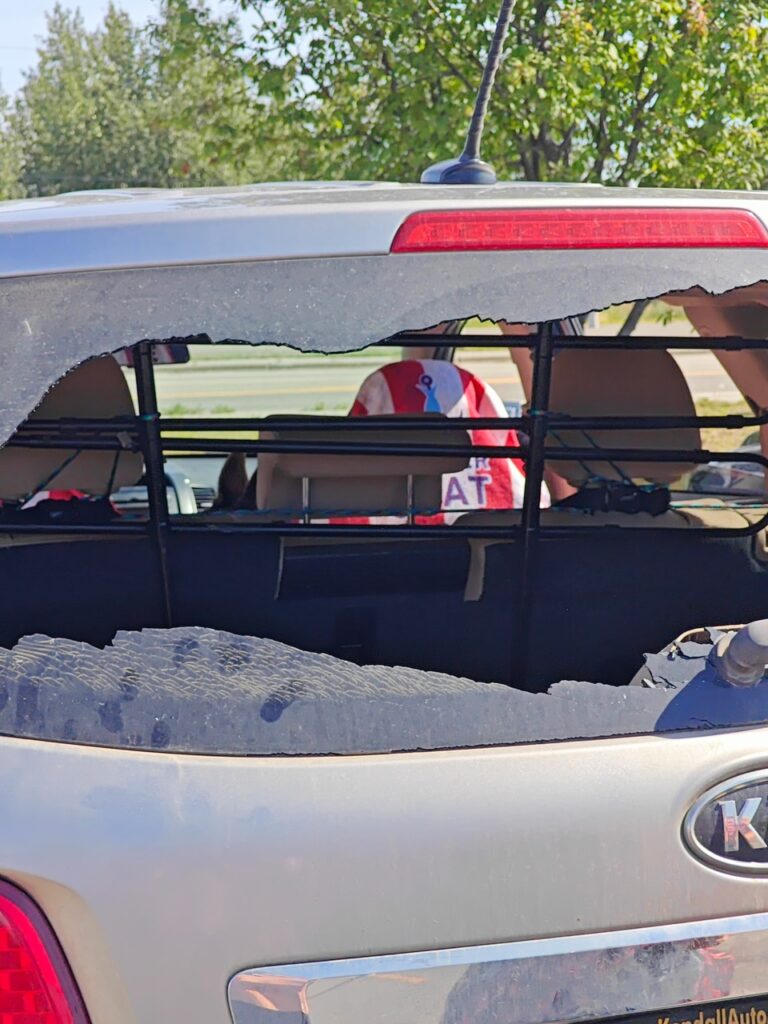
Meanwhile, pro-Trump demonstrators waved American and Trump flags. One Trump supporter, an older woman with a service dog, returned to her car to find a window smashed out.
A window in a vehicle belonging to a Trump rally participant was smashed.
Anti-Trump protesters seen near the car of a Trump supporter that had the window smashed just before the incident in Fairbanks.
A handful of protesters were on hand to protest the arrival of Robert F. Kennedy Jr. and Alaska senators.
This scene mirrored Kennedy’s stop in Anchorage on Tuesday, where similar liberal protesters greeted him.
Pro-Trump rally was also part of the day in Fairbanks.
Following the Fairbanks clinic visit, Kennedy, Sullivan, and Murkowski took questions from the press. Kennedy said the trip was focused on listening to tribal health leaders and understanding the challenges of healthcare delivery in remote communities.
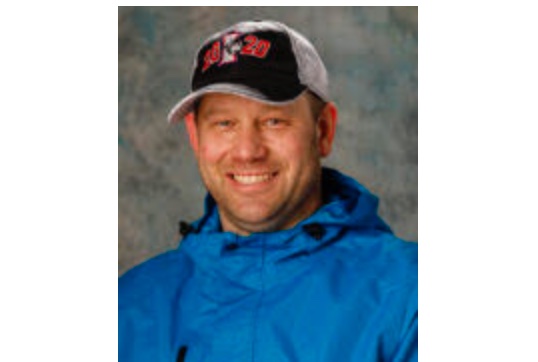
A small private aircraft has crashed near Willow, seriously injuring the pilot, who is believed to be Ramey Smyth, the well-known Iditarod Sled Dog racer.
The aircraft, an Aeronca 7AC Champion with tail number N84726, went down under unknown circumstances on or near a runway in the Willow area. The crash occurred during an unspecified phase of flight, and no other individuals were aboard, according to initial reports. The plane is registered to Smyth.
Smyth survived the crash but sustained injuries that included broken bones. No fatalities or other injuries were reported.
In his late 40s, Smyth was born and raised in Alaska and is the son of Iditarod mushers Bud Smyth, who raced in the first Iditarod and the late Lolly Medley who raced in the second Iditarod.
Smyth lives in Willow with his wife and family. He has raced the Iditarod 27 times placing in the top 10 a dozen times. He won the Kuskokwim 300 in 1995 and has raced in, and won, many other events throughout the state.
Smyth has said he began mushing “as soon as I could walk” and won the Jr. Iditarod twice before his first Iditarod in 1994.
He is a full time log home builder and owns and operates Smyth Logwork and Construction in Willow.
The extent of damage to the aircraft remains unknown. The National Transportation and Safety Board will likely open an investigation.
On Saturday, the Alaska Legislature met in special session and overrode two of Gov. Mike Dunleavy’s vetoes. The first and most important of these was upholding the unaffordable, unsustainable increase in the foundation formula for public education next year: 45 votes to override were needed and 45 was what the majority caucuses got.
Analysis of the vote showed every single democrat voted for the unsustainable increase in public education funding. Every single Republican that chose to caucus with them also voted to override.
The 21-member House majority caucus(2 Republicans – Chuck Kopp and Louise Stutes) managed to pick up 7 additional Republicans for the override vote. These included Jeremy Bynum, Julie Coulombe, Bill Elam, David Nelson, Justin Ruffridge, Dan Saddler, and Will Stapp.
In the Senate, the 14-member Majority coalition(5 Republicans – Jesse Bjorkman, Cathy Giessel, Kelly Merrick, Bert Stedman, Gary Stevens) managed to pick up three additional Republicans for the override vote. These included Mike Cronk, James Kaufman and Rob Yundt.
Any single member of the newly formed Republican Override Caucus of 10 votes against the override and it fails to pass.
None of the members of the Republican Override Caucus demanded any accountability from public education for the additional money. Not a single one.
None of them demanded improvements from what is currently the 49th best performing school system in the entire nation. Not a single one.
All of them agreed to shovel more money into a failing system.
Congratulations, guys. You must be very proud.
If it were up to me, I would target all 10 of these putative Republicans for removal from office in the next election (2026 for all House members and few senators, 2028 for the rest). I would do the same thing for the seven Republicans that crossed over to caucus with democrats, handing them legislative power on a silver platter.
Finally, I would target every single democrat possible.
There are opportunities in 2026. First of these are openings in House District 5 (Louise Stutes, who is going to run to replace Gary Stevens (Senate District C). Much easier to pick up an open seat than to bounce an incumbent.
It is not all bad news, as legislative politics on the political left have scoped down to two related issues. The first is destruction of the Permanent Fund dividend. Second, is the growth of the foundation formula. Make that large enough, and there is no way it will ever be rolled back, gobbling up every penny of the PFD to pay for it now and in the future, not unlike like JB Pritzker at a pizza bar. A return to defined benefit pension retirements for government union members is the same idea. If they lock the new spending in, the PFD is gone forever.
Other legislatures in the Lower 48, particularly those in red states, are doing amazing, creative things for their citizens. Not here in Alaska, where the only two ideas are how to destroy the PFD and lock in additional spending to benefit public employee unions.
Oh joy.
Other than that, Alaska Democrats are much the same as Democrats in the Lower 48 — out of airspeed and ideas. You would think the rank-and-file union members with children would want something other for their kids than the current garbage masquerading as public education. Perhaps not, but I am forever hopeful.
Somewhere along the line, we are going to have to get off the dime in this state and our Legislature needs to do something other than figure out how to destroy the PFD.
In case you hadn’t noticed, the political world has changed for Alaska. Resource development is back. ANWR, NPR-A, Cook Inlet are all going to be drilling and producing. Offshore in the Chukchi and Beaufort Sea may not be far behind. Pebble is going to be dug. We may see a natural gas pipeline. The growth of fish farming internationally will continue to grind commfish into so much economic dust. Finally, the Trump administration is coming for the Homeless Industrial Complex so lovingly constructed here in Anchorage over the last decade.
We ought to be in position to take advantage of those changes and start growing the economy of this state rather than participating in increasingly bitter fights over a static to shrinking pie.
The combined Majority Caucuses in both the House and the Senate and the newly formed Republican Override Caucus have told us who and what they are.
It is up to us to listen to them, believe them, and do something about it. Should be a fun ride.
Alex Gimarc lives in Anchorage since retiring from the military in 1997. His interests include science and technology, environment, energy, economics, military affairs, fishing and disabilities policies. His weekly column “Interesting Items” is a summary of news stories with substantive Alaska-themed topics. He was a small business owner and Information Technology professional.