Friday, April 10, 2026
Home Blog Page 1293

Berkowitz virtue signals as he destroys Anchorage

By DAN FAGAN

Virtue signaling politicians are destructive, dangerous, and deadly. For example, the Municipality of Anchorage looks the other way when it comes to hundreds of drug- and alcohol-addicted people living on the streets.

Dan Fagan

Some call them homeless. For most of them, a lack of housing is not their problem. They just want to get drunk or high. They want nothing of accountability. They beg, often steal, whatever it takes to get their next fix.

Theyโ€™re trespassing and live in filth, surrounded by stolen stuff, used drug needles, and their own feces.

Itโ€™s a horrid existence, especially for the women living in these camps. Drug dealers are more than ready to swoop in and sell their illegal goods to these poor souls who live in a prison of their own making.

This petri dish of crime, extreme human suffering, and anarchy needs three components to continue to flourish:

  • The drug-addicted willing to steal and beg,
  • Dealers willing to accommodate, and
  • City leaders willing to look the other way.

All three have happened under the leadership of Mayor Ethan Berkowitz. 

The compassionate thing to do is enforce the law. Lock up the lawbreakers for trespassing, stealing, public intoxication, and illegal drug use. Separate them from their addiction for at least 30 days. Give them a chance to get into their right mind. Get them help. But most of all, get them off the street. 

Weโ€™re told the courts wonโ€™t let us enforce the law. Bull.

Even if it was true, enforce the law anyway and fight it all the way to the U.S. Supreme Court, if necessary. Itโ€™s time to stop cowering to the threats of the ACLU. Other than Planned Parenthood, thereโ€™s not an organization in America in recent memory thatโ€™s enabled more destructive behavior and human suffering than the ACLU.  

But the virtue signalers see it another way. I remember a debate on the subject of โ€œhomelessnessโ€ on my radio show with former Assembly member, the late Allan Teche. He loudly and piously proclaimed, โ€œWe donโ€™t lock up the homeless in Anchorage.โ€ He said it thinking it made him sound virtuous. Enabling bad behavior is not virtuous. Itโ€™s cruel.ย 

Berkowitz, too, is a virtue signaler, maybe chief among them. The useless plastic bag ban for instance. It did no good for anyone other than showing us the mayor is a good environmentalist who loves Mother Earth. ย 

After interviewing the mayor on my radio show recently about homelessness in Anchorage, listeners had the impression he viewed them as victims. They are not victims. They are lawbreakers who have made a mess of their lives. But it sounds more virtuous to call them victims.   

Berkowitz was in his full virtue signaling glory on Friday when he announced heโ€™d continue to keep his boot on the neck of the private sector. 

โ€œOur strategy is slow and steady,โ€ he said.  

Gov. Mike Dunleavy removed most COVID-19 restrictions on Friday. Berkowitz said, not so fast. 

โ€œIf we are not safe, we are not free,โ€ said Berkowitz. 

How virtuous of the mayor. Saving lives and all. But freedom is important too, right? Maybe Berkowitz will next lower the cityโ€™s speed limits to 5 miles per hour. Think of the lives our virtuous mayor could save.  

Friday, on my radio show we got a call from a medical professional who said he knew of five people who died of heart attacks in Alaska since the COVID-19 restrictions have been put in place. Fear and stress kill too.  Alaska Public Media reported this week some Anchorage hospital emergency rooms have seen visits drop as much as 50 percent because patients stayed away for fear of catching COVID-19. 

Thereโ€™s mounting evidence harsh lockdown restrictions donโ€™t work when it comes to protecting people from COVID-19. The state of New York earlier this month found 66 percent of COVID-19 hospitalizations came from those sheltered at home. Another 18 percent of the hospitalized were previously nursing home patients.

“We were thinking that maybe we were going to find a higher percentage of essential employees who were getting sick because they were going to work, that these may be nurses, doctors, transit workers,โ€ New York Gov. Andrew Cuomo said. โ€œThat’s not the case, and they were predominantly at home.”  

Look at South Dakota, where Republican Gov. Kristi Noem imposed no restrictions. Her COVID-19 death rate per capita is lower than 41 other states. And yet Democrats run nine of the 10 states with the highest COVID-19 death rate per capita, employing the harshest stay at home restrictions. In contrast, Republicans run eight of the 10 states with the lowest fatality rates per capita. Alaska has the lowest number of COVID-19 fatalities per capita. 

And yet Berkowitz just canโ€™t let go.

It reminds me of Sunday nights growing up as a kid when it started to get dark and my mother would call out for us to come inside. Weโ€™d beg for another 10 minutes. Berkowitz was having so much fun playing virtuous life saver, he just wants another 10 minutes of it.  

Dan Fagan hosts a radio show weekdays, on Newsradio 650 KENI, between 5:30 and 8 am.

Of Memorial Days past

By ART CHANCE

I grew up in rural Georgia in the Fifties and Sixties. I grew up with ghosts in the closet.

Old family Southerners could rattle off what company, regiment, corps, and army of the Provisional Army of the Confederate States their ancestors had served in.ย About a third of all the men who served in combat units of the PACS were killed. Some families had the luxury of knowing where their ancestor was buried.ย Some of the soldiers even lay in a marked grave.ย ย 

It was March 4, 1862. Ten members of the maternal side of my family — fathers, sons, brothers, cousins, uncles — answered Georgiaโ€™s call for a militia muster at which they were โ€œinvited to volunteer or then and there be drafted by the State of Georgiaโ€ for service in the provisional army.ย ย ย 

By April 26, 1865, the day the last Confederate force east of the Mississippi surrendered, three of them were still alive.ย The other seven lie in unmarked graves somewhere in Virginia, Maryland, or Pennsylvania.

Also on March 4, 1862, a fraternal great-great-grandfather answered a prior militia muster.ย ย ย He was a teacher and a successful small planter.ย ย He was fairly political and pretty well connected, but as it turned out, not well connected enough.ย ย 

Opposed to secession, and fairly activist about his opposition, he pulled every string he could to get out of being forced into the army, but failed. He duly reported and โ€œvolunteered.โ€ย ย ย 

He either became ill or was wounded in the Seven Days Battles in 1862 and connected with the Confederate hospital system.ย ย Because he was an educated man, his connection there put him on lots of administrative details into the field hospitals.ย ย ย 

I was doing some research and connected with a guy who had an authorization for 30 days recovery leave and subsistence document signed by my great-great grandfather, who ran out of luck and connections in the spring of 1864.ย I have a lot of his letters home during that time.ย He had wanted to buy a substitute and clearly had the money, which required about $10,000 in confederate dollars at that time.ย I donโ€™t have my great-great grandmotherโ€™s letters to him, letters from home to a soldier are extraordinarily rare, but it was clear that she was having none of her man โ€œlying abedโ€ while others were still in the ranks.

He returned to the ranks in time for The Wilderness, Spotsylvania, Cold Harbor, and the siege of Richmond/Petersburg, and was then killed in action, probably by friendly artillery fire, in General Mahoneโ€™s confederate counterattack at the Battle of The Crater.ย ย ย 

We donโ€™t know where he is buried, but the best surmise is in the mass grave of soldiers thought to be Georgians at the cemetery at Blandford Church in Petersburg, Virginia.ย ย I have a copy of the incredibly cold letter from his lieutenant to my great-great grandmother, informing her of his death; by that time thereโ€™s been a lot of dying.ย ย ย 

A neighbor came home on leave some time later and brought some of my great-great grandfather’s personal effects.ย I have the blood-stained testament that was in his breast pocket when he was killed.ย We also have the home-made quilt that had been his bedroll, but along the way, we’ve lost track of which among the old family quilts was his.

Thereโ€™d long been a tradition in America of organizing the cleaning and decoration of family cemeteries.ย Families and communities got together and made a โ€œdinner on the groundsโ€ event of cleaning up the cemeteries and placing flowers on the graves.ย The Civil War produced a lot of fresh graves.

Some families had the wherewithal to retrieve the body of their dead son or father, but most didnโ€™t; many soldiers of both sides were buried hastily, sloppily, and often corruptly in mass graves or in better circumstances in individual graves simply marked as โ€œUnknown.โ€ย ย ย 

The military issued โ€œdog tagโ€ was almost unknown at that time.ย A few soldiers could afford to have some sort of ID pendant made, while others scrawled their name and address on a piece of paper and pinned it to their jacket; most were just โ€œunknown.โ€ย Since the contractors were being paid by the body, there wasnโ€™t a lot of distinction between dead horses and dead men.ย Many werenโ€™t buried until long after the war.ย ย ย 

The 1864 Battle of the Wilderness was fought on the same ground as the 1863 Battle of Chancellorsville, and The Wilderness was fought literally on the unburied bodies from Chancellorsville the year before.ย The Wilderness was as close to a vision of Hell as one might want, as the gunfire set fire to the heavily wooded area and burned long dead and freshly wounded alike.

Lincolnโ€™s Gettysburg Address was delivered for the dedication of a National Cemetery at the site of the battlefield.ย In the South, the endeavor to honor the graves was almost entirely private.ย The best documented, if not necessarily the first, formal event was in Savannah, Georgia to honor the graves of Georgians killed at First Manassas — or in Yankee parlance, the First Battle of Bull Run, which took place in 1862.

The North took up the practice both with the dedication of National Cemeteries and commemoration of private gravesites.ย In an act of spite or vengeance because of the death of his son in battle, the U.S. Quartermaster in charge of Union burials in the Washington area ordered that Union soldiers be buried on the grounds of General Robert E. Leeโ€™s estate at Arlington.ย We know it today as Arlington National Cemetery. They donโ€™t much teach that piece of history in school.

After the War, civic organizations arose in both the North and South.ย The predominant organization in The North was the Grand Army of the Republic.ย In The South there was the United Confederate Veterans, and later and still today the Sons of Confederate Veterans, but in The South the various womenโ€™s groups were much more effective and most of those monuments being torn down today were bought and installed by the work of the mothers, widows, and orphans of dead confederate soldiers.

In The North, many states established Decoration Day as a state holiday on May 30.ย  It is said that the date was chosen because there was no battle on that day.ย In The South there were various state holidays but by the early 20 th Century most Southern states had settled on April 26, the date of Johnsonโ€™s surrender to Sherman of the last major Confederate field army.ย ย ย 

When I was a youngster, April 26ย was a state holiday in Georgia, while the Northern Decoration Day was little noted.ย In those days there were still plenty of folks whoโ€™d turn their back to the playing of โ€œBattle Hymn of the Republicโ€ because they well know whose vineyards the Yankees were bragging about trampling.

The South remained a separate country in all but name through most of the remainder of the 19thย Century.ย ย We can talk about carpetbaggers and scalawags and rapacious banks and corporations, but that is for another piece.ย 

The U.S. needed safe passage through the former Confederate States for prosecution of the Spanish American War, and the former Confederate States still werenโ€™t particularly enamored with the United States.ย The U.S. even dredged up a former Confederate Cavalry general to command troops in the attack on Cuba. They picked Joe Wheeler, who commanded a small cavalry unit in Georgia that fired a few shots for their manhood against Shermanโ€™s massive army.ย Southerners didnโ€™t offer any opposition to U.S. mobilization, but neither was there any outpouring of Southern support.

The U.S. imposed conscription on all male citizens for World War I.ย Again, the South offered little opposition, although though many Southerners were not qualified for service because of health and education considerations.ย ย ย My grandfather was drafted and seriously injured in a gas training accident and spent the rest of his foreshortened life with serious respiratory problems.

By World War II, The South was somewhat a part of the United States.ย It was still poor, ignorant, segregated, and xenophobic, but it was beginning to have paved roads.ย FDR liked to hang out in Warm Springs, Georgia, and the Central of Georgia Railroad could luxuriously take him there.ย By then, Southern volunteers and draftees served proudly in the U.S. military.ย ย ย Whether the issue is The South or the largely Northern immigrant population, World War II was the โ€œmelting potโ€ that made modern America before, the “diversity” types took it all apart.

Fast forward to the Cold War and Vietnam; the military had become heavily Southern.ย Especially during Vietnam, the draft hit the working class boys of The South a whole bunch harder than it hit the Ivy League preppies of The North.ย ย ย 

Which brings us to the modern Memorial Day.

Along the way, the U.S. had agreed to provide grave stones to Confederate soldiersโ€™ graves and give some recognition to them as legitimate combatants.ย Only the dedicated hardasses still wanted to execute Southerners for treason; donโ€™t you think they would have done it in 1865 if they thought they could?

President Nixon finally offered reconciliation in 1971.ย He combined the old Confederate States Memorial Days and the Northern Decoration days into a Federal Holiday, Memorial Day.ย 

If it werenโ€™t for COVID-19 we could be doing beaches, barbeques, and beer for three days.ย 

Maybe we can pause for a moment to consider the men who bled and died to give us our beaches, burgers, and beer.

Berkowitz slow-rolls opening

ONE BUSINESS OWNER, HOWEVER, LEADS AN INSURRECTION

Mayor Ethan Berkowitz said Anchorage will take his slow approach to releasing Anchorage from its economic handcuffs.

Monday he’ll allow businesses to operate at full capacity, but there will be rules, he said.

“The state has guidelines, we have rules,” he announced today during his press conference. Those rules will dictate how close people can be to each other at restaurants and other establishments. There won’t be absolute capacity counts, but there will be mandates the municipality will post for every sector.

“Our strategy is ‘slow and steady.” It has been successful, and we’re sticking with that strategy because it has kept people safe,” he said.

“If we are not safe, we are not free,” Berkowitz said.

It was a Berkowitz twist on the old Benjamin Franklin quote: “Those who would give up essential Liberty, to purchase a little temporary Safety, deserve neither Liberty nor Safety.”

At least one business owner was having none of it. The owner of the Red Chair Cafe had already said online that she would open her doors to full capacity today in defiance of the mayor’s orders.

“We’ve been following the rules (unfair rules, btw) to the ‘T’ to be open, (with the Mayor sabotaging small businesses to benefit his own), but our dining room won’t allow for many tables. Today, I’m making a stand against the Mayor. I’m choosing to OPEN MY CAFE at almost full capacity. I’ve been in touch with a few people that have empowered me to take a stand. I truly feel that if we play the victim, we are the victim. I’m choosing to EXERCISE MY CONSTITUTIONAL RIGHT TO EARN A LIVING,” wrote Chef Barb Whitney on the Facebook Group “Open Alaska.”

By the accounts, the Red Chair did more business today than it had done in the past many days combined, as people flocked to support the rogue downtown Anchorage restaurant.

Samaritan’s Purse sets up field hospital in King Salmon

Samaritanโ€™s Purse, a faith-based organization based in North Carolina, has committed one of its emergency field hospitals to King Salmon, Alaska, as the commercial fishing season brings an influx of workers that could bring a localized outbreak of COVID-19 with them.

Photo above: Franklin Graham with Naknek Mayor Daniel O’Hara.

โ€œMany locals are frightened, remembering what happened when the Spanish flu came through in 1918 and wiped out entire families,โ€ Samaritanโ€™s Purse Presidentย Franklin Graham posted on Facebook. โ€œThankfully, the government of Alaska has set up many protocols to identify possible cases and mitigate the spread.โ€

Graham has earlier this month met with officials from the Dunleavy Administration, as well as military and local leaders. Samaritanโ€™s Purse staff members participated in assessing the regionโ€™s needs and capacity.ย 

“This response anticipates the possibility of novel coronavirus affecting Bristol Bay communities, including Naknek, South Naknek, and King Salmon. Beginning in June, more than 10,000 fishermen and workers from across the globe are expected to travel to the ‘Red Salmon Capital of the World.'”

“With so many outsiders descending on the area, any virus spike could overwhelm local medical services and prove catastrophic for the regionโ€™s several hundred permanent residents, about one-third of whom are Native Alaskans,” the group said on its website.

“We are also prepared to send COVID-19 response teams into the surrounding communities to help with prevention and awareness.”

Samaritanโ€™s Purse has worked in Alaska for many years, bringing the hope of the Gospel to dozens of communities. Since 2006, its volunteer teams have completed 31 construction projects, including worship centers for congregations that need a warm, safe place to meet for services.

In Port Alsworth, Samaritan’s Purse has hosted more than 1,100 U.S. military couples through Operation Heal Our Patriots, with Bible-based marriage enrichment training and spiritual refreshment.

Most recently, in April, Samaritanโ€™s Purse airlifted to Alaska over eight tons of supplies critical for the fight against the pandemic. At Gov. Mike Dunleavyโ€™s request, the group provided hospital beds, thermometers, and personal protective equipment such as masks, gloves, and gowns. The critical resources were delivered through the Alaska Native Tribal Health Consortium to rural areas of the state that are extremely vulnerable to the virus due to a lack of medical infrastructure.

Samaritanโ€™s Purse has been at the forefront of the international response to COVID-19, deploying emergency field hospitals in Cremona, Italy, and New York City. Both sites closed recently after treating hundreds of COVID-19 patients over the past two months.

‘Get back on your feet’ grants: $5K-100K grant criteria posted

4

The Alaska Department of Commerce, Community, and Economic Development and the Alaska Industrial Development and Export Authority have partnered with Credit Union 1 to offer federally funded emergency relief to Alaska’s small businesses.

Grant amounts are $5,000 to $100,000, based on eligible expenses.

[Read the frequently asked questions here]

The CARES program details are not finalized and the state says the criteria may change, but the preliminary details have been released:

Who Can Apply

Small businesses including C-Corps, S-Corps, Partnerships, nonprofits (501(c)3 or 501(c)19), or sole proprietorships with a current Alaska Business License that:

  • Did not qualify or were otherwise unable to obtain SBA PPP or EIDL funding
  • In operation for at least one year prior to March 11, 2020
  • Have on average 50 or fewer employees

Who Isย notย eligible to apply

  • Marijuana related businesses.
  • Secondary income sources.
  • Out of State business.
  • Business that has received funding or have an approved application for SBAโ€™s PPP or has EIDL funding in excess of $5,000.
  • Business with more than 50 full time equivalent employees.
  • Businesses that have filed bankruptcy.
  • Businesses that do not meet the eligibility criteria outlined above.

Eligible Expenses

Amount of grant award based on the following COVID-19 emergency related eligible expenses during the period 8 weeks prior and 8 weeks following the application date:

  • Payroll costs and expenses;
  • Payment of any short term (less than 24 months) or credit card debt incurred by the applicant to support the applicantโ€™s business during the emergency;
  • Rent or mortgage payments (unless otherwise waived by lessor/lender);
  • Utilities payments;
  • Purchase of personal protective equipment required by the business;
  • Business related equipment; and
  • Expenses incurred to replenish inventory or other necessary re-opening expenses.

Technical Assistance

Division of Economic Development โ€“ Investments is providing technical assistance for small businesses:

Toll Free in Alaska (800) 478-5626
Outside Alaska (907) 465-2510
Email:ย [email protected]

Small Business Development Centers’ information can be found at: https://aksbdc.org/contact/

Trump declares houses of worship ‘essential’

President Donald Trump has declared churches and other places of worship are considered “essential services.” Across the country, houses of worship were closed by governments during the coronavirus pandemic.

The president declared “houses of worship, churches, synagogues and mosques” to be “essential places that provide essential services.”

“Some governors have deemed liquor stores and abortion clinics as essential, but have left out churches and other houses of worship,” Trump said. “It’s not right. So, I’m correcting this injustice and calling houses of worship ‘essential.'”

“I’m call governors upon governors to allow our churches and places of worship to open right now,” he said during a press availability at the White House on Friday afternoon.

Part II: Leadership during crisis, now an economic one

GOVERNOR FACES THE NEXT STORM

By March 16, there were 52 cases of COVID-19 diagnosed in Alaska, and the first Alaskan had just died of the coronavirus. The case load was just about to spike. Between March 17 and 23, more than 100 cases of COVID were diagnosed across the state, mainly in urban areas.

By now, Gov. Mike Dunleavy was closing state-operated facilities like libraries and museums, and suspending public programs. Residential school programs were told to send students back to their home communities. Mayors in some communities took even more drastic actions.

The case count kept growing and by March 31, there were 187 active cases of coronavirus, 66 had recovered, and four Alaskans had died. That was the peak of the first viral storm for Alaska, and by then personal protective gear for medical providers was a problem all over the country, including Alaska, to the point where the joint commission that governs hospital standards issued a statement saying health care workers could bring their own masks to work from home, and use whatever PPE they could get their hands on.

These were unusual times for a field that is highly regulated. Alaska was by no means fully prepared.

Mask-makers all over the state were busy sewing masks, trying to keep up with the demand by medical professionals and first responders, as well as those with public-facing jobs.

Also unusual: At the governor’s request, distilleries begin making hand sanitizer, which was in short supply. They were suddenly pumping out hundreds of gallons of the virus-destroyer.

Fairbanks had emerged as a “hot spot” for the spread. So had Ketchikan, and cases were popping up in Juneau. Gov. Dunleavy and his team were working 20 hours a day, by now.

“There were times when we’d just stop and look at each other and realize, ‘Seattle is falling apart. They’re dying left and right like Italy. We have to make decisions. We can sit here like sitting ducks, or we can make some changes pretty fast and save this place’,” Dunleavy said.

At one point, Seattle was even asking Alaska hospitals for help, he said.

Dunleavy has a great deal of respect for the team that helped lead through the storm. Dr. Anne Zink, the state’s chief medical officer, was tough, but he said she understood that while her focus was to be on health, his focus had to be on the entire health of the state — including the economic well-being of Alaska. The state could not endure an indefinite lockdown, and he would not allow it to go on long.

But he also knew that no matter what the outcome, the person at the helm takes the blame for what goes wrong.

“I told my people back in January, ‘We won’t survive this politically. If it’s a nothing-burger, and people survive, we will be crucified. If we don’t act fast enough, we will be crucified. We just have to do the best we can to maintain our health care system,'” Dunleavy said. “That’s our responsibility. We told people we needed time to build up our health care capacity, and we did that.”

Now, on May 22, it seems like a lifetime since Dunleavy and his team warned Alaskans to stock up on their prescription medications and prepare to hunker down. Dunleavy has now declared the state reopened.

Some communities will lag, such as Anchorage, which is governed by a mayor who follows his own political compass.

Western Alaska communities that are starting the fishing season will also have their own rules, Dunleavy said. Next week, Samaritan’s Purse will open a field hospital in King Salmon to be ready for a possible outbreak.

It is up to Alaskans to take personal responsibility to guard their health and their families from infection.

“We’re going to have to live with this virus. We’ve now got the Alaska Airlines Center in Anchorage set up, with 150 beds ready. We’ve got response teams to go out to rural Alaska and pull people out by helicopter if needed,” Dunleavy said. “But we need to manage this in our lives.”

Every night, Dunleavy thinks about the business community and the misery they have endured. He knows it’s an economic disaster that is just beginning. He sees it in the tourism businesses struggling to stay alive in hopes of a better year next year. He hears about it from business owners, many of whom are his friends and supporters.

There will be another surge of virus, and maybe another one after that until an effective vaccine is available, Dunleavy said. The surges will not care that there’s an economic crisis afoot.

Now that he has lifted nearly all of the mandates, Alaskans should brace themselves for clusters of cases to pop up.

Meanwhile, nearly every state is going through the same disaster — Hawaii, which has an economy dependent 100 percent on tourism, is in big trouble, Dunleavy said. He hears about the other states on phone calls with the White House and other governors: Boston is on the verge of having its hospital system collapse. In North Dakota and Texas, the oil economy has decimated the economies.

“In conversations with other governors, it’s the same kind of story. They’re in bad shape, like we are in Alaska,” he said. “California just cut $18 billion from their education budget — and yet some in our own Legislature was trying to figure out how to override my vetoes.”

Dunleavy hinted that he has some tough management decisions ahead for state government. Even with federal funds, the price of oil is far beneath what is needs to be to pay for the fiscal year ahead.

“This story is far from over. We are facing great economic perils,” Dunleavy said.

But he’s done with closures; the state and the people of Alaska have taken all they can bear of the mandates. The world will have to figure out how to move forward with this virus for some time to come.

“We can’t shut down again,” he said.


Read Part 1 of this story at this link:

Haines burns through yet another borough manager

SCHNABEL HAD BOROUGH STAFF SAND HER PRIVATE ROAD

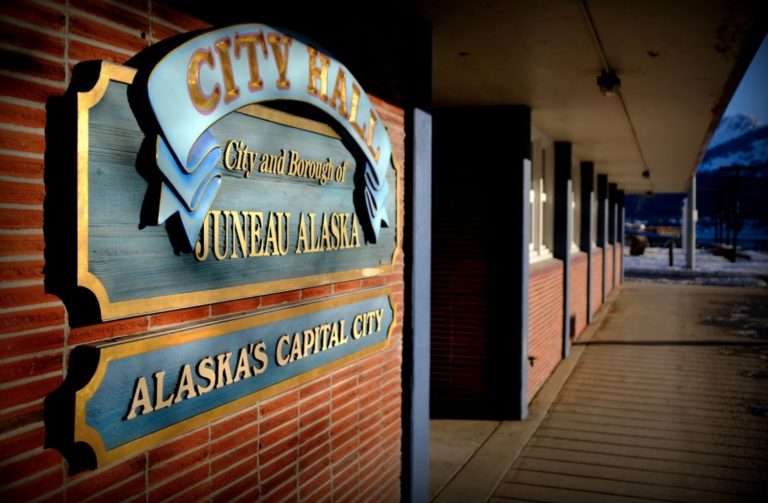
Haines has a history of stormy relationships with between its Assembly and its borough managers. This week, Haines-born-and-raised Debra Schnabel became the latest political casualty in the picturesque community along the Chilkat River, north of Juneau.

The Borough Assembly thought it might break the streak of bad managers when it went local with its pick of Schnabel in 2017.

Schnabel, from a well-known family in Haines, had recently attracted the ire of Assembly member Paul Rogers, who said that she wasn’t taking direction and she was using borough resources inappropriately. Assembly member Brenda Josephson said the complaints had been increasing about Schnabel, who had also raised eyebrows after confronting a local business owner for not wearing a face mask to protect against the COVID-19 coronavirus.

Schnabel also admitted she had borough staff sand a private road at a trailer park that she owns.

Schnabel has an attorney and says that statements made about her by Assemblyman Rogers are defamatory.

“Assembly member Paul Rogers defamed Manager Schnabel that same day in an online news story published by the Chilkat Valley News. The Mayor allowed the public to spew defamatory remarks during the meeting. At one point, Paul Rogers mimicked Manager Schnabelโ€™s voice in a demeaning, unprofessional, and gender-discriminatory manner,” according to Schnabel’s attorney Sara Bloom of Anchorage.

Schnabel, the first woman borough manager, has asked through her lawyer to be reinstated and given due process. It appears she may be ready to file a lawsuit based on gender discrimination.

That makes at least four managers in six years for Haines Borough: Schnabel started in June of 2017 after the Haines Borough Assembly dismissed Bill Seward, who had been on the job six months. Brad Ryan, became Interim Borough Manager after Seward left, but the Assembly ended up hiring Schnabel. Another short-lived manager, Dave Sosa, had been hired in April of 2014, and lasted 19 months before resigning.

And now Haines Borough Clerk Alekka Fullerton is serving as the interim manager, making it technically five managers in six years.

Group seeking class action lawsuit against government

A small-but-determined group of Alaska residents are looking for businesses and individuals to join them in what they hope will be a class-action lawsuit against the Dunleavy Administration and local governments that shut down their businesses, or denied them needed health care.

“Many Alaskans have lost their jobs, income, healthcare, businesses, and much much more due to the mandates of politicians in our state. They are facing financial ruin, health crisis, a lifetime of negative effects because their constitutional rights have been trampled on,” writes Chandra Caffroy of Anchor Point in her fundraising plea on Fundrazr.com, where she has raised $900 in four days to pay for legal fees.

“These Alaskans want to take these politicians to court and show them that we will not stand for the stripping of our constitutional rights. We stand for freedom, we stand for the constitution and we stand for those that canโ€™t fight for themselves. ย We ask you to stand with us!”

Caffroy is specifically looking for those who have been harmed financially or in terms of deferred health care because of the state and local mandates that began in March. She hopes to establish legal grounds for a constitutional challenge.

Some mandates that concern the group were the mandate forcing people to be tested for COVID-19 or facing the threat of refusal of treatment for their other health care concerns, and forced quarantines even for those who have no symptoms and who have not been screened for COVID-19.

Caffroy, who says her family’s finances are relatively stable in spite of the poor economy, is concerned about others who haven’t been as fortunate. She has heard from business owners whose companies are crumbling due to the mandates, and she has learned of one suicide that resulted from depression after the individual had lost his job.

Anyone who may have suffered financial or health damage they believe is a direct link to government mandates may reach her at [email protected].