After license plates with possibly hidden messages started showing up in social media accounts last month (3REICH and FUHRER, for example), the Department of Administration has heard from others with concerns about license plates that may have questionable meanings.
The most recent is “JUZBAD,” which could have a number of different meanings and was reported to the department. Must Read Alaska could only find that Juzbado is the name of a town in Spain. There may be alternate meanings, including anti-semitic ones.
“Following the outcome of the review I ordered of Alaska’s personalized plate program at the DMV, the DMV began the long process of reviewing tens of thousands of personalized license plates that have been issued by the State going back as far as the Murkowski administration,” said Commissioner Kelly Tshibaka.
“In the meantime, DOA has been contacted by Alaskans who continue to find questionable plates – some of which were issued a decade or more ago.
“Alaskans can rest assured that we will find and revoke any plates that violate the rules of Alaska’s personalized license plate program. Messages that promote violence, vulgar, criminal or demeaning terms will not be tolerated,” she said.
If you have seen any personalized plates that you believe may violate the state’s policies, you may report it to the DMV at [email protected].
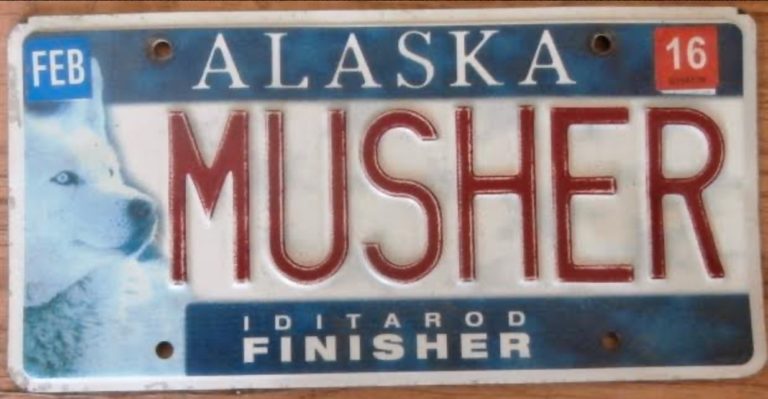
The photographed plate was sent to us by a proud finisher of the Iditarod Sled Dog Race.
Attorney General Treg Taylor announced Cori Mills of Juneau will serve as the new Deputy Attorney General for the Department of Law.
Mills started with the department in 2012 as legislative liaison and public outreach coordinator for the Civil Division. She spent eight years in that role where she honed her legislation skills, worked on budget and fiscal issues, and served as special assistant under two former Attorneys General. In May of 2019, she transitioned to the elections attorney position in the Labor & State Affairs Section until becoming supervisor of that section in August 2020.
“Cori has a deep respect for the department and its role in assisting the State’s elected and appointed officials in carrying out their duties,” Taylor said. “She has been involved in many high-profile issues the department has faced over the years, and she is the ideal person for this role.”
Two big ordinances are being considered at the Feb. 2 meeting of the Mat-Su Borough Assembly.
One would allow the elected mayor to manage the borough — this ordinance could not be enacted without voter approval, however. This is called a strong mayor form of government and would repeal the current manager form of government.
The other would change the borough to a “first class” from its current second class status, which would give the borough numerous powers that would not require voter approval.
The titles of the ordinances are:
OR 20-046 – Strong Mayor: An Ordinance Repealing The Manager Plan Of Government And Submitting The Proposal To The Qualified Voters At The November 3, 2020, Regular Borough Election.
OR 20-061 – First Class Borough: An Ordinance Proposing A Reclassification Of The Matanuska-Susitna Borough From A Second Class Borough To A First Class Borough And Submitting The Proposal To The Qualified Voters At The November 3, 2020 Regular Borough Election.
The Assembly meets at 6 pm on Feb. 2, at the Assembly Chambers, 350 E. Dahlia Ave., Palmer.
An email thread between two progressive Assemblymen in Anchorage indicate that they were coordinating with each other to coerce pastors into supporting a massive, controversial, and costly homeless services plan last summer.
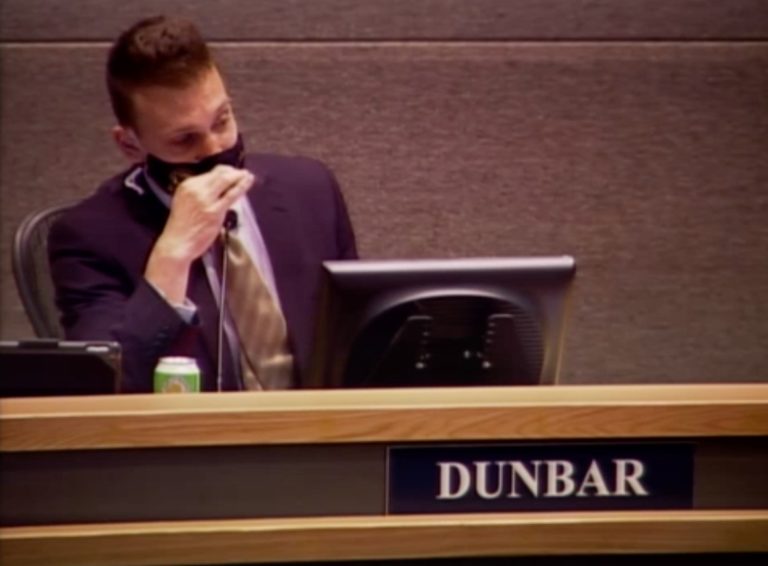
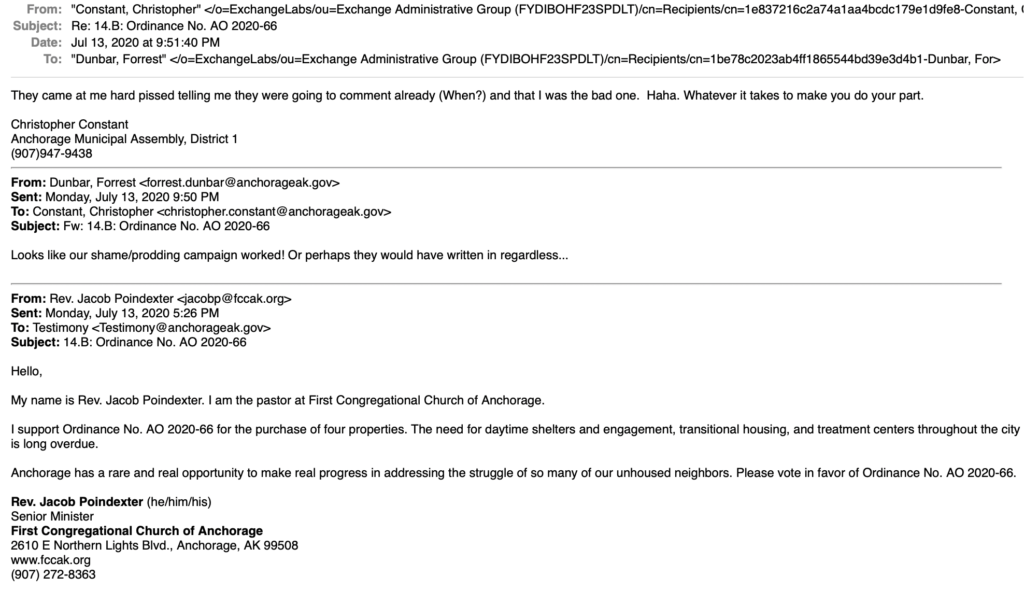
The emails came to light as part of a public records request. The two men, using their personal emails but using the municipality’s server, carried on an exchange during which Assemblyman Forrest Dunbar congratulated himself and Assemblyman Chris Constant because “our shame/prodding campaign worked!”
Dunbar is running for mayor of Anchorage.
Constant wrote that some of the pastors were unhappy with the pressure, and “they came at me hard pissed telling me they were going to comment already (When?) and that I was the bad one. Haha. Whatever it takes to make you do your part.”
Alaska Statute forbids such coercion by people in positions of government power. Title 11.41.530 addresses it:
“A person commits the crime of coercion if the person compels another to engage in conduct from which there is a legal right to abstain or abstain from conduct in which there is a legal right to engage, by means of instilling in the person who is compelled a fear that, if the demand is not complied with, the person who makes the demand or another may
(4) take or withhold action as a public servant or cause a public servant to take or withhold action;
Coercion is a Class C felony. In this case, churches were under the threat of being shut down again by the mayor. A couple of weeks later, they were ordered shut down by Emergency Order 15, which was in effect Aug. 3-30. The shutdown had followed other emergency orders that had closed or greatly limited church gatherings.
Some churches did not comply, while others did. Anecdotally, pastors who spoke with Must Read Alaska say they know of many churches in Anchorage that will never reopen because of the financial crisis caused by the Emergency Order.
Both Constant and Dunbar repeatedly voted on the various powers granted to the mayor to shut down the churches, bingo halls, bars, restaurants, and other establishments.
In another era, the public might expect the ACLU-Alaska to take up the cause of the rights of individuals and the COVID-19 constitutional infringements, or to defend churches who were “shamed” and “prodded” by public officials into writing letters in support of legislation, knowing that the officials could make their churches pay a heavy price if they did not comply. But in this era, the ACLU has remained silent.
The only organization in Alaska that would investigate this as public corruption would likely be the Department of Law’s civil division, which also handles matters of public corruption.
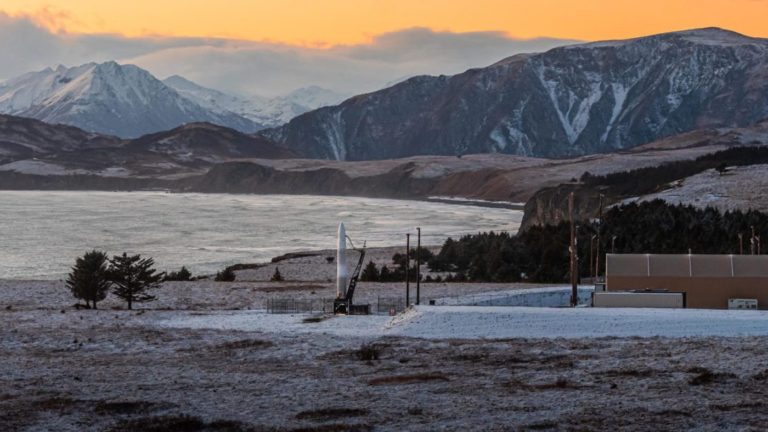
Tuesday’s Wall Street Journal reports that the rocket company Astra Space, Inc., which has been launching rockets from Kodiak, intends to be the first maker of small rockets to become publicly traded in the U.S. The company plans to use what is called a “blank-check company, in a transacting value of $2.1 billion.
“One of the few space startups with flight-proven technology, Astra said it is teaming up with billionaire telecommunications investor Craig McCaw to take advantage of the surging popularity of such transactions across an array of evolving high-technology sectors. SPAC stands for special-purpose acquisition company, a vehicle for swiftly taking entities public,” the Journal reported.
Astra is based in Northern California and has about 120 employees.
Although the rockets it launched from Kodiak in 2020 did not reach orbit, the company’s founder, Chris Kemp, formerly with NASA, expects another test soon and a commercial mission as early as summer.
“In going public, Astra seeks to stand out from a bevy of small-rocket competitors by locking in funding despite fallout from the coronavirus pandemic and an anticipated shakeout of rivals targeting the same market segment,” the Journal reported.
Astra’s mission is to launch a new generation of space services by making space more accessible through affordable, regular launches.
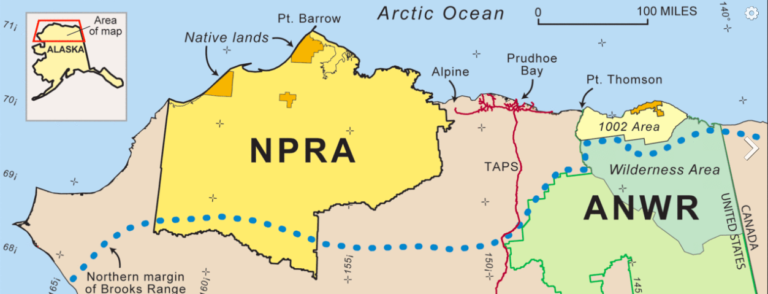
The House Energy and Natural Resources Committee, chaired by Rep. Raúl Grijalva of Arizona, has inserted a provision in a budget reconciliation bill that could take the 10-02 area of ANWR off the table for drilling.
In 2017, the U.S. House and Senate passed budget resolutions allowed drilling in the Coastal Plain of the Arctic National Wildlife Refuge by making it part of paying for a $1.1 trillion budget for fiscal year 2018.
This new provision basically reverses that in budgetary terms.
The reconciliation bill is expected in the Senate this week, where it will be up to Sen. Lisa Murkowski to convince Sen. Joe Manchin, now the chair of the Senate Natural Resources Committee, to strip the provision. Murkowski has a good relationship with Manchin, who is a moderate Democrat.
Alaska’s congressional delegation has worked to open ANWR for decades, to be stopped by administrations that were both Democrat and Republican. That is, until President Donald Trump made the 10-02 area a priority for Alaska and signed the bill.
Leases for the area were auctioned in January, and the State of Alaska’s Alaska Industrial Development and Export Authority now holds $12 million in winning bids, of the $14.4 million awarded.
What is it with our state elected officials? We go to the polls to select those who will represent us in Juneau and before the game gets started, we witness backroom political shenanigans and power plays that are not helpful in moving our state forward at a time when we really need strong conservative leadership.
Case in point…Rep. Laddie Shaw. I have known Laddie Shaw for over 20 years, long before he was an elected official. Laddie is a remarkable Alaskan, who has served his state and nation with the highest degree of honor and dedication.
Laddie served 24 years in the military. He was a U.S. Navy SEAL. A Navy SEAL is not your average enlistee. To become a SEAL, a recruit endures the most challenging physical and mental testing imaginable. This guy is tough.
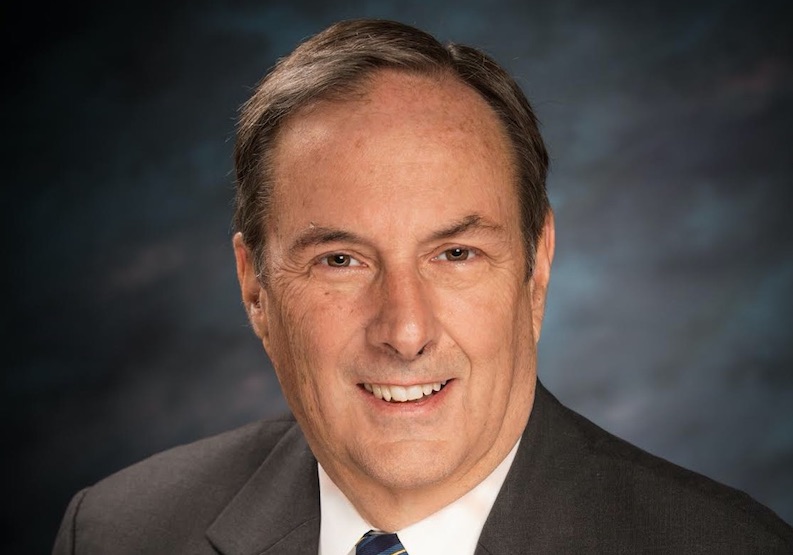
Rep. Laddie Shaw
His dedication to our nation is reflected by his two tours in Vietnam during a period when America was being torn apart over our involvement in that war. I don’t know if Laddie supported or disapproved of the United States engagement in Vietnam. What I do know is that Laddie understood the role he served as a member of the United States military. He did his duty, honorably. That dedication continues today with his commitment to the Vietnam Veterans of America and the UDL/SEAL Association.
Laddie has an extensive history in public service. He was an Instructor at the Alaska State Trooper Academy, was Director of the State Standards Council, and served four years as the State Director for Veterans Affairs.
First elected to the Alaska House of Representatives in 2018, serving District 26, he was re-elected this past November with no primary or general election opponent. That is a mark of how much the people of his district respect his leadership in Juneau.
So, here’s my confusion. With this phenomenal track record, why was Laddie rejected by the Senate leadership to fill the senate seat vacated by the untimely death of Chris Birch? Laddie was exceptionally qualified and was a friend of Chris’s. He was recommended to fill the vacancy by Gov. Mike Dunleavy. Did Senate President Cathy Giessel and five others really block Laddie because they didn’t like his position in regards to the Permanent Fund, or maybe because he was a Dunleavy nominee? So, they really did have a litmus test. Disgusting.
Don’t get me wrong, Josh Revak was a good choice for Senate. I have always supported Josh in his political career, but the question still comes back to why the Senate Majority first rejected a distinguished candidate like Laddie Shaw.
Today we learned that Laddie was once again rebuffed by his peers. At a time when the Alaska House of Representatives is struggling to select a Speaker and establish a majority, they rejected Laddie as interim Speaker Pro Tem.
The responsibilities of the Speaker Pro Tem are to fill the role of the presiding officer in the absence of a Speaker of the House. It’s not like they were putting him in as the next Speaker. Heaven forbid they have their act together enough to take even baby steps.
But there is more to this story.
Last week they rejected Representative Bart LeBon from Fairbanks, and this week they reject Laddie Shaw. With Republicans holding 21 of the 40 seats in the House, my math tells me it should be a no-brainer to elect either Bart or Laddie into the Pro Tem position.
Awe, Alaskan politics. Easy math doesn’t work here. It only took one Republican to join with the other 19 Democrats and undeclareds to block even the interim, temporary Speaker Pro Tem position from being filled by a Republican. One Republican embraced the Democrats to stop Republicans from forming a majority, or even from simply selecting a Speaker Pro Tem to allow the House to conduct routine business.
So here we are, two weeks into session and the House remains a house divided. No leadership to organize committees. No committees to hear legislation and review budgets. And no way to accomplish the people’s business.
What’s up with this group? Didn’t they learn anything from the past two years failures of the bi-partisan coalition that resulted from Democrat/Independent Bryce Edgmon’s leadership? Apparently not.
Alaskans, take notice of how at least one elected official is posturing for personal gain and power within the House instead of doing the right thing and immediately organizing as the 21 Republican majority we sent to Juneau to fix the incredible fiscal issues facing our state right now.
So back to my point. Laddie Shaw is an incredible individual with impeccable integrity and honesty. He is a strong leader with exemplary credentials who would do an outstanding job serving as the House Speaker Pro Tem. It’s just so disheartening to see good people not supported at a time when Alaska is in dire need of leadership.
Keep your chin up, Laddie. Alaskans know you. We know your past service. We appreciate your dedication to public service. We understand your commitment to supporting our constitutional government, the provisions of law, and fiscal responsibility. We will always have your back. Thank you for everything you do for this state and our nation.
Finally, thank you to the Republicans that remained together and supported both Bart and Laddie. Maybe it’s time to play the Democrat game and bring a couple of the more moderate Democrats over to our side to form up a Republican lead bi-partisan majority. Just a suggestion. The clock is ticking.
Craig E. Campbell served on the Anchorage Assembly between 1986 and 1995 and later as Alaska’s Tenth Lieutenant Governor. He was the previous Chief Executive Officer and President for Alaska Aerospace Corporation. He retired from the Alaska National Guard as Lieutenant General (AKNG) and holds the concurrent retired Federal rank of Major General (USAF).
Once again, the House of Representatives has voted 20-20, and once again there is still no Speaker, or Speaker Pro Tem. The House remains unorganized and cannot conduct business.
Rep. Bart LeBon of Fairbanks, whose name has been offered by Republicans twice for Speaker Pro Tem, nominated a man who is arguably the most popular legislator in Juneau, and one who is considered to have no natural enemies — Rep. Laddie Shaw.
But the Democrats, undeclareds, and Rep. Louise Stutes, a Kodiak Republican, were having none of it and voted Shaw down along caucus lines.
And so ended another quick House floor session on Monday. Former Speaker Bryce Edgmon is holding onto the Speaker’s office and still has a huge staff to support him, although he is no longer speaker. He is making a play for the role for the third time, but is not popular among Republicans and some Democrats. Democrats have not nominated him for Speaker or Speaker Pro Tem.
The House will convene in a floor session on Tuesday, to try once again to organize. Meanwhile, the Senate held a technical floor session today, gaveling and gaveling out, and business is being conducted in committees.
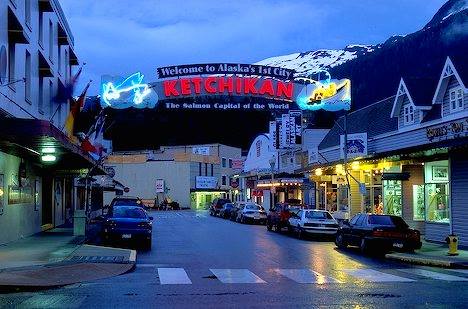
As Ketchikan saw the cases of COVID-19 creep up, the official response has been to name five downtown bars, and tell people that if they visited those bars they should get tested.
Steven Kantor, of the Ketchikan chapter of CHARR (Cabaret, Hotel, Restaurant, and Retailers Association) says that’s unfair targeting. He says patrons in bars also visit other establishments around town, and yet the name-shaming is focused on just the bars.
Cases have risen in Ketchikan over recent days, jumping from nine cases on Thursday to 10 on Friday, and 13 each on Saturday and Sunday. Of each of those 13 cases, four have been considered “community transmission.”
Last summer, Anchorage tried the name-shaming method, also focusing on bars. The Mayor’s Office, then occupied by Ethan Berkowitz, named 19 bars — both in Anchorage and in the Mat-Su Valley — where people who had tested positive for COVID had visited. None of his own restaurant-bars were on the list.
In Southern Southeast Alaska, 2,691 people have been vaccinated against the coronavirus. The Ketchikan Borough has under 14,000 residents.
The bars named by the Ketchikan Emergency Operations Center were The Arctic, The Asylum, 49’er Bar, Moose Lodge #224, and Totem Bar.
The EOC is asking those who visited the establishments to quarantine at home for two weeks and get tested within a week of having visited one of the establishments, or earlier if exhibiting symptoms.