
By Michael Tavoliero
Alaska’s political class keeps treating the Permanent Fund Dividend as a negotiable budget item. It is not. The PFD is the clearest remaining sign that Alaska still recognizes the people as the owners of its resource wealth, and in 2025 the numbers made clear how badly that principle has been compromised.
The State of Alaska projected roughly $15.6 billion in total FY2025 revenue. Over the same period, Alaska’s Grants Summary Dashboard shows about $2.72 billion flowing out in grants through state departments and programs. That is roughly 17.4% of all state revenue, about 22.3% of the FY2025 operating budget, and about 43.2% of projected unrestricted general fund revenue. Those are governing priorities written in numbers big enough for all Alaskans to see.
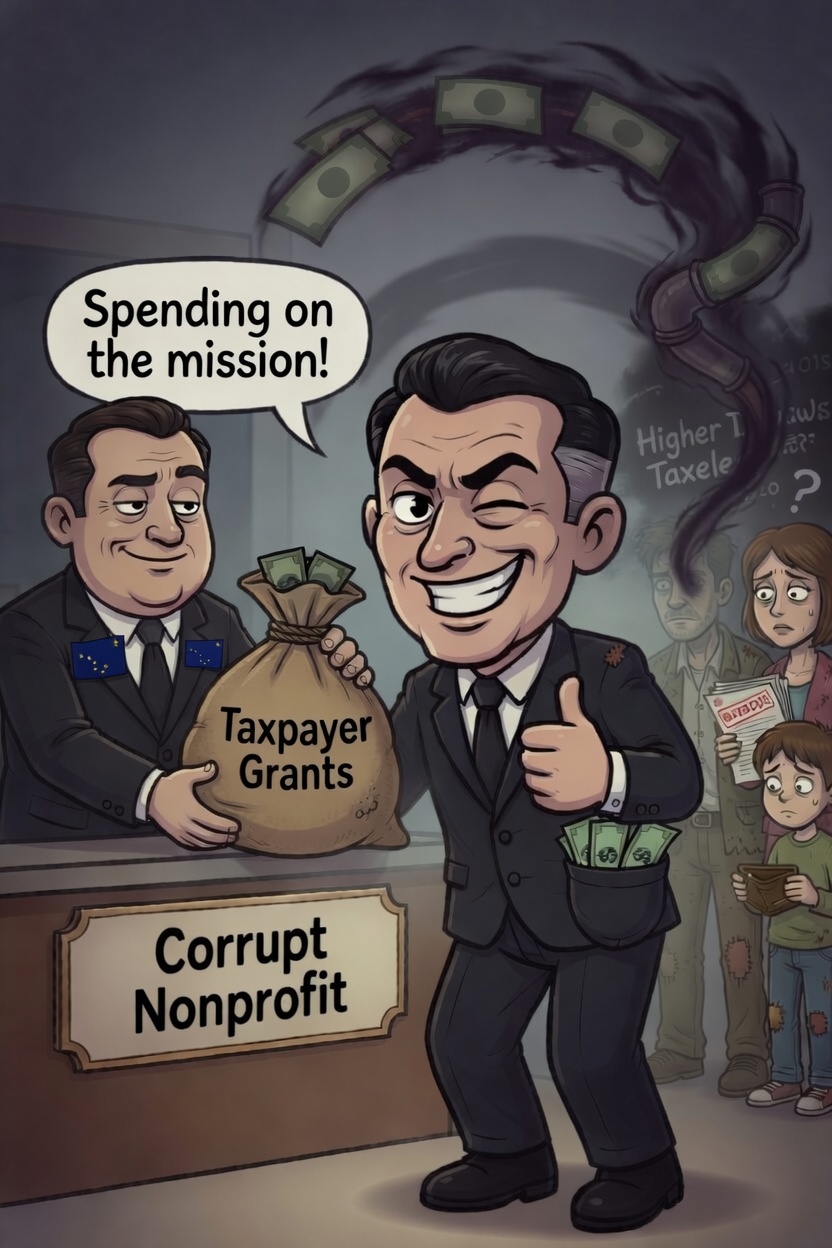
Not every grant recipient is illegitimate, and many grants may be lawful and necessary. But when billions flow out year after year while the crises used to justify them persist or worsen, Alaskans have every right to ask whether the state is funding real solutions or sustaining a permanent crisis-management class.

That concern is now mainstream. The recent federal indictment of the Southern Poverty Law Center reinforced a broader public suspicion. When an institution is funded to fight a social evil, there is always a risk that the evil becomes too useful to disappear.
The key policy question is not whether grant recipients claim a public purpose, but whether grant spending produces measurable public success. If crises worsen as spending grows, citizens may fairly ask whether government is solving problems or sustaining them, especially in Alaska, where billions move through grants while households are denied their full share of oil wealth.
Compare that to the PFD. The Governor’s FY2025 proposal pointed toward roughly $3,400 per person, but the actual 2025 dividend was set at $1,000, or about $600 million statewide. In plain terms, Alaska moved $2.72 billion through grants while giving resource owners a sharply reduced share of their own wealth.
The PFD is not just a fiscal device or campaign talking point. For many Alaskans, it is the difference between stability and falling behind. It’s fuel, groceries, repairs, medical travel, or debt relief. In Alaska’s punishing cost environment, a small PFD is not an abstract adjustment. It feels like a humiliation.
A reduced dividend tells families that when the state has money, the system comes first and the citizen gets what is left. Over time, that breeds not just frustration, but bitterness, alienation, and the growing belief that Alaska’s government no longer sees its people as owners, only as obstacles to bureaucratic spending. It also feeds a broader public suspicion seen in controversies surrounding groups like the Southern Poverty Law Center. Do institutions become more invested in perpetuating the conditions that justify their funding than in achieving the permanent disappearance of the evils they claim to fight?
The PFD fight has become a major obstacle to Alaska’s progress. It has eroded trust, distorted elections, and diverted attention from energy, infrastructure, education, resource development, and fiscal reform. Instead of resolving it, state leaders have repeatedly used the PFD as a bargaining chip, deepening public resentment and reinforcing the belief that government priorities come before the people.
That is not just bad budgeting. It is bad statecraft. A government cannot endlessly invoke the language of shared prosperity while behaving as though the citizen’s dividend is the easiest promise to break. It cannot keep asking the public for patience, sacrifice, and trust while visibly prioritizing bureaucratic distribution over household relief. Eventually people stop hearing “fiscal responsibility” and start hearing something much darker. Is there always money for the machinery of the state, and never enough respect for its people?
Alaska was not supposed to become a state where the citizen’s share is perpetually negotiable, but the institutional share is politically untouchable. The Permanent Fund was meant to express a principle. The wealth of this place belongs first to the people who live here, raise families here, work here, age here, and endure this land’s costs and hardships. When that principle is repeatedly subordinated to a grant-driven political economy that always seems to grow while the state’s core social problems remain unsolved, something fundamental is lost.
And that is the real danger. Once Alaskans conclude that their own government treats them as the last claimant instead of the first, everything else gets harder. Trust collapses. Reform stalls. Cynicism spreads. Political life becomes a fight over scraps instead of a shared effort to build a stronger state. That is why the small PFD is not merely a fiscal issue. It has become a moral test of whether Alaska is still governed for its people, or merely over them.
If Alaska wants to move forward, it must do more than balance columns on a spreadsheet. It must reckon with what those columns now say: roughly 17.4% of all state revenue, about 22.3% of the FY2025 operating budget, and about 43.2% of projected unrestricted general fund revenue flowed through grant channels while ordinary Alaskans were told there was not enough to fully honor their own share of the state’s wealth.
At the same time, too many nonprofit and policy organizations appear less committed to solving the crises they invoke than to sustaining, enlarging, and monetizing them so their relevance and funding never end. That is the point at which public trust breaks. Alaska must decide whether its wealth still belongs first to its people, or whether the citizen has become merely the last claimant after the system has taken care of itself.


