On Monday, the Legislature’s Joint Task Force on Education Funding released its recommendations, and most of them ask for more money for some of the worst-performing schools in the country. On page nine, though, the task force takes its first step toward regulating how Alaska families teach their own kids.
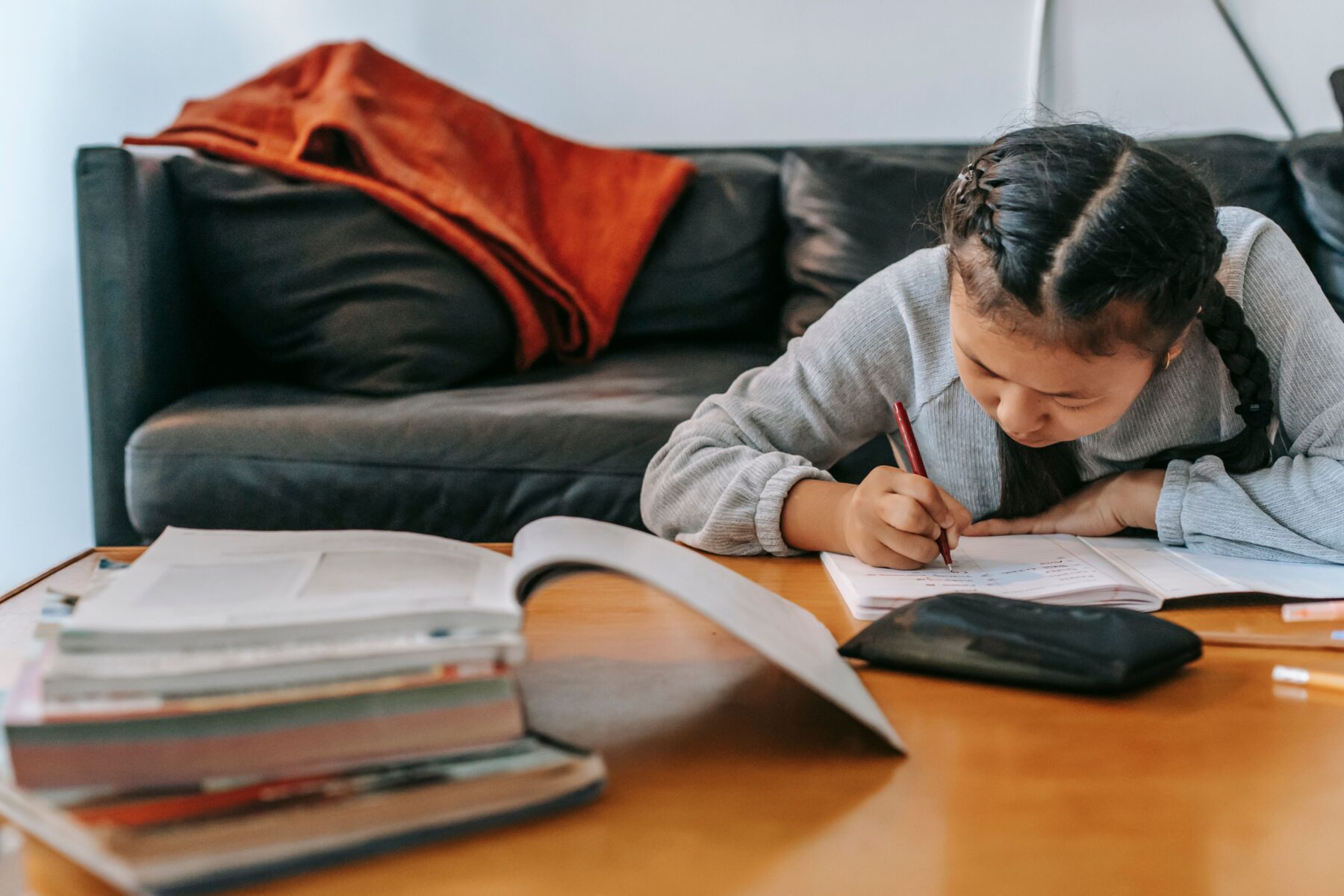
The task force recommends “reviewing Alaska’s existing correspondence school statutes, which allow broad exemptions from statewide content standards, proficiency assessments, and fiscal audits,” and asks districts to consider “incorporating public correspondence programs into a broader brick-and-mortar framework.” Those exemptions let families choose their own curriculum, and more than 20,000 Alaska kids have left the brick-and-mortar system.
On the 2024 Nation’s Report Card, Alaska ranked 51st of 53 jurisdictions in fourth-grade reading, fourth-grade math, and eighth-grade reading, and we spent $20,340 per student to get there, 23 percent above the national average. Mississippi, poorer and spending thousands less per kid, focused on phonics and rose to first in fourth-grade reading among low-income students, while ours ranked 49th.
A 2026 study in the Peabody Journal of Education found homeschool students scoring 25 to 29 percentile points higher than their conventionally schooled peers in every subject tested. A 2004 study in Education Policy Analysis Archives found homeschoolers outscored public school students on the SAT by 80 points, after accounting for family income and parents’ education. I would like someone in Juneau to explain why a failing system should set the standard for parents who outperform it.
Families also leave over moral instruction, which 68 percent of homeschool parents cited as a reason in a 2023 Washington Post poll. As of 2023, Anchorage School District guidelines warned that telling parents about a child’s gender transition “carries risks for the student.” When a school treats a mother as a danger to her own child and celebrates sexual ideas most Alaska families consider immoral, parents pull their kids out.
The Associated Press reports that public school enrollment fell by more than 1.4 million students nationwide from 2019 to 2024, and 1,156 public schools closed last year. Falling birth rates explain much of that, but the AP also cites homeschooling and school choice. Families are voting with their feet, and the task force’s answer is to build a fence.
Virginia built that kind of fence years ago, and homeschool parents there file a notice every year, meet a parent qualification, and prove their child scored at or above the fourth stanine on a standardized test or passed an approved evaluation. California bans religious curriculum in its charter homeschool programs, and a federal appeals court upheld the ban in Woolard v. Thurmond.
State law here already limits allotments to “nonsectarian services and materials,” which puts Alaska partway down California’s road. The task force quotes the constitutional clause barring public money “for the direct benefit of any religious or other private educational institution,” the same clause plaintiffs used in 2024 to try to kill allotments. The Alaska Supreme Court’s State v. Alexander ruling saved the program but left specific uses open to challenge, and I doubt quoting that clause was an accident.
It also wants the Legislature to define an “adequate education” as curricula meeting state standards in fifteen subjects, taught by “qualified educators,” with partnerships among “schools, families, tribes, and the community.” Parents get one seat at a table of four. Under Alaska law, a correspondence student is a public school student, so if the Legislature adopts this definition and removes the exemptions, the state will grade every learning plan against its own standards. A family teaching Latin, logic, and Bible-based history would have to drop the faith or leave the program.
Proving a child is educated means proving it by the state’s measure, and the state writes the measure. The proposed definition already reaches into “Skills for a Healthy Life” and “Culturally Responsive Schools,” and nothing stops future standards from carrying whatever the people writing them believe about sex, gender, or economics. Even teaching method matters. A child who learned traditional arithmetic at the kitchen table can stumble on a test built around Common Core-style strategies, and a family doing the job well could look, on paper, like it neglected its child.
I would be glad to see more families stop taking the state’s money, because control comes with it and rarely stays put. Virginia’s rules apply to every homeschooler, funded or not, and if Alaska starts setting standards for the families it pays, the families it does not pay will be next.
The task force says “extensive post-pandemic research” shows in-person learning outperforms online learning, but it does not name a single study. The pandemic research looked at public schools that sent kids home with a laptop and a Zoom link in 2020, and my wife and I do not teach our daughters over Zoom.
Deuteronomy 6:7 gives parents the job of teaching their children, at home, on the road, at bedtime and in the morning. Thomas Jefferson championed public schools, yet wrote in 1817 that “it is better to tolerate the rare instance of a parent refusing to let his child be educated, than to shock the common feelings & ideas by the forcible asportation & education of the infant against the will of the father.” The Supreme Court said in Pierce v. Society of Sisters (1925) that “the child is not the mere creature of the State.”
I do not believe the state should be running schools at all. Educating children is the parents’ job, and the state has no business taxing families to fund a system that does it worse. This report does not regulate homeschoolers yet, but it sets up everything a future bill would need.
Two Republicans sat on this task force: Sen. Mike Cronk of Tok and Rep. Justin Ruffridge of Soldotna. The report does not say which recommendations were unanimous, and Kenai Peninsula families deserve to know whether either signed off.
The new Legislature convenes in January. Ask your legislators now, in writing, whether they will oppose state standards and testing for homeschoolers, oppose folding correspondence into brick-and-mortar schools, and keep the state out of what parents teach.
Former Education Commissioner Jerry Covey asked this task force to show Alaskans what limited, affordable public education looks like. Homeschool families have been showing them for years.