APOC’s recommendation to deny Treg Taylor certification for the ballot needs to be scrutinized by the people of Alaska for all its implications.
The essential matter is not about politics, but about wise interpretation of law. What is a reasonable standard of disclosure for a public official who is also an owner of a hotel or large apartment complex—or a food wholesaler for that matter—doing business with thousands of people every year?
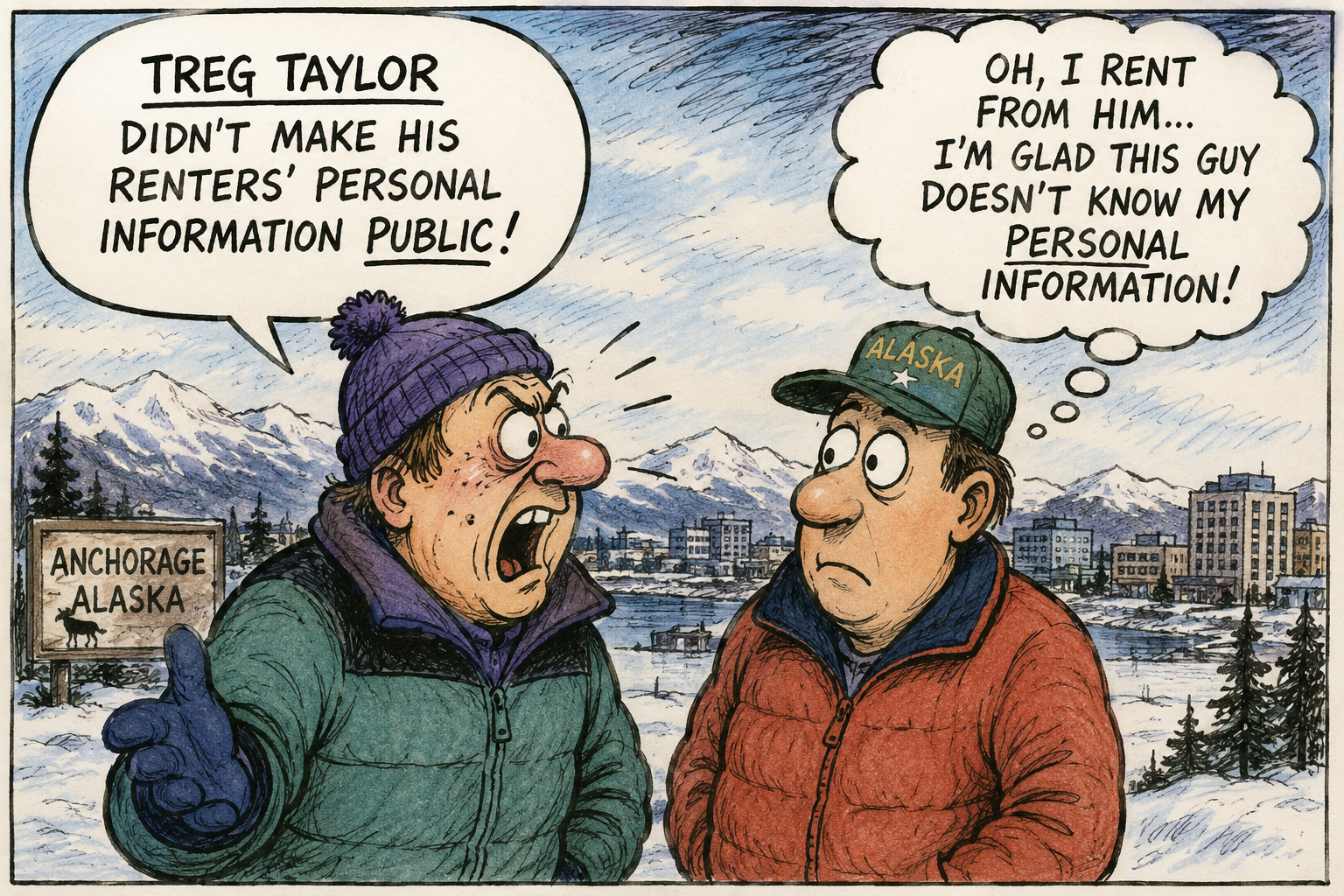
Does it serve the public interest for APOC to require the full names of every customer doing business with a candidate and render these people’s personal information a matter of public disclosure? If we strip political motivations from this question, the answer is: “Are you kidding me, no!”
Was Walter Hickel forced to disclose every customer of the Captain Cook? Tony Knowles the Downtown Deli? Hammond his lodge and air-taxi clients? No! Similarly, when I served briefly in Commerce, the disclosure requirement was deemed unreasonable at that time.
Consider the weight against public service APOC’s present recommendation carries. How does this impact our privacy as innocent patrons of any business? Do we not have a right to assume a reasonable level of anonymity when we rent an apartment? Equally important, how does APOC’s present recommendation impact future qualified leaders to step forward and serve? Imagine a leader of a large Regional Native Corporation seeking elected office being held to the standard being promoted by APOC.
We all benefit from “the rule of law,” primarily because we regard it as protecting the public interest. Nowhere is this more important than in elections. Free and fair elections are a critical foundation for a free society.
The burden on APOC to serve democracy, to promote public service, and to reasonably protect innocent citizens from political retribution is paramount. Any decision by APOC—an appointed commission—that denies a candidate the ballot or Alaskans the right to support a candidate of their choosing, carries lasting consequences.
Taylor should be certified, and here’s why: the extent of the disclosure requirement is out of proportion to the public risk. Alaskans are not put at risk by Treg Taylor withholding the personal information of his tenants— private tenants, not campaign donors. Additionally, Alaskans should be far more concerned about the amount of outside money pouring into Alaskan races, and the unreported “in-kind” volunteer contributions from labor unions.
The level of disclosure APOC appears to embrace may lead to the targeting and unfair exclusion of candidates who own a business and formerly served in public office.
The standard applied to Mr. Taylor is arbitrary and unsustainable. Carried to its logical conclusion, it cannot be reasonably implemented. Implementation of disclosure laws should serve the public interest, not become a mechanism for excluding otherwise qualified candidates from the ballot over private information that has little bearing on a voter’s decision. APOC’s recommendation has usurped the power of the people’s vote, which should determine who wins and loses an election. It may further discourage good people from serving the public. Worst of all, it justifies the exposure of private individuals to politically motivated intrusions.