
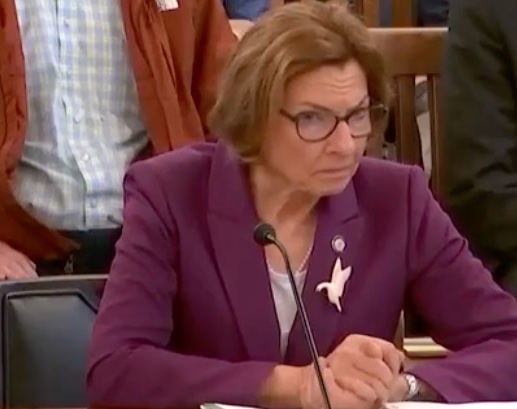
Once considered a champion of Alaska’s oil-based economy, Sen. Cathy Giessel, a south Anchorage Republican, has done a 180-degree pivot, and now is voting against energy companies, which are the driving force for jobs and prosperity in Alaska.
Giessel’s vote in Senate Natural Resources Committee on Friday to tax Hilcorp surprised many who once knew her as a conservative.
But on Wednesday, her Hilcorp tax was foiled.
Senate Finance Committee brought forward a new version of House Bill 50 — the governor’s carbon storage bill — stripping out the S corporation tax that had been inserted into the bill by Sen. Bill Wielechowski and Committee Co-Chair Giessel.
The amended bill, with the controversial “Amendment d.49,” had left the Resources Committee on a vote of 4-3, with Giessel the only Republican to vote for enacting a new tax in Alaska.
Even Sen. Matt Claman, a Democrat, voted against it because of the implication it would have on thousands of businesses, both large and small, in Alaska. The language in the amendment was so vague it could capture other S corporations in the industry.

Other provisions had been crammed into HB 50 included HB 394 (gas storage), HB 256 (seismic data release) and HB 388 ( reserve-based lending). All were taken out in Finance and the bill is back to being just legislation that allows the state to engage in carbon storage as the only topic.
In addition to Giessel’s vote, Senators Forrest Dunbar, Scott Kawasaki, and Wielechowski voted in favor of taxing S corporations.
Voting against the tax amendment were Senators James Kaufman, Claman, and Committee Co-Chair Click Bishop.
Gov. Mike Dunleavy may not need to veto his own bill, now that the hostile tax amendment has been removed, although the bill must still pass the Senate.
It’s not a secret that the Giessel and Wielechowski are working on a plan to make Giessel the Senate president next year, while Dunbar is working on a plan to run for governor in 2026, according to those inside the Capitol.
Gas storage, seismic data, and reserve-based lending are expected to be considered separately on their own merits. They should advance as they involve policies with bipartisan support.



