
MILLENNIALS ARE IN CHARGE, WILL SHAPE THE GENERATIONS TO FOLLOW
In 1920, the Greatest Generation was coming into the world squalling and kicking, as babies do. They had no idea what was ahead of them.
The generation that earned the name “Greatest” grew up during a time when soldiers came home from World War I. The kids went to school during the Roaring Twenties, felt hunger during the Great Depression, went to war in World War II, and some returned home to rebuild the nation.
They are all but gone now; the average lifespan for a male born in 1920 was 58.8 years, for a female it was 60.6 years.
On Wednesday, Jan. 1, the calendar turns to the next decade — the 2020s, and a very different generation will emerge.
Millennials? No, those are yesterday’s kids who are now heading into their 40s and shaping public policy and life as they become grandparents and hit their career stride during a time of unprecedented national prosperity.

The children being born now don’t have a code-name identifier, such as the Silent Generation, Baby Boomers, Gen X, or Gen Z. Today’s generational personality won’t be settled upon until marketers observe how events unfold for these youngsters, and how they typically respond.
What we can predict about the babies born today is they are emerging into a world light years away from that of the Greatest Generation, and even far from that of their Millennial grandparents.
They will be a diverse lot. The babies born today already represent no clear racial or ethnic majority, according to Census Bureau population estimates.
These children will navigate a complicated world. They’ll be taught that climate change is settled science, but gender is choice. They’ll compete in the workforce against robots and automation.
There are similarities, of course. As it was in 1920, America is starting out this decade with an economic boom unlike any other, a time of immense prosperity and growth. These newbie Americans inherit that promise of prosperity.
Under the presidency of Donald Trump, America has gone from being one-fifth of the world’s economy to one-fourth — in three short years.
Back in 1920, fascism was on the rise in Germany and Italy. And, in spite of capitalism driving innovation and wealth accumulation in the United States, socialism was beginning to be fashionable. A robust manufacturing sector in America gave rise to unions, and unions hitched their wagons to communism.
Socialism, the experiment that stifled progress and resulted in the deaths of millions, had all but faded as a fashion by the 1980s. Few talked about it as a viable economic model for America.
But today, Socialism has become part of everyday dialogue in post-Obama America, a time when Democrats long for an even bigger government footprint in their lives. A declared socialist — Bernie Sanders — could very well be the Democrats’ nominee for president.
Those who lived through the Roaring Twenties saw the economy come tumbling down around them in a stock market crash, and resulting Depression. The sudden reversal of fortunes was a result of unregulated markets, when people borrowed money to invest it.
Today’s newborns are entering an America where markets are soaring more and more people are coming off of welfare. Nearly everyone who wants a job can get one. Hispanics, African Americans, women, and blue-collar workers are thriving under the policies of the Trump presidency in ways they have never before succeeded.
Economic events of today’s Trump economy will shape the perceptions of today’s newest Americans:
- The economy has added 6 million jobs in the past three years.
- Unemployment rate dropped to 3.6 percent, the lowest level in 50 years.
- Economic growth rate is 2.1 percent. The ideal growth rate is between 2-3 percent.
- Median household income has reached $65,976 – an all-time high and up more than 8 percent in 2019 dollars under the Trump presidency
- Middle-class incomes, after adjusting for inflation, have surged by $5,003 since Donald Trump became president in January 2017.
- The poverty rate and food stamp rolls declined 15 percent.
- Stock prices rose: The S&P 500 index was up 29.8 percent.
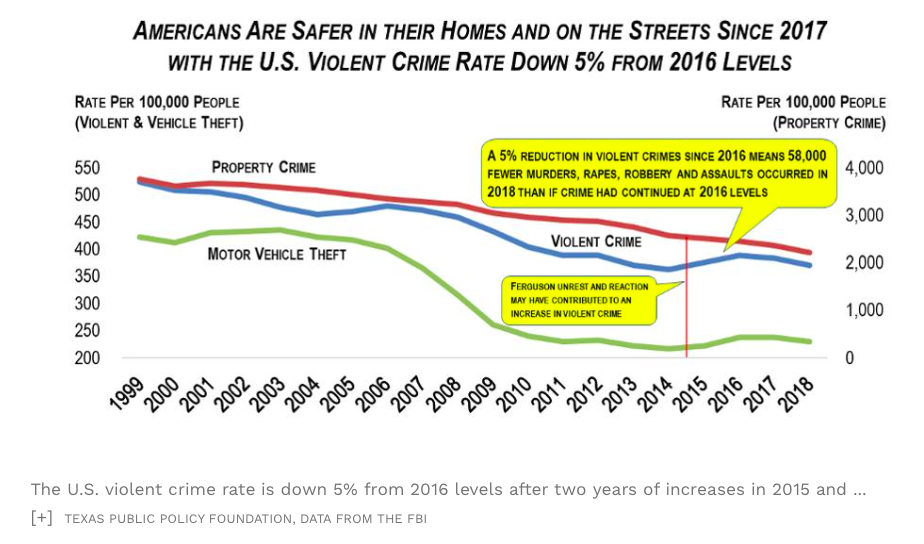
- The number of murders dropped 6.9%.
- The FBI’s annual crime report, shows violent crime rate dropping 4.6 percent since President Trump took office, reversing an uptick in violent crime that occurred under the last two years of President Barack Obama.
The 1920s was also a decade of technological advancements. By the end of the decade, there was one car for every household in America, and families had radios and telephones.
Today, the pace of technological change happens so fast that babies born into this 2020 generation will experience reality in a way unimaginable to the Greatest Generation. Artificial intelligence is baked into their every transaction and surveillance tracks their movements from the moment their parents put a crib monitor on the wall of the nursery.
Just as likely, the children born today will not be able to easily distinguish what is real from what is fake, as information and the warping of it comes at them more quickly than their human brains can assimilate.
Will peace prevail during these children’s formative years during the 2020s? Will lifespans increase for today’s toddlers, who are predicted to live until past the year 2100? Will prosperity continue to lift up the poor?
America has yet to see the end of the current Trump economic expansion. It could go another five years, or it could come to a screeching halt in November, 2020. Much of it will depend on the biggest voting bloc: Millennials.
Thus, 2020 and the decades that follow will be the era Millennials fully shape and control. The 71-million-and-aging Baby Boom generation is handing over the reins to the 76 million Millennials. Boomers are transferring wealth to them, some $30 trillion in personal wealth in these next few years, likely be the greatest wealth transfer in history.
Whether Millennials lean toward free markets or embrace Socialism will shape the world for babies born into the New Roaring Twenties. And how Millennials vote this coming election cycle will say a lot about the future of the American experiment. It will be an election year for the ages.


