President Joe Biden, speaking to reporters in Korea, said everyone should be concerned about monkeypox, which has been reported on the African continent, in Europe and two cases in the United States — one in Massachusetts and one in New York.
Cases have been reported in Britain, Spain, Portugal, Italy, Sweden, Canada and other countries — and none of the individuals who have had the illness had any travel history in Africa, where the virus is endemic.
“We’re working on it, hard to figure out what we do,” Biden said to reporters, adding “if it were to spread, it’s consequential.”
Biden’s exact remarks, given as he boarded his jet for Japan, are transcribed at this White House link.
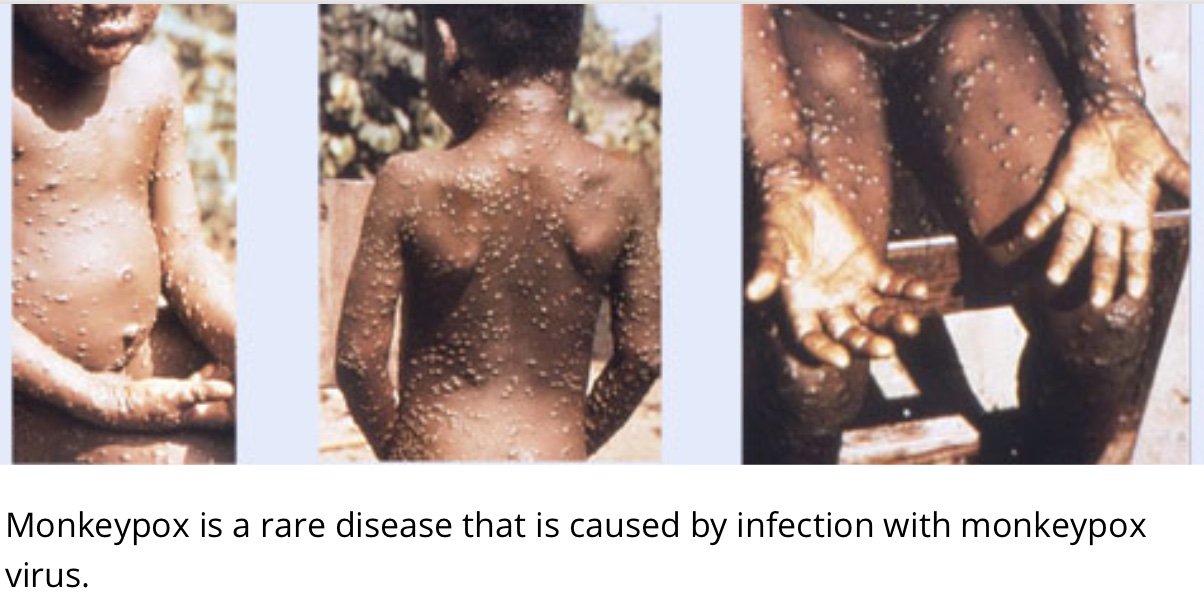
Monkeypox is transmitted by skin contact, air droplets, and infected surfaces. Smallpox-like sores, and the illness also comes with fever and other flu symptoms. It can be fatal. The media has seized upon the news of the disease with gusto and suddenly there is no rush to report on Covid-19, the pandemic that began in early 2020 and that spawned numerous unconstitutional policies by federal, state, and local governments.
Belgium was the first European country to introduce a mandatory 21-day monkeypox quarantine for those who contact the virus, after three cases were recorded.
“I’m stunned by this. Every day I wake up and there are more countries infected,” said Oyewale Tomori, a virologist and World Health Organization advisory board member, as reported by Fox News.
Monkeypox used to be confined to animals, but the first human case of the pox disease broke through from research monkeys to humans in 1970 in the Democratic Republic of Congo. Since then, monkeypox has been reported in humans in other central and western African countries, according to the Centers for Disease Control and Prevention.
The World Health Organization writes that as of May 21, 92 laboratory confirmed cases, and 28 suspected cases of monkeypox with investigations ongoing, have been reported to WHO from 12 states that are not endemic for the virus, across three WHO regions. No associated deaths have been reported to date.
“The identification of confirmed and suspected cases of monkeypox with no direct travel links to an endemic area represents a highly unusual event. Surveillance to date in non-endemic areas has been limited, but is now expanding. WHO expects that more cases in non-endemic areas will be reported. Available information suggests that human-to-human transmission is occurring among people in close physical contact with cases who are symptomatic,” the WHO writes.
WHO says monkeypox is a viral zoonosis with symptoms very similar to those seen in the past in smallpox patients, although it is clinically less severe. Monkeypox virus is now transmitted from one person to another by close contact with lesions, body fluids, respiratory droplets, and contaminated materials such as bedding. The incubation period of monkeypox is usually from 6 to 13 days but can range from 5 to 21 days, WHO says.
Risk factors include eating inadequately cooked meat and other animal products of infected animals. Monkeypox is usually self-limiting but may be severe in some individuals, such as children, pregnant women or persons with immune suppression due to other health conditions. Human infections with the West African version of the virus appear to cause less severe disease compared to the Congo Basin version, with a case fatality rate of 3.6% compared to 10.6%.
Has monkeypox been weaponized? According to the Daily Mirror, a specialist in biological weapons during the Soviet Union says that in those days a program was run to find out which viruses could be made weapons. Colonel Kanat Alibekov was the deputy head of the country’s biological weapons program until the collapse of the Soviet Union in 1991. He said, “We started a special program to find out which ‘model’ virus of interest can be used for human smallpox. We used vaccinia virus, mousepox virus, rabbitpox virus and monkeypox virus as model viruses for smallpox.”