
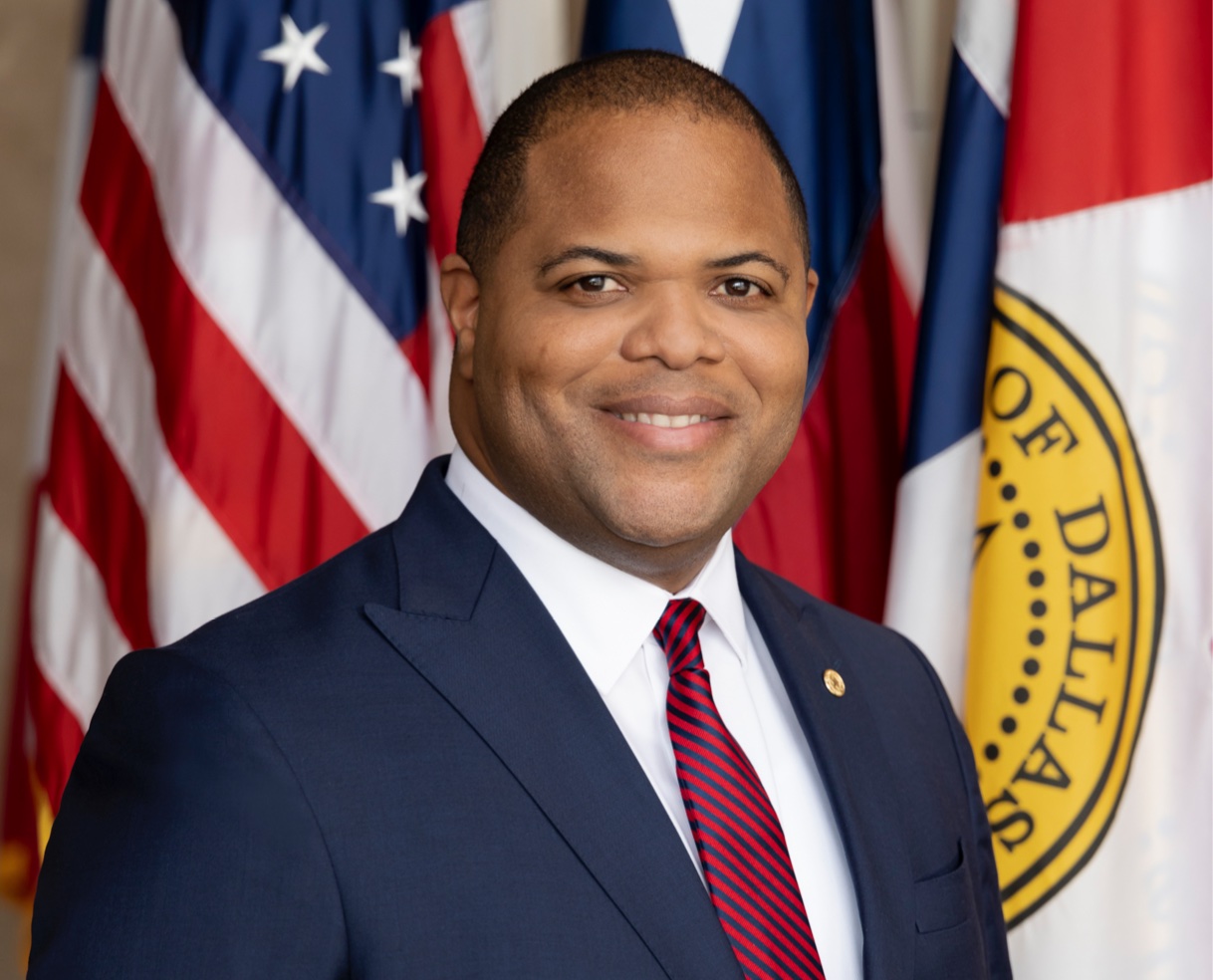
By BETHANY BLANKLEY | THE CENTER SQUARE
Two days after failing to convince the Dallas City Council to cut spending and taxes in its new budget, the Democratic mayor of Dallas switched parties to become a Republican.
On Wednesday, the Dallas City Council approved its FY 2023-24 city budget, and Democratic Dallas Mayor Eric Johnson voted against it. He sought to ensure the budget kept a no-new-revenue property tax rate of roughly 68.13 cents per $100 valuation. The city council passed a $4.6 billion budget, including a property tax rate of 73.93 cents per $100 valuation.
“In an environment of such economic uncertainty for our residents and businesses, with inflation and interest rates being where they are, I simply could not vote for a budget that is the largest in the history of the city and that is paid for by raising taxes on our residents and businesses,” Johnson said on Wednesday, explaining his decisions to go against fellow Democrats.

“It is simply not the case that we could not have significantly reduced the size of this budget and cut taxes without drastically cutting essential services,” contradicting the claims made by proponents to increase taxes. He also said, “it is preposterous to suggest that our city government could not, by being more efficient, deliver essential services next year using the same amount of tax revenue collected from Dallas residents and businesses just a year ago.”
Before becoming the 60th mayor of Dallas, Johnson served in the Texas House of Representatives as a Democrat from 2010 to 2019. During his four years as mayor, he’s sought to lower taxes and create a “friendlier business climate.” One major accomplishment he’s championed is the city has reduced its property tax rate every year since he took office.
On Friday, he announced in a Wall Street Journal column that he had joined the Republican Party.
He said he has “no intention of changing my approach to my job” but is changing his party affiliation. “Next spring, I will be voting in the Republican primary. When my career in elected office ends in 2027 on the inauguration of my successor as mayor, I will leave office as a Republican.”
He said of his time in the state legislature that he took pride in “finding common-sense solutions and worked closely with my conservative colleagues to improve policing, public education and water infrastructure. I was never a favorite of the Democratic caucus, and the feeling was mutual. By the time I was elected mayor—a nonpartisan office—in 2019, I was relieved to be free from hyper partisanship and ready to focus on solving problems.”



