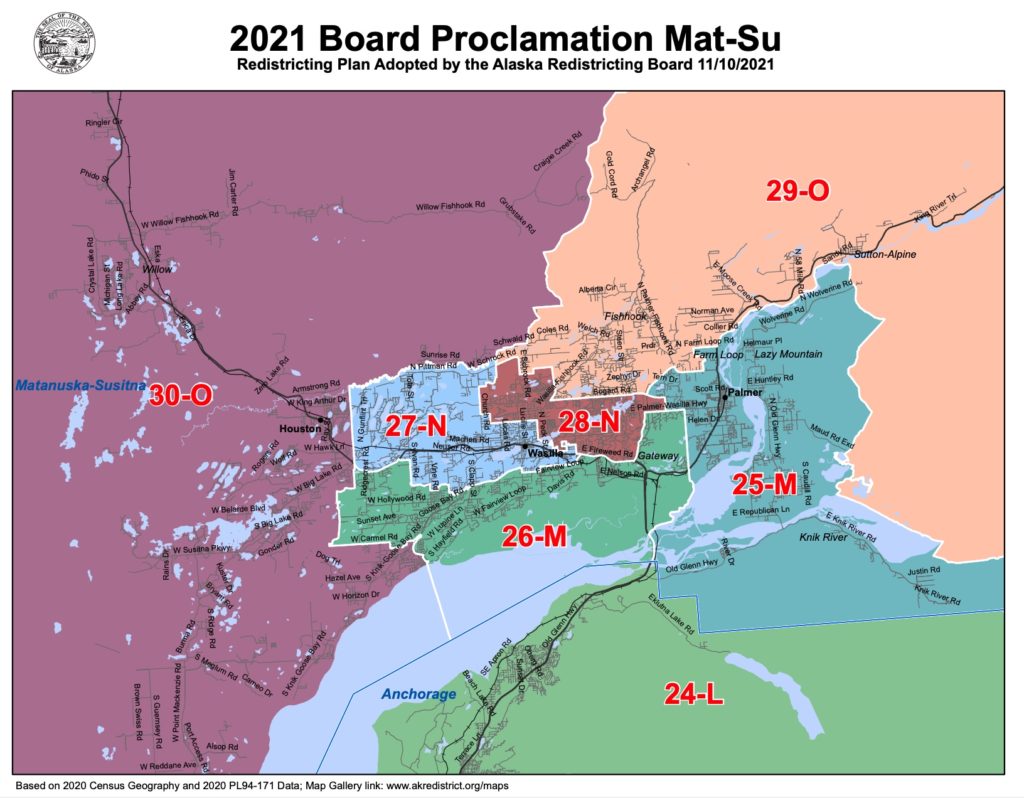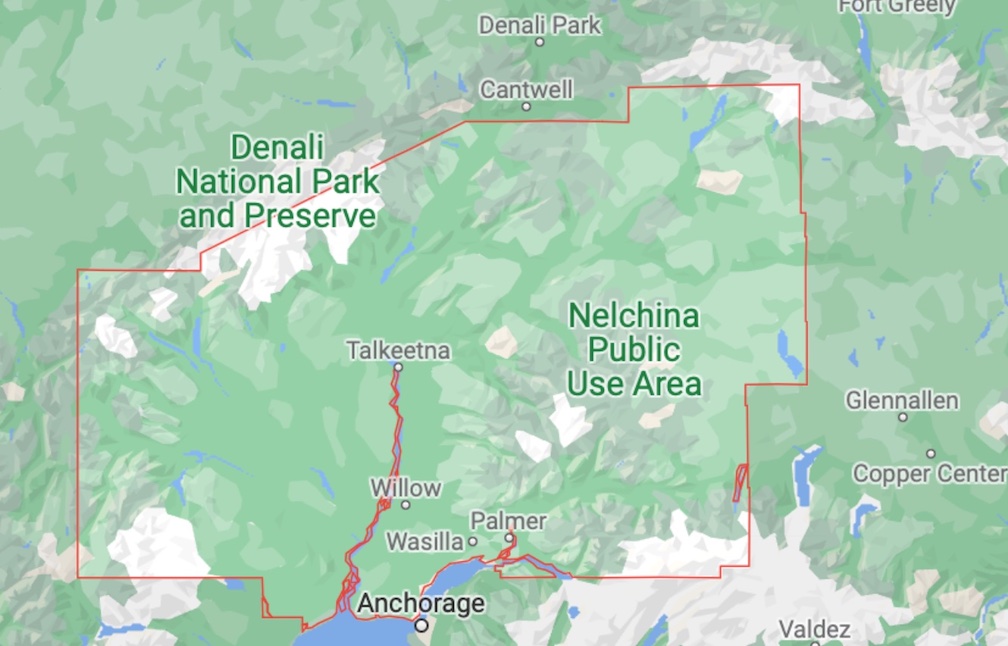
The Matanuska-Susitna Borough says that the new political boundaries drawn by the Alaska Redistricting Board has robbed the people of the Mat-Su by diluting their votes with other population centers.
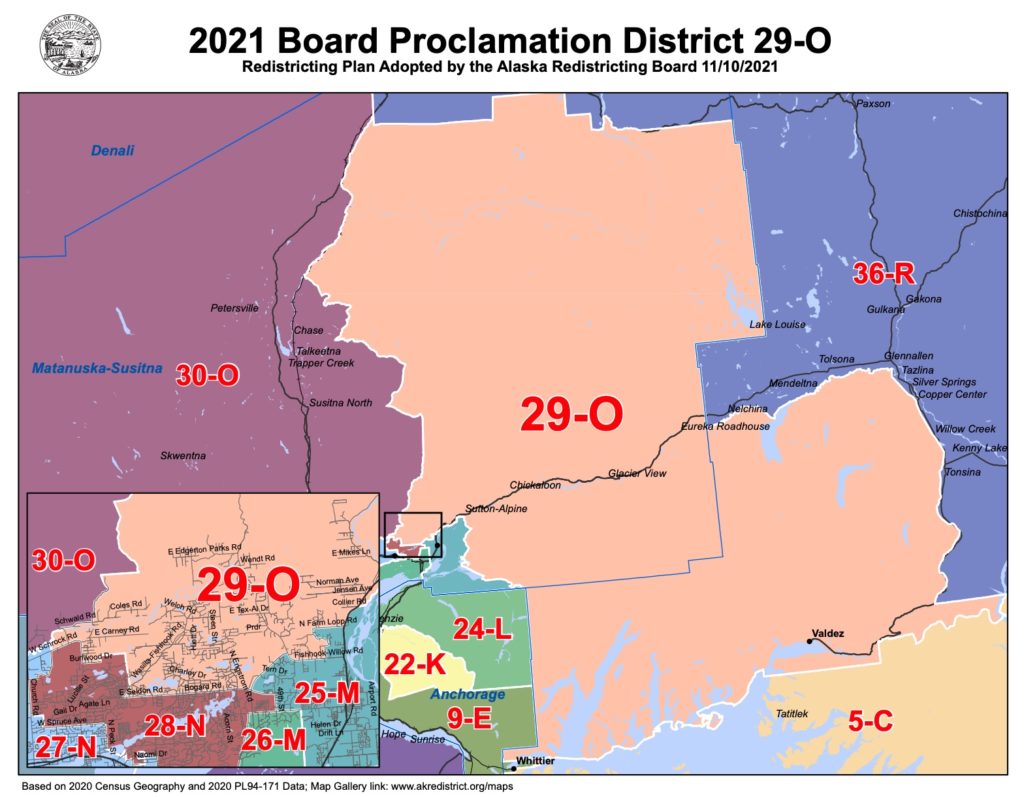
In the new map, the borough has one House district — 29 — that is tied in with Valdez.
The Mat-Su Borough had proposed having four House seats exclusively in the borough, and two House seats that it would share, but it didn’t want to have that district including Valdez, and Valdez has also said it doesn’t feel naturally paired with the Mat-Su. It’s an oil export city on Prince William Sound, and it tends to vote solidly Republican, 53.1% to 41.9%. Valdez voted Republican in the last five presidential elections, after voting Democratic in 2000.
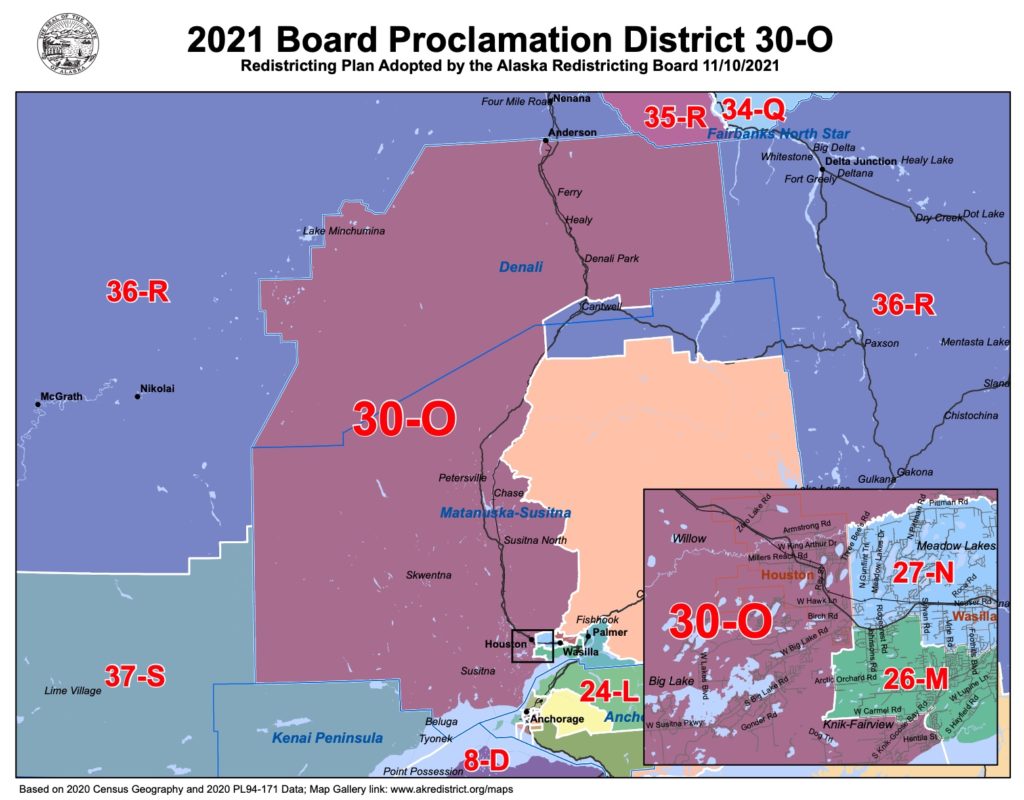
Another section of the borough was shaved off and added to the district that represents the Denali Borough, District 30.
The plan, according to the Mat-Su lawsuit, dilutes the effective strength of MSB voters, by throwing a few of them into a borough to the north, and a few to a borough to the east. That, the lawsuit says, is not respecting the borough boundaries and those voters living in that section.
As one of the nation’s fastest growing areas, the Mat-Su Borough has an estimated population of 108,317 and projects it will grow to 130,000 by 2027.
The Denali Borough, according to the U.S. Census, has 2,097 residents. Valdez has a population of 3,985.
Every one of the districts in the Mat-Su “overpopulated” on the map by 400 people, the most significant deviation in the state. Anchorage’s 16 districts are underpopulated by 10 percent, which is the number that has been used historically as the highest deviation that would be acceptable.
All lawsuits challenging the final redistricting map must be filed by Dec. 10. This is the first lawsuit to be filed, but others are expected.