
The Bristol Bay Six case against Bristol Bay Regional Seafood Development Association has been dismissed.
Alaska Superior Court Judge Yvonne Lamoureux said that the association is within its rights to spend money fighting the Pebble Project, which the association feels could harm the fishery of Bristol Bay.
The six fishermen who had sued had said that BBRSDA was working in areas far from its mission, spending some $250,000 of fishermen’s money on contracts with groups opposing the Pebble Project.
BBRSDA was created by statute to market seafood, but contracted with SalmonState and United Tribes of Bristol Bay, which were actively working against the massive copper and gold mining project proposed for state mining lands in the region. Some fishermen support the mining project and don’t want their funds to be used to oppose it.
According to statute, the BBRSDA was created for:
- Promotion of seafood and seafood by-products that are harvested in the region and processed for sale;
- Promotion of improvements to the commercial fishing industry and infrastructure in the seafood development region;
- Establishment of education, research, advertising, or sales promotion programs for seafood products harvested in the region;
- Preparation of market research and product development plans for the promotion of seafood and their by-products that are harvested in the region and processed for sale;
- Cooperation with the Alaska Seafood Marketing Institute and other public or private boards, organizations, or agencies engaged in work or activities similar to the work of the organization, including entering into contracts for joint programs of consumer education, sales promotion, quality control, advertising, and research in the production, processing, or distribution of seafood harvested in the region;
- Cooperation with commercial fishermen, fishermen’s organizations, seafood processors, the Alaska Fisheries Development Foundation, the Fisheries Industrial Technology Center, state and federal agencies, and other relevant persons and entities to investigate market reception to new seafood product forms and to develop commodity standards and future markets for seafood products;
BBRDSA said that its anti-Pebble activities fall under the category of “education.”
Judge Lamoureux ruled that the mission is broad enough that it could spend its members’ money to oppose the mining project.
Commercial fishers in Bristol Bay are required to pay BBRDSA 1 percent of their fishing income. The judges decision essentially forces them to pay 1 percent to an organization that is not dedicating 100 percent of its resources to marketing fish, as it was set up to do.
In other news, Northern Dynasty Minerals, which owns the Pebble Project, has signed another right of way agreement with the Alaska Native village corporation Iliamna Natives Limited, to use some of INL lands for construction and operation of transportation infrastructure
Ron Thiessen, Northern Dynasty president and CEO said the agreement will involve the shareholders of INL in a “meaningful way in the future development of the Pebble Project.”
“Not only does today’s announcement demonstrate that the Alaska Native landowners and those who live in closest proximity to the project support the work we are doing to advance Pebble in an environmentally sound and socially responsible manner, it also ensures they will benefit in a meaningful way from the jobs and other economic opportunities associated with the project,” he said.
The Right-of-Way Agreement is the second one the Pebble Partnership has reached with Alaska Native landowners for access to the site for both construction and operation. The first agreement was with Alaska Peninsula Corporation in November.
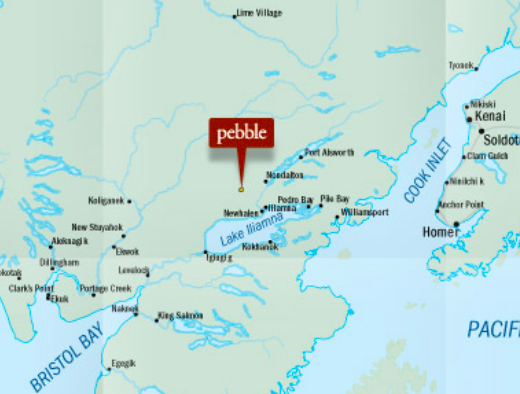
The agreement with INL gives the Pebble Partnership an alternative ferry landing site and road and utility corridor on the north side of Lake Iliamna, which will give the project some flexibility as it advances toward a final Record of Decision on the federal Environmental Impact Statement (“EIS”) permitting process next year.
The U.S. Army Corps of Engineers released the draft environmental impact statement in February and has extended the public comment period until the end of May.


