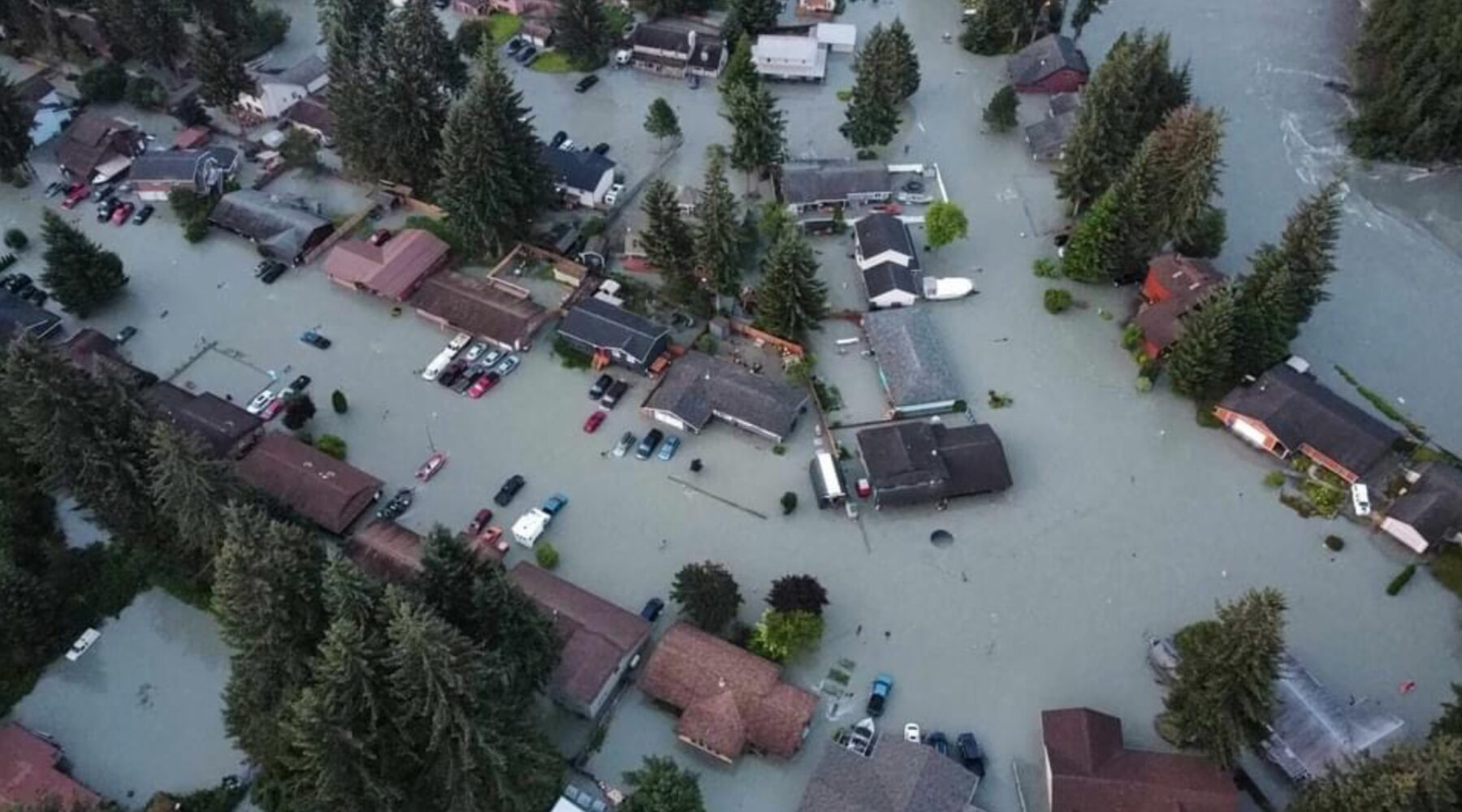
The Juneau Assembly voted Monday to spend as much as $2 million for a containment system along a portion of the Mendenhall River to protect homes in the populated Mendenhall Valley from future glacial flooding. Two floods have occurred this year so far, the first on Aug. 6, which impacted more than 300 homes, and left many uninhabitable. The second, which occurred last week, spared homes but caused concern since it came so quickly on the heels of the last flood.
The Hesco barriers are containers that can be filled with sand, similar to oversized sandbags. Such barriers, placed end to tend, can become a type of levee.
The flooding is now a regular occurrence. As the the Mendenhall Glacier has receded, it developed a feature known as Suicide Basin, essentially a pond of ice and water that fills up and then releases. In August, about 14.5 billion gallons of water gushed out of the glacier pond and powered through many homes, businesses, and streets, leaving a path of destruction.
Other solutions include building a large levee around a portion of the Mendenhall Lake to control the flow from the lake into the river.
That idea would take the cooperation of multiple federal and local agencies, and might be subject to environmental group lawsuits.
The Hesco solution might end up being paid for by the residents of the impacted areas through what’s known as a Local Improvement District, where the burden is shifted to those impacted. That might cost each homeowner $100,000 or more, which in turn could impact property values, assessments, and property tax collections.
The burden for some homeowners would be greater if they had those installed on their properties, even though the benefit would be provided to homes hundreds of yards away. In addition to aesthetic concerns, there is no guarantee that the Hesco barriers will actually prevent flooding.