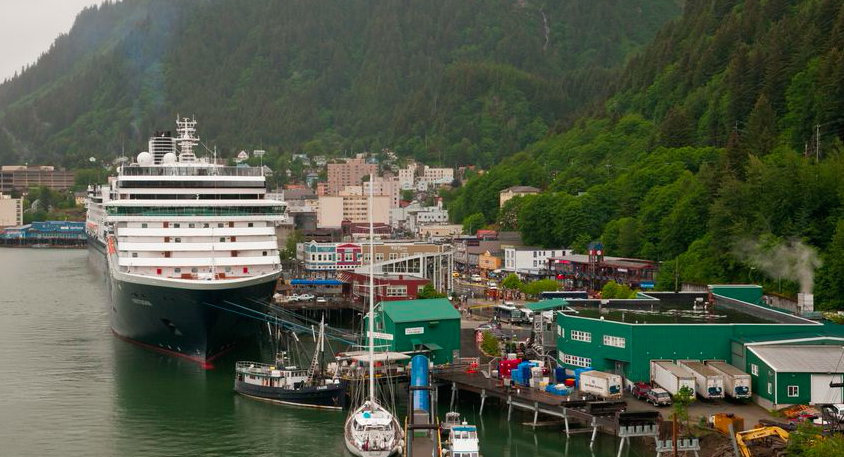
Brace for impact: Alaska’s tourism economy is about to take a big hit, and that means Alaska’s economy — from Fairbanks to Ketchikan — will likely suffer this summer.
Why? The U.S. State Department has just published an advisory that says U.S. citizens, particularly those with underlying health conditions, “should not travel by cruise ship.”
This serious admonition from the highest level of government is bound to have repercussions. After all, the tourism industry is Alaska’s second largest primary employer.
“CDC notes increased risk of infection of COVID-19 in a cruise ship environment. In order to curb the spread of COVID-19, many countries have implemented strict screening procedures that have denied port entry rights to ships and prevented passengers from disembarking. In some cases, local authorities have permitted disembarkation but subjected passengers to local quarantine procedures. While the U.S. government has evacuated some cruise ship passengers in recent weeks, repatriation flights should not be relied upon as an option for U.S. citizens under the potential risk of quarantine by local authorities.

“This is a fluid situation. CDC notes that older adults and travelers with underlying health issues should avoid situations that put them at increased risk for more severe disease. This entails avoiding crowded places, avoiding non-essential travel such as long plane trips, and especially avoiding embarking on cruise ships. Passengers with plans to travel by cruise ship should contact their cruise line companies directly for further information and continue to monitor the Travel.state.gov website and see the latest information from the CDC: https://www.cdc.gov/quarantine/cruise/index.html.
Alaska saw more than two million out-of-state visitors last year, more than 1.1 million of them on cruise ships.
Until the Wuhan virus hit, 1.44 million cruise ship passengers were expected this year, a six percent increase. An additional 10 ships were expected to make 29 additional port calls this year.
Alaska’s visitor industry accounts for more than 43,300 annual jobs, with peak employment at 52,000 jobs. The industry generated $1.5 billion in labor income, and $4.5 billion in economic output in 2017.