
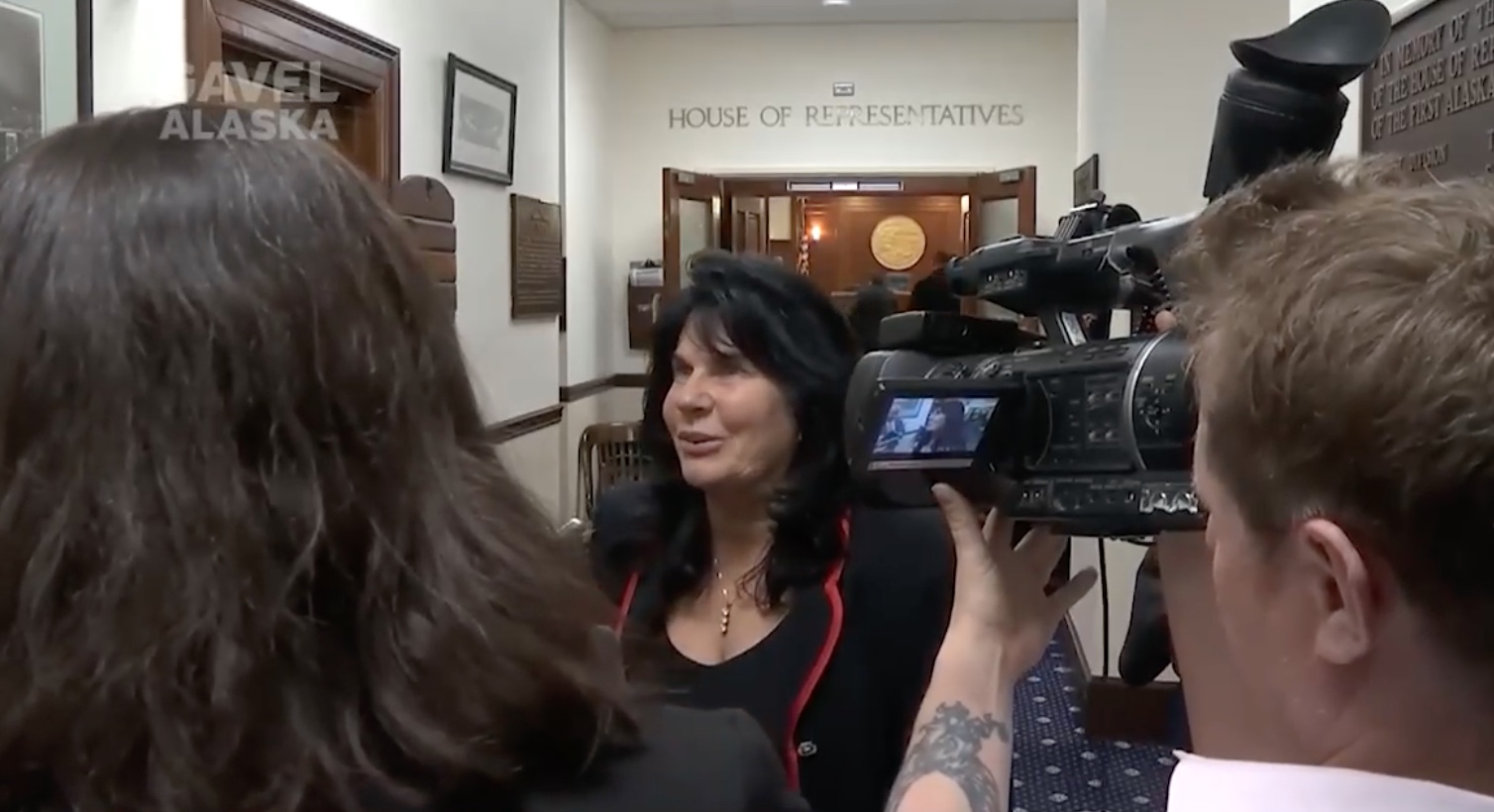
Alaska’s House Minority leader raced to the hallway microphones after the House adjourned on Thursday morning to get the first word in and develop the narrative for the media.

Rep. Calvin Schrage, who leads the Democrats in the House, said that he regretted there was not a permanent increase to the school funding formula, but he authoritatively pronounced a good session overall. He is serving his second year as a legislator and has been the combative point person for the Democrats, in charge of blocking all progress of the Republican-led majority.
House Speaker Cathy Tilton then emerged from the House Chamber and the media scrum shifted to her. She acknowledged that “beauty is in the eye of the beholder,” and that the crime bill, House Bill 66, was one big success of the session.
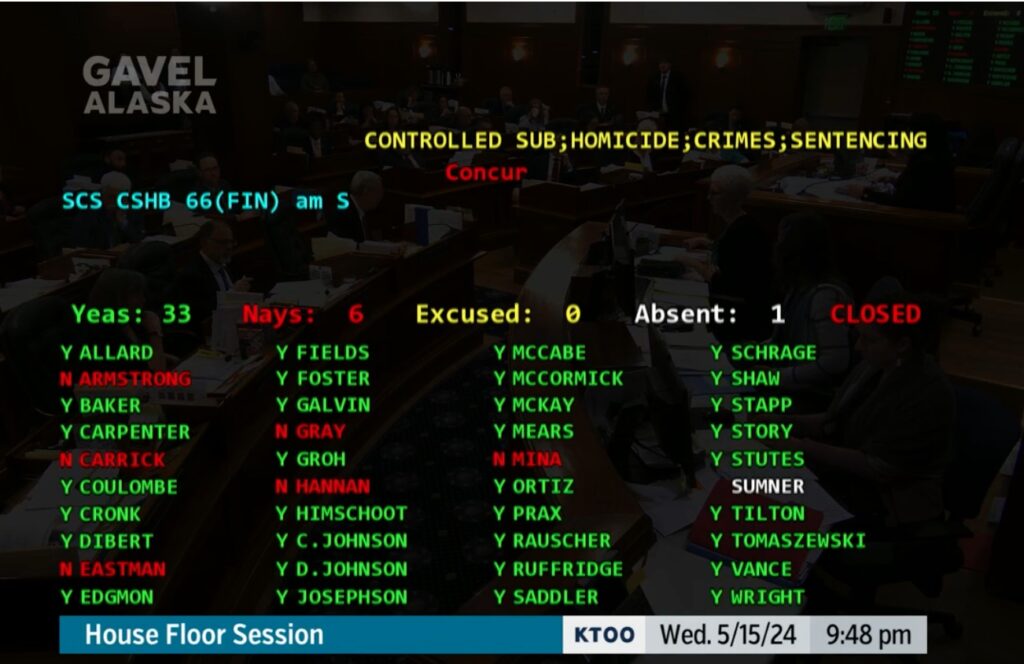
H.B. 66, casually known as the “Fentanyl Bill” was the governor’s crime bill introduced Feb. 8, and one of the final bills to pass this year. It addresses the use of addictive narcotic to victimize people and it barely squeezed by both House and Senate, after some in the Senate filibustered it with amendments. Sen. Matt Claman was particularly hostile to the bill, but he was unsuccessful in stopping it.
“That is a great success because that is for people who are the victims of crimes,” Tilton said. And so it’s really important that we focus on them. Most of the time when we do crime bills it’s about the criminals but this is really about the victims and helping them and I think that’s really important.
The vote was not unanimous. Voting against the final bill were Democrat Rep. Jennie Armstrong, Ashley Carrick, Andrew Gray, Sara Hannan, and Genevieve Mina, along with Republican David Eastman.
Tilton said the energy bills were also a huge win. House Bill 50, the “Carbon Credits Bill,” combines a regulatory framework for Alaska becoming a storage unit for the world’s carbon, and has financing framework for Cook Inlet natural gas development.
She noted that House Bill 400 was a big win for education, giving homeschool and correspondence students and their families some security in knowing what their reimbursements will look like.
The bill instructs the Alaska Board of Education to develop some temporary regulations for correspondence school reimbursements, known as allotments, while the court case involving state reimbursement of home and correspondence education moves to the Alaska Supreme Court. The matter affects over 22,000 students in Alaska and over 44,000 parents or guardians.
Senate Bill 22, proclaiming June 19th as “Juneteenth,” a state holiday, passed the House at the last minute. If signed by the governor, it will give state workers another day off, bringing the total formal state holidays to 12. The cost to the state is in the millions due to lost work and holiday pay for essential workers.
In addition to personal legislation and the governor’s bills, the House and Senate passed operating and capital budgets that will now go to the governor for his review, vetoes, and signature.
The Senate adjourned just before midnight on Wednesday, the 121st day of the session.
Both House and Senate members now pack their Juneau apartments up and return to their districts until either a special session is called by themselves or the governor, or until January of 2025, when the 34th Legislature convenes its first of two sessions.


