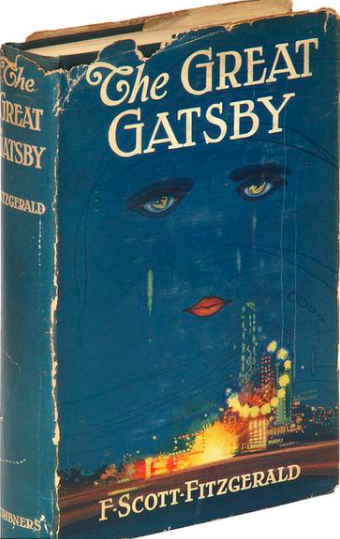
Wednesday night’s Mat-Su School Board meeting was dedicated to hearing from those who oppose the removal of five books from the English curriculum at district high schools, including The Great Gatsby.
Most who testified were from the borough, but notably, the ACLU of Alaska gave prepared testimony opposing the board’s action from a newcomer from New York City.
Triada Stampas, the policy director for the ACLU of Alaska, told the board that the ACLU has a long history of opposing censorship of any kind.
“From books and radio to film, television, and the Internet, we have consistently fought to make sure Americans have the right to say, think, read, and write whatever they want, without fear of reprisal. The First Amendment does not allow the government to get rid of or limit the use of books or ideas because they are controversial, unpopular, or offensive. Opposition to censorship is especially important in our schools, because students do not lose their constitutional rights ‘at the schoolhouse gate,'” Stampas told the board.

Stampas worked for the New York City Food Bank for over 10 years before taking a job in Alaska with the ACLU. She is a Harvard graduate with a master’s degree in public administration from Columbia University.
Her testimony, like 90 percent of the other testimony given to the board on Wednesday evening, asked for reinstatement of the following works of fiction: The Things They Carried, by Tim O’Brien, I Know Why the Caged Bird Sings, by Maya Angelou, Catch-22, by Joseph Heller, Invisible Man, by Ralph Ellison, and The Great Gatsby, by F. Scott Fitzgerald.
All of the books have their place in literature, but even liberal literary critics find The Great Gatsby to be lacking in merit.
“The book is short, easy to read, and full of low-hanging symbols, the most famous of which really do hang low over Long Island: the green light at the end of Daisy’s dock; the unblinking eyes of Dr. T. J. Eckleburg, that Jazz Age Dr. Zizmor. But the real appeal of the book, one assumes, is what it lets us teach young people about the political, moral, and social fabric of our nation. Which raises the question: To our students, and to ourselves, exactly what kind of Great Gatsby Package are we selling?,” writes Kathryn Schulz in New York Magazine, a liberal publication.
“It is an impressive accomplishment. And yet, apart from the restrained, intelligent, beautifully constructed opening pages and a few stray passages thereafter—a melancholy twilight walk in Manhattan; some billowing curtains settling into place at the closing of a drawing-room door—Gatsbyas a literary creation leaves me cold. Like one of those manicured European parks patrolled on all sides by officious gendarmes, it is pleasant to look at, but you will not find any people inside,” Schulz argued.
“Indeed, The Great Gatsby is less involved with human emotion than any book of comparable fame I can think of. None of its characters are likable. None of them are even dislikable, though nearly all of them are despicable. They function here only as types, walking through the pages of the book like kids in a school play who wear sashes telling the audience what they represent: OLD MONEY, THE AMERICAN DREAM, ORGANIZED CRIME. It is possible, of course, to deny your readers access to the inner lives of your characters and still write a psychologically potent book: I give you Blood Meridian. But to do that, you yourself must understand your characters and conceive of them as human,” she wrote.
“Fitzgerald fails at that, most egregiously where it most matters: in the relationship between Daisy and Gatsby. This he constructs out of one part nostalgia, four parts narrative expedience, and zero parts anything else—love, sex, desire, any kind of palpable connection. Fitzgerald himself (who otherwise expressed, to anyone who would listen, a dazzled reverence for his own novel) acknowledged this flaw. Of the great, redemptive romance on which the entire story is supposed to turn, he admitted, “I gave no account (and had no feeling about or knowledge of) the emotional relations between Gatsby and Daisy.”
Instead of understanding his own characters, Fitzgerald seemed to be preoccupied with “precision-engineering his plot, chiefly, and putting in overtime at the symbol factory,” Shulz said.
But the ACLU of Alaska wants it featured in English classes, because if the school board is opposed to it, then the ACLU will favor it, regardless of its merit.
It’s time to retire The Great Gatsby as a “taught” book in high school. Thousands of other titles are more worthy, and to lean on this one is laziness on the part of educators. (This is a point that the author of this blog tried to make to Mr. Ed Ferguson, high school English literature teacher at Juneau-Douglas High School, many years ago, without success.)
The Mat-Su School Board will continue with testimony two weeks from now, at its next regularly scheduled meeting. Meanwhile, readers should feel free to discuss the merits of The Great Gatsby or any of the other works in question, in the comment section below. There will not be a quiz.