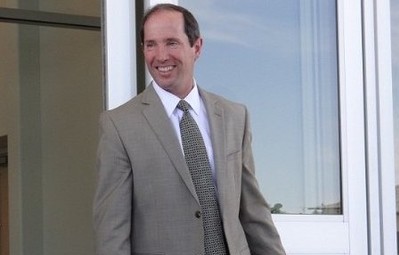
On the KSRM Sound Off Show, hosted by Duane Bannock, former Kenai Borough Mayor, (and incoming mayor) Mike Navarre acknowledged Thursday that the process for appointing a temporary mayor for the borough was less than perfect.
The Kenai Borough Assembly this week surprised the public by appointing Navarre as the interim mayor without so much as any advance notification.
Navarre, a Democrat and co-chair of the Bill Walker for Governor campaign, received the appointment without public process and without the Assembly allowing others to apply for the position. Mayor Charlie Pierce is resigning to work on his gubernatorial campaign. Pierce gave the Assembly a five-week notice.
At least two others had expressed interested in serving: Outgoing Sen. Peter Micciche, and former Borough Chief of Staff James Baisden. Baisden offered to do it for free as a public service.
Bannock, on the air, said he had written a letter to Assemblyman Tyson Cox, who was the one who proposed to the Assembly that Navarre be appointed in the role of temporary mayor. Bannock’s letter asked Cox questions:

“1. Was there a behind the scenes agreement prior to Tuesday’s meeting?”
“2. How many assembly members did you speak with in advance of the meeting?”
“3. While the vote was public, were you involved in private consensus-building conversations?”
Bannock did not get answers to his questions.
“From the outside this smacks of a violation of the Open Meetings Act,” he said.
On the Thursday afternoon show, Bannock recommended the Assembly have a “do over” even if the result is the same, just for the sake of transparency, so it didn’t look like the fix was in.
Navarre, who was in the studio at Bannock’s invitation for the show, said Bannock was wrongly accusing the Assembly of violating the Open Meetings Act, which would be a violation of law.
“You are assailing the institution and the members of this,” Navarre said. “Because somehow some sort of a fix is in? And none of that happened, Duane. Why can’t it just be? I was contacted by a number of people who work at the borough. And they said ‘Would you be willing to do this for a short period of time?’ and I said ‘Yeah for a short period of time.’ I felt when I looked at it I was uniquely qualified.”
But in a memo obtained by Must Read Alaska from Assembly President Brent Johnson, it was Navarre who called to ask if he could be temporary mayor.
“Former Mayor and former House Representartive [sic] Mike Navarre also called me in London. He offered to serve as a temporary mayor,” Johnson wrote. Later, Assemblyman Cox reached out to Navarre to get a firm commitment.
Navarre continued on the radio, “Nobody was really expecting the resignation that came when it did. I know there was some talk about it but it didn’t happen until it happened. That’s what put the assembly under the gun in order to make a determination about a special election and about an appointment process.”
Pierce said “They had five weeks.”
But Navarre also admitted it could have been done better. “If they had asked, ‘Would you mind if we postpone’ this I would have said ‘just fine, postpone it if you like.’ That would probably look better. But I wasn’t engaged in the debate before the Assembly. That is the prerogative of the Assembly.”
He said that the Assembly should have allowed others to submit their resumes for the job.
Navarre said he sees it as a short-term management job. But that may not be how Assemblyman Cox sees it. In a Facebook post, Cox wrote that the Assembly needs to now pause the special election process. Mayor Pierce’s term is not over until next October, meaning that Cox intends for an unelected mayor to fill in for an entire year.

Navarre could serve essentially until April. The special doesn’t need to be called until then. Similar actions were taken by the Anchorage Assembly in installing an unelected mayor for eight months, after former Mayor Ethan Berkowitz suddenly resigned in October of 2020. Austin Quinn-Davidson was appointed and then the Anchorage Assembly majority refused to hold a special election, allowing her to execute numerous far-left policies over her eight-month reign.