
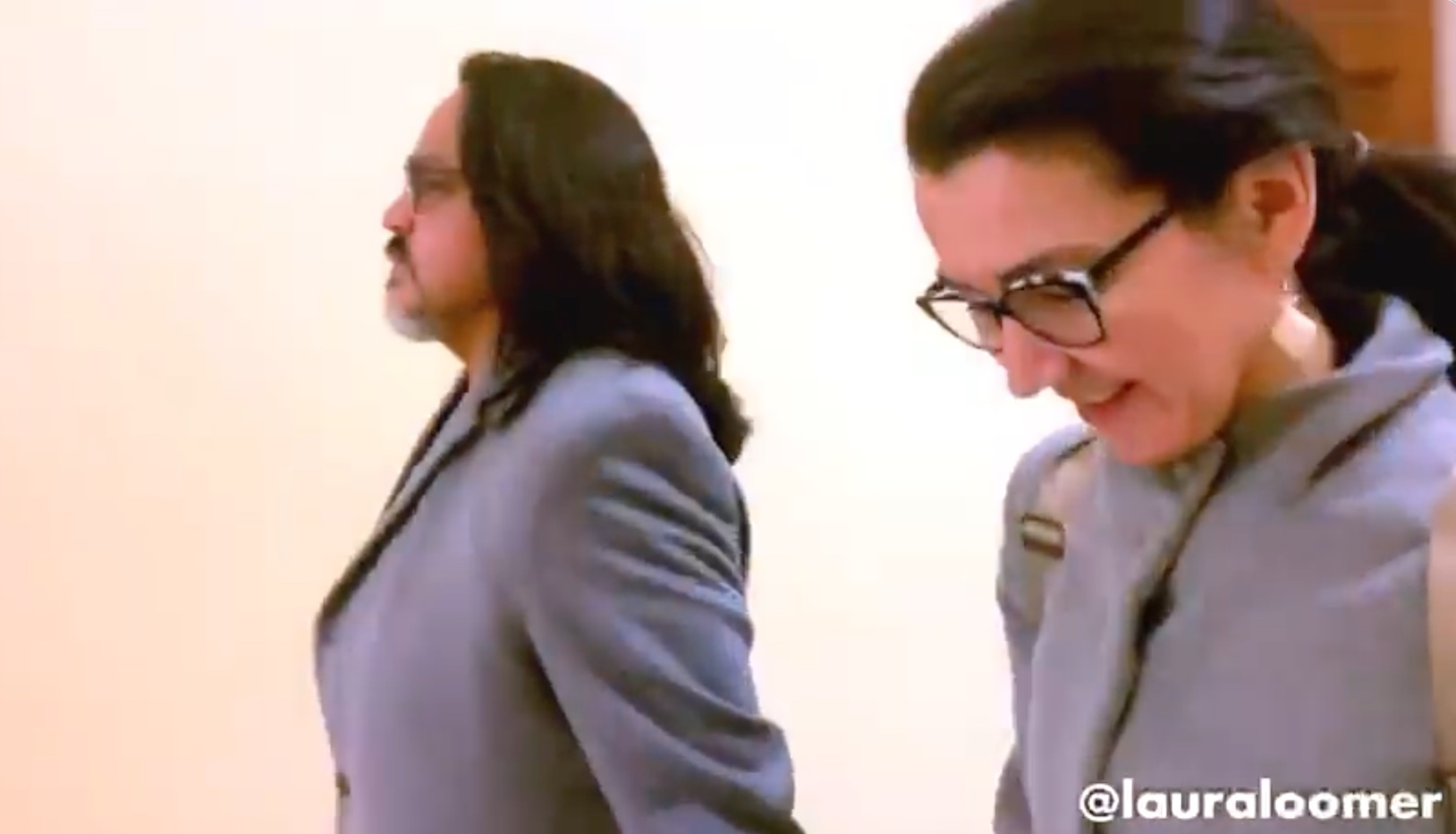
Rep. Mary Peltola, eager to try to persuade moderate voters in Alaska, wants the world to know she has 176 long guns in her house. She has said so repeatedly to shore up her credentials with the pro-Second Amendment voters.
She just doesn’t say which house — the one she owns on the Anchorage hillside or the one in Bethel. She probably doesn’t have them in her D.C. house, because guns are difficult to own in the nation’s capital.
Whichever house it is, she has just advertised to the world that her homes, usually unoccupied, have enough long guns in them to open up a gun shop. She’s sent a signal she may have not wanted to send, and if these guns are stolen, how will she catalog them for State Troopers?
But more to the point, where did Mary Peltola get all these long guns? The mainstream media and groups like Moms Demand Action are not asking the questions that come naturally to Alaskans.
They support Democrats and understand, with a wink, that Peltola, who has come out in favor of federal universal background checks, waiting periods for gun purchases, and mandatory gun safes for gun owners, is trying to appeal to a Republican state, and must appear to be pro-Second Amendment.
“Donald Trump and J.D. Vance are the gun industry’s dream ticket,” says the anti-Second Amendment group Everytown for Gun Safety. “They have made it clear that they would rather protect the gun industry than our freedom to be safe from gun violence.”
The group and others like it have been dead silent on Rep. Peltola’s arsenal and whether they are all legally traded weapons.
To put it in perspective, Peltola claims to have so many guns that to ensure the guns are not stolen, she would have to also have at least 10 of the largest gun safes made. These safes weigh about 750 pounds each and cost over $1,500 apiece. They would occupy an entire room of a house, but could cave the floor in or cause it to sag or settle, if not on a concrete surface. That’s about 8,000 pounds — the weight of two average cars — when you include the shotguns and rifles. It’s unlikely she had gun safes shipped to Bethel, as the shipping would cost more than the safes themselves.
If each of the long guns has an average street value of about $500, Peltola is sitting on $88,000 worth of guns, not counting any handguns she may or may not have.
And she’s not even known to be a hunter; Peltola fashions herself a fisherwoman. She is on the record saying that she supports the Second Amendment because Alaskans need to protect themselves and their food from wild animals.
When asked about Mary Peltola’s 176 guns, Robert Shem, the State of Alaska’s first forensic firearm examiner, now retired, said it “sounds like the arsenal of an insurrectionist.”
It becomes clear that it was her late husband Gene Peltola who was actually the gun collector who arguably amassed one of the largest private collections of guns in the 49th state. He was a hunter. He traded in guns.
Known as “Buzzy” to his friends, he was a federal employee in rural Alaska for most of his career. He worked for U.S. Fish and Wildlife for 34 years, and was state director for the Bureau of Indian Affairs. With his plane, he traveled all over rural Alaska and knew people in all of the villages. He knew where the guns were.
The important thing to know about rural Alaska is that it’s largely a non-cash economy. The currency? Drugs. Booze. Guns. Short on rent? You might offer your landlord a rifle or shotgun. Need repairs on your snow machine? You might offer a rifle scope as payment. Serial numbers are not tracked in rural Alaska and background checks are rarely performed in these arrangements.
In villages surrounding Bethel, a bottle of booze that goes for $15 in Anchorage and $70 in Bethel could sell for $150. People can snow machine into Bethel, load up, and double their money in the “dry” villages. The same goes for drugs and guns.
How Buzzy came to be in possession of 176 long guns should be of interest to state and federal officials. While there is no evidence that he was trading guns while clocked in on the job in rural Alaska, sources have said that he was known as a gun dealer, but not with cash.
How many of these guns have receipts and how many of them might be on the Alaska State Troopers’ list of known stolen guns?
These are questions people in rural Alaska are asking. While Buzzy always had well-paying jobs, he also had jobs that put him in authority over people in rural Alaska, where he would know if someone was a felon with a gun. Did he use his authority to confiscate guns?
People in rural Alaska say this is not unlikely. As an employee of U.S. Fish and Wildlife Service for decades, he was the federal subsistence management program leader, and, importantly, he was the zone supervisor for Yukon Delta National Wildlife Refuge law enforcement.
He also served as refuge manager. Buzzy, in his own plane or in a USFW plane, could fly over the refuge and spot people with guns. He would know who was allowed to have them and who wasn’t on federal land, who had proper hunting permits and who didn’t, and it may be that situations occurred in which hunters not following the extensive regulations may have given up their guns to Buzzy Peltola in exchange for not being cited and having to show up in Bethel court.
Buzzy Peltola died last September in a plane crash while hauling moose meat out of a hunting lodge in rural Alaska. He’s not around to answer the questions, but Rep. Peltola, having raised the matter by herself about her mighty arsenal, has opened up the conversation about these guns she has possession of and the manner in which Buzzy obtained them.
If you are a person in rural Alaska and you’ve ever had a gun confiscated by an employee of the U.S. Fish and Wildlife Service and wondered if it was ever tagged into federal property, Must Read Alaska would like to hear from you. Leave a comment below with your contact information, which we will delete before posting the comment.


