
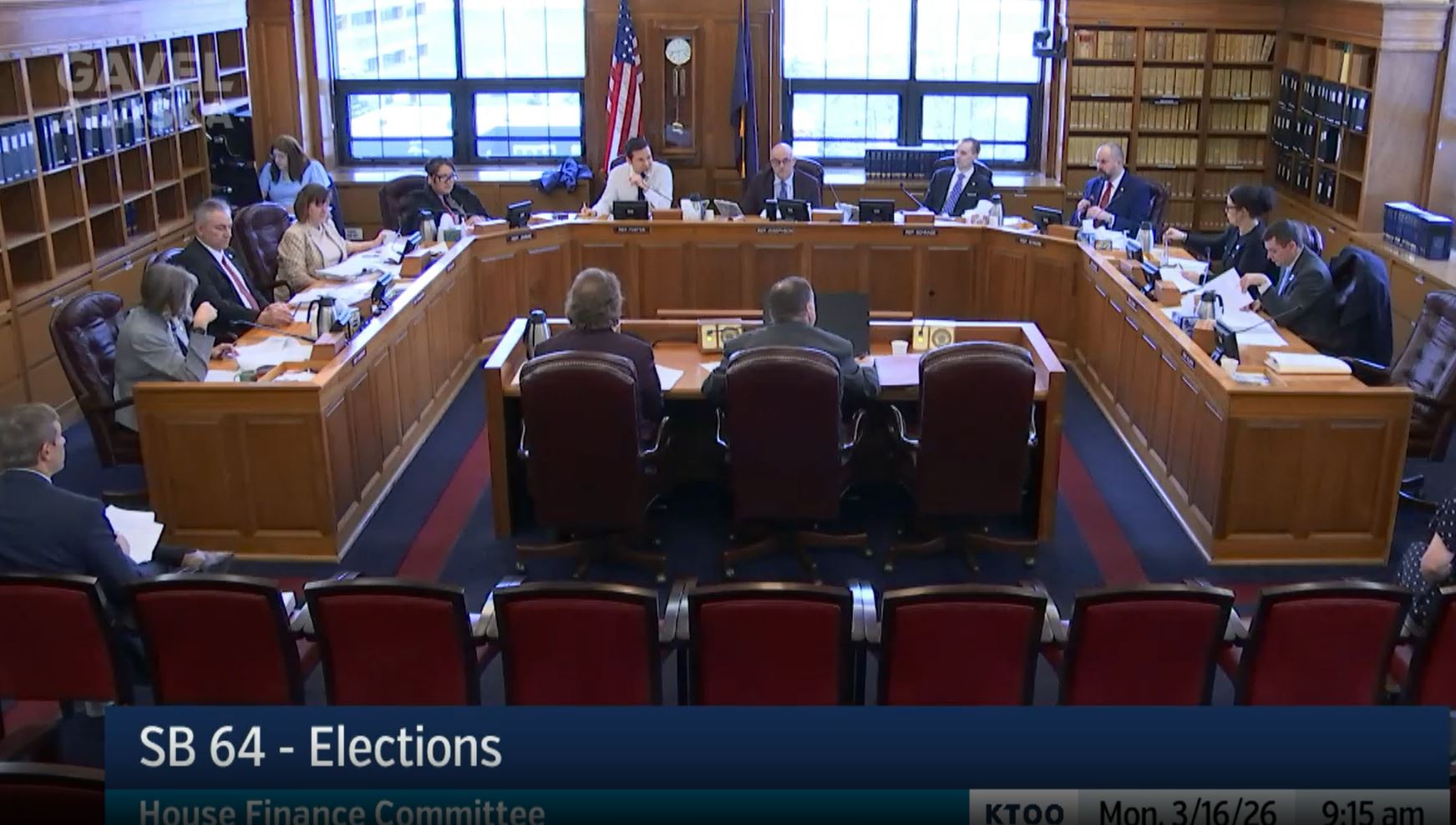
The Alaska House Finance Committee moved swiftly Monday morning to adopt a committee substitute for SB64, the elections reform package aimed at strengthening ballot curing, voter roll maintenance, and citizenship verification. Co-Chair Rep. Neal Foster (D-Nome) presided over the session, emphasizing the need for a clear working document ahead of an amendment deadline set for Thursday, March 19, at noon. The substitute, incorporates targeted refinements from prior discussions, reflecting a careful effort to enhance election security while respecting operational realities and taxpayer resources.
Staff from both the sponsor’s office and the committee walked members through the redlined changes. Key updates include clarifying voter roll maintenance triggers by ensuring any single criterion—rather than all—prompts a notice. The previous out-of-state physical address rule spanning 28 months was removed to align with federal constraints under the National Voter Registration Act. On citizenship verification, specific reference to the DHS Systematic Alien Verification for Entitlements (SAVE) program removed.
“I am not aware of any other system that verifies citizenship,” questioned Rep. Will Stapp (R-Fairbanks), “so what exactly are we referencing?” Dunsmore indicated that the bill intended to broaden to “one or more systems,” that may be developed granting the Division of Elections flexibility amid ongoing litigation.
New data security “sideboards” require encryption and prohibit retention by outside entities, addressing privacy concerns for Alaska’s 600,000 registered voters.
Additional technical adjustments refined breach notification timelines to 30 days (with election-specific safeguards), updated rural liaison duties, and eliminated an unworkable PFD data transmission requirement. Uncodified transition language now authorizes immediate regulation drafting and procurement, with an immediate effective date for those sections. The bulk of the bill, including ballot curing and tracking, takes effect August 31, 2026—after the primary but before the general election—while the “true source” clarification for ballot measures is delayed until January 1, 2027.
Fiscal notes remain unchanged, Director Carol Beecher confirmed, “we do not anticipate that it would reduce the cost,” she stated, underscoring the measured approach. Committee members probed implementation feasibility. Rep. Alyse Galvin (NA-Anchorage) asked whether staggered effective dates could accelerate certain provisions before the primary. Sponsor staff David Dunsmore described the package as “carefully negotiated,” advising collaboration before amendments. Rep. Jeremy Bynum (R-Ketchikan) pressed for an updated sectional analysis and a section-by-section timeline from the Division, both promised by day’s end.
Rep. Nellie Jimmy (D-Toksook Bay) highlighted the stakes of inaction: without the bill, rejected ballots stay rejected with no cure option. Co-Chair Foster noted plans for an additional hearing this week before amendments and set the bill aside. The substitute was adopted without sustained objection after a brief at-ease.
The changes prioritize accurate voter rolls, verifiable citizenship, and secure data handling—without rushing untested technology. The Division committed to delivering detailed implementation timelines by afternoon, allowing informed decisions on any further tweaks.


