
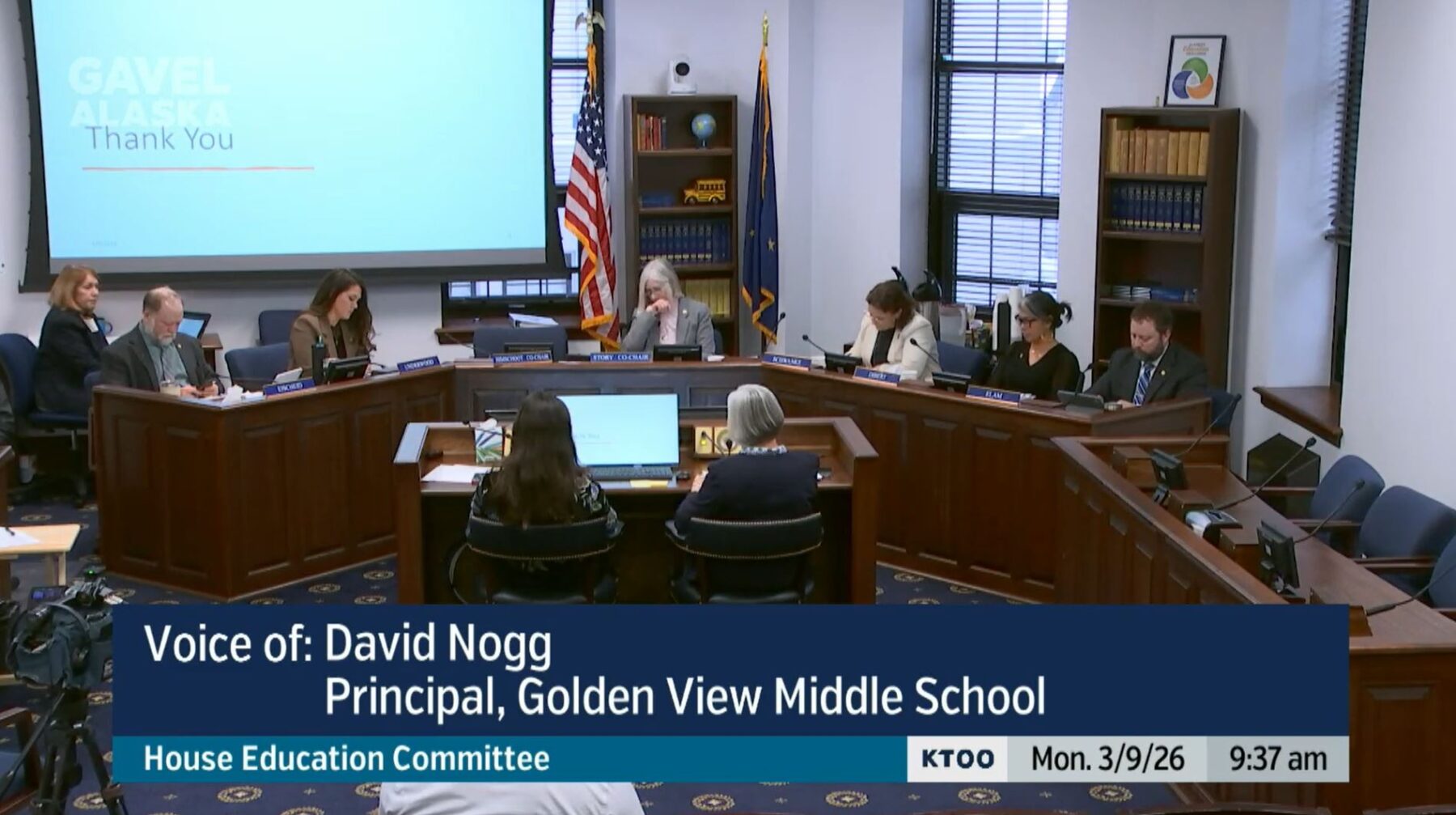
The House Education Committee convened for a session that blended celebration of educational innovation with urgent legislative action. The meeting spotlighted Alaska’s 2026 Teacher of the Year, Pete Daley, and his groundbreaking “Girls in Welding” program before delving into three key pieces of legislation: House Joint Resolution 39 (HJR39), House Bill 261 (HB261), and House Bill 374 (HB374). These bills, while distinct in focus, are interconnected threads in a broader effort to stabilize Alaska’s public education system amid declining enrollment, rising costs, and persistent teacher shortages. HJR39 addresses international teacher recruitment by easing H-1B visa fees, HB261 seeks to provide fiscal predictability through reformed student counting methods, and HB374 proposes a direct infusion of funds via an increase in the Base Student Allocation (BSA).
The session’s narrative underscores how these bills are not isolated fixes but complementary measures: HJR39 supports workforce stability by facilitating foreign teacher hires, HB261 enhances budgeting certainty to aid retention and planning, and HB374 provides the raw financial resources needed to implement both.
Part 1: HJR39 – Waiving H-1B Visa Fees for Teachers
The committee’s swift handling of House Joint Resolution 39 highlighted a targeted approach to Alaska’s teacher shortage crisis. Sponsored by Representative Galvin (NA-Anchorage), HJR39 urges the federal government to waive the $100,00 H-1B visa fees for teachers in the state, a move designed to make it easier for school districts to recruit qualified educators from abroad. In a state where teacher turnover hovers at 28%—far above the national average of 8%—this resolution addresses a critical gap in the workforce pipeline.
During the brief discussion, Co-Chair Himschoot (NA-Sitka) noted that no amendments had been received and public testimony had already been heard in a prior session. With no further inquiries from members, Co-Chair Story (D-Juneau) moved the resolution forward, and it passed without objection, accompanied by individual recommendations and an attached fiscal note.
This resolution’s passage underscores the interconnectedness of the day’s legislative agenda. Alaska’s rural and urban districts alike struggle with recruitment, as evidenced by later testimonies on funding shortfalls leading to staff cuts.
In essence, HJR39 acts as a recruitment booster shot for a system bleeding talent. Its relation to the other bills is clear: stable funding (HB374) and predictable budgeting (HB261) are futile without enough teachers to staff classrooms. As Rep. Galvin implied, the resolution builds on prior discussions, positioning it as a proactive step in a holistic education strategy.
Part 2: HB261 – Reform Student Count Method for Funding
Shifting to more complex funding mechanics, the committee devoted significant time to HB 261, sponsored by Co-Chair Story. This act aims to enhance education funding predictability by allowing districts to choose between a three-year average or the previous year’s student count for funding calculations. In a state grappling with enrollment declines—down 3% statewide—and growth in pockets like Mat-Su and Kenai Peninsula, HB261 seeks to mitigate fiscal volatility, enabling better budgeting, teacher contracts, and retention.
Co-Chair Story explained the bill’s origins in a 2015 recommendation from the Governor’s Education Task Force. Districts would select their count by July 1, providing certainty for March teacher contracts. Using hypothetical examples, she clarified the three-year average (e.g., 2022-2024 counts for FY26) versus the previous year (2025). This choice benefits stable or declining districts with the average, while growing ones opt for the recent count.
Key discussions revealed proposed amendments for a forthcoming committee substitute (CS). To address growth concerns raised by Rep. Elam (R-Nikiski), Story suggested authorizing immediate funding for significant fall influxes above a set percentage. She also announced grandfathering “hold harmless” provisions for districts currently benefiting, a Task Force recommendation. Intensive student counts—costing $43 million initially—would use the previous year but include a February 15 “true-up” to fund new arrivals, avoiding double-counting fears.
She removed a $5.8 million alternative school funding provision, citing fiscal climate, suggesting a separate bill. On staffing, she noted mid-year student moves force districts to absorb costs, as contracts prevent teacher transfers. Elam requested a 10-year impact snapshot, which Story committed to pursuing, encouraging districts to run their own numbers.
As Story emphasized, “These costs are happening right now in districts,” shifting burdens back to the state aligns with HB374’s funding boost. Without HB261, even increased BSA might not prevent mid-year shortfalls, underscoring the bills’ interdependence.
Part 3: HB374 – Boosting the Base Student Allocation to Prevent Cuts and Closures
The meeting’s crescendo focused on House Bill 374, sponsored by the committee, proposing a $630 BSA increase to $7,280 per student. Presented by Representative Himschoot (NA-Sitka), the bill addresses inflation-eroded funding, with the current $6,650 BSA equating to just $4,711 in FY11 dollars. Himschoot invoked the constitutional “shall” for public schools, noting last year’s $700 hike—only $20 above prior one-time funding—fell short of the $1,800 needed for purchasing power parity.
Rising costs dominate: Anchorage’s property insurance up 42%, liability 139%, health benefits 33%; Sitka’s energy 45%. New mandates like the Reads Act add burdens, with Kuspuk spending $403,000 on interventions and tutoring. Himschoot highlighted education’s people-driven nature, with 88% of budgets on wages/benefits, and turnover costing $20,000-$30,000 per teacher, plus unquantifiable learning losses.
Enrollment drops—3% statewide, steeper in some districts—exacerbate fixed costs for facilities and insurance. Himschoot calculated the $630 based on the mean deficit of the five largest districts: Anchorage ($90M), Mat-Su ($22M), Fairbanks (surplus after cuts), Juneau ($11.8M), Kenai ($8.6M). This won’t fully close gaps but prevents deeper cuts.
Principal David Nogg reported a $142.4M-$146.8M statewide deficit from 43 districts, forcing his school to cut teachers, an assistant principal, and electives, shifting to a six-period day. “This isn’t hyperbole; it’s a devastating reality,” he said, urging BSA support. Principal Elizabeth Kwame warned Sterling Elementary’s closure would consolidate 110 students into classes of 30, harming vulnerable learners. “Without additional funding, schools like mine are set to close.”
Committee dialogue addressed formula flaws (Rep. Elam) and accountability (Rep. Schwanke (R-Glenallen)). Himschoot agreed on long-term fixes but stressed immediate BSA action: “What is the opportunity cost of doing nothing?” Rep. Dibert (D-Fairbanks) shared Fairbanks’ struggles—six closures, 40-student classes—while Rep. Eischeid (D-Anchorage) questioned if flat funding improves outcomes, with Himschoot replying, “I think it’s common sense.”
A public hearing is set for March 11 at 5:00 PM, with a joint session with the State Board of Education at 8:00 AM.
HB374 anchors the trio: its funding directly enables HB261’s predictability and HJR39’s recruitment. Without it, reforms falter amid deficits, as testimonies showed. The bills collectively combat out-migration, retain talent, and sustain programs.
By easing teacher imports, stabilizing counts, and increasing funds, they form a cohesive response to fiscal pressures, ensuring schools remain open and effective. As Himschoot noted, inaction risks losing families and educators, threatening the state’s future.


