
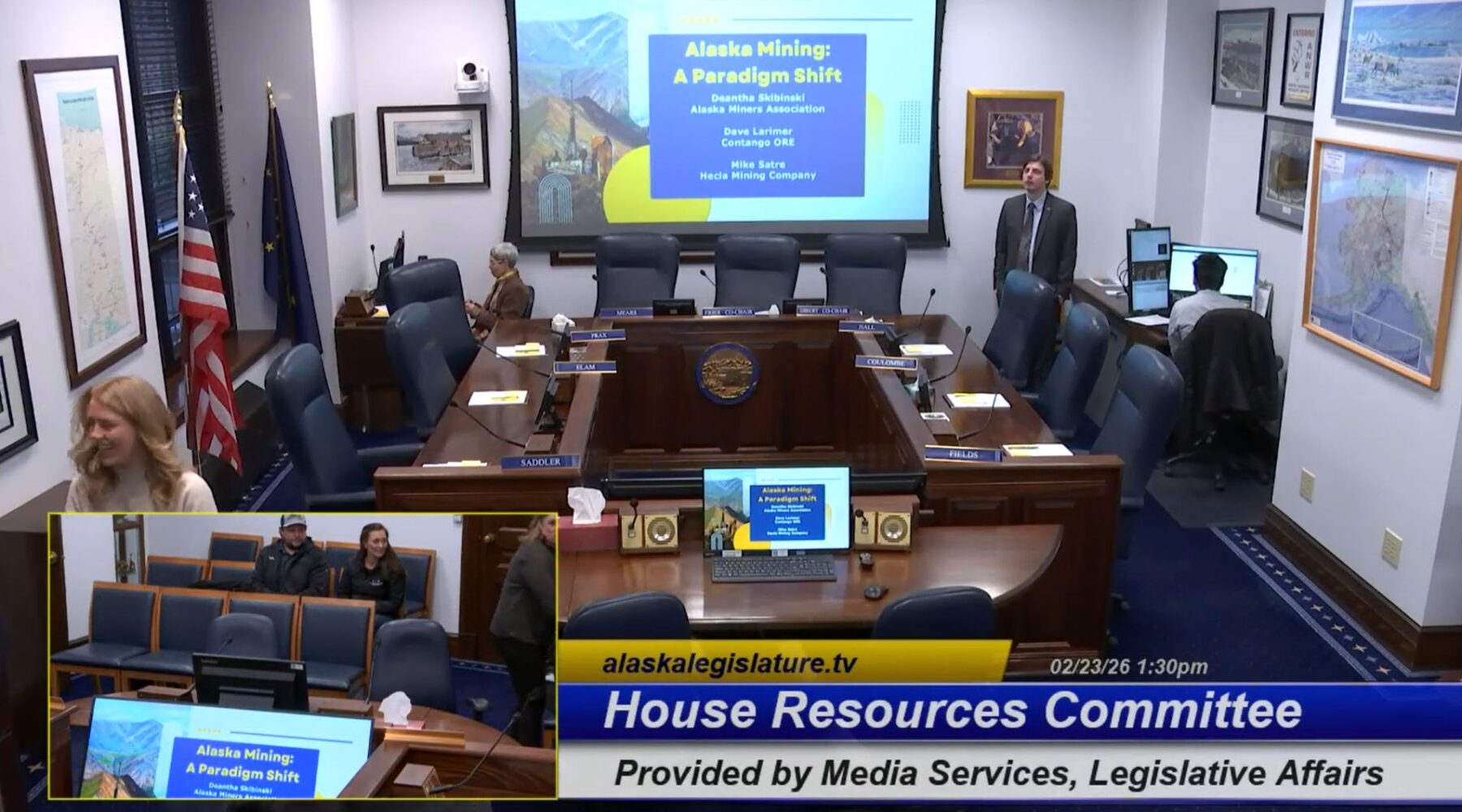
Alaska House Resources Committee voted to advance House Bill 271, a measure that would permanently reduce the royalty rate to 3% for natural gas production in the Kitchen Lights unit of Cook Inlet. Sponsored by Rep. Zach Fields (D- Anchorage), the bill aims to incentivize further investment and production in the aging basin, which supplies much of Southcentral Alaska’s energy needs. Critics, however, decried it as a targeted giveaway to a single operator, HEX/Furie, amid the state’s ongoing fiscal woes.
After a brief recess, public testimony opened, revealing sharp divisions.
Jeff Landfield, operator of the Alaska Landmine news website, delivered a scathing critique, framing the bill as the latest in a series of “political handouts” to HEX/Furie owner John Hendrix. Landfield recounted Hendrix’s acquisition of Furie out of bankruptcy in 2019 for $15 million, partly financed by a state loan, and his subsequent battles over property taxes. He noted that the Department of Natural Resources (DNR) had already granted a 75% royalty reduction in September 2024, resulting in a $2 million credit and slashing monthly payments from $400,000 to $100,000. “The royalty relief he’s already obtained does nothing for ratepayers, it just enriches his pockets,” Landfield said. “I urge this committee to put this bill where it belongs: in the trash.”
Carrie Harris, testifying online, echoed the opposition, arguing that the bill creates a “permanent three percent royalty carve out for a single operator” without geological justification. “Alaskans are being told there isn’t enough money for a permanent fund. Essential services are strained,” she said, warning of a “really big bad precedent” that could prompt other producers to seek similar deals.
With public comment closed, the committee deliberated on three amendments. Rep. Donna Mears (D – Anchorage) moved Amendment G.1, proposing a sunset date of January 1, 2030, to limit the relief while allowing time for the operator to refine plans through DNR processes. “I fundamentally believe that this work should be done through DNR’s thorough process rather than legislative action,” Mears explained. Fields opposed, arguing four years was insufficient to attract major investments like jack-up rigs, suggesting 2035 instead. Rep. Dan Saddler (R – Eagle River) called the shorter timeline “counterproductive,” potentially harming financing. The amendment failed 2-7.
Mears’s second amendment, G.2, sought to remove intent language justifying the bill’s focus on one unit, citing drafting guidelines. Fields defended it as essential to address constitutional concerns over special legislation, emphasizing the unit’s role in boosting competition and supply. Rep. Mike Prax (R – North Pole) supported removal, viewing the bill as “special treatment for a particular company.” It also failed 2-7.
A conceptual amendment from Sadler, changing “avoid reliance on imported fuels” to “reduce reliance” for realism, passed without objection.
Debate intensified on the bill’s merits. Mears opposed, trusting DNR’s existing robust process. Prax argued it overreaches legislative expertise, setting a bad precedent by overriding DNR. Saddler countered that statutes provide enduring certainty executive actions cannot: “What the executive giveth, the executive can taketh away. Uncertainty is the enemy of fiscal certainty.” Fields clarified, “This bill definitely does not override what DNR did. It actually takes DNR’s decision and gives us some multi-year predictability and stability to encourage investment and production.”
Rep. Julie Coulombe (R – Anchorage) supported, noting it endorses DNR’s research showing relief yields more gas: “This is not overriding DNR. This is actually supporting what DNR did.” Mears reiterated that DNR relief is a durable contract across administrations.
Co-Chair Maxine Dibert (D – Fairbanks) moved the amended bill, granting Legislative Legal leeway for technical changes. After objection, a roll call passed it 7-2, with Mears and Prax dissenting.
The bill now heads to further committees amid broader debates on Cook Inlet’s declining output and high gas prices. Supporters see it bolstering supply; opponents fear favoritism eroding state revenues.
Saddler, in a key remark during debate, underscored the pragmatic stakes: “We’d rather have fifty percent of loaf or one hundred percent of no loaf at all, and that’s the situation we are faced up against. My constituents do have a need for natural gas in the inlet.”
This decision comes as Alaska grapples with energy security, with Hilcorp’s production update slated for February 25. Critics like Landfield vow continued scrutiny, alleging Hendricks’s influence. Proponents argue it’s vital for competition in a basin not “what it was.”
Editors Note: Corrected spelling of John Hendrix and HEX/Furie.


