
By GREG SARBER
Alaskans will vote on a ballot initiative this November proposing to raise the minimum wage to $13 an hour next year, which then would jump to $15 per hour by 2027.
When a similar law was passed in California it resulted in the loss of jobs for low-income workers.
It is also important to note that current wages for entry-level jobs in Alaska are already higher than what this legislation will achieve. We should ask ourselves why we are voting to enact a law that is not needed and who else might benefit from it.
California passed a similar new minimum wage law that went into effect on April 1 of this year. I covered that in a previous article, which you can read at this link.
However, as a brief update, since California’s new minimum wage has gone into effect, over 10,000 low-wage workers have been fired from their jobs because their employers could not afford to pay the new higher wage or found cheaper alternatives like automation to replace workers. Instead of helping employees, the new law put them out of work and into the unemployment line. I wonder what all of these now unemployed workers in California might say to the politicians who passed this legislation.
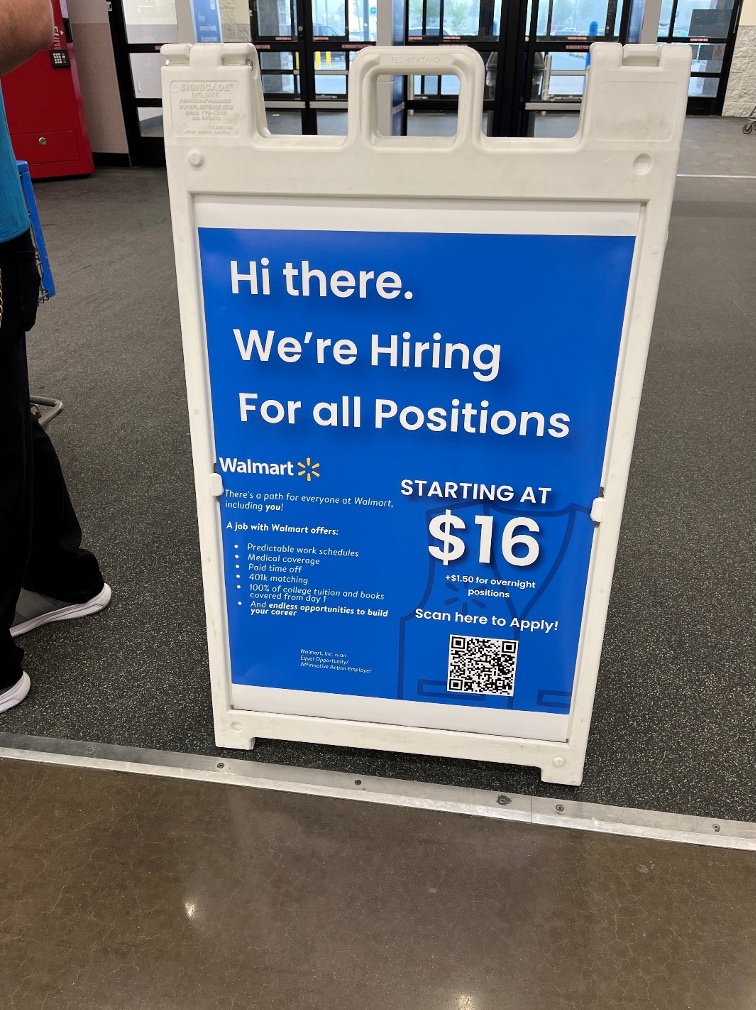
The second issue is the need for this law in the first place. On Sunday, I stopped by the Kenai Walmart. This business provides entry-level jobs, and their employees are the likely target of the new minimum wage initiative. Prominently displayed at the entrance to the store is a sign advertising that they were hiring and offering a starting wage of $16 per hour.
That wage is already higher than what is required in the ballot initiative, even when it goes into full effect in 2027.
It isn’t just Walmart. A relative of mine found a summer job in Homer and every business she talked to pays more than Walmart does.
There are entry-level jobs available today in Alaska that pay far more than what this proposed minimum wage initiative accomplishes. While I have only given a couple of examples from the Kenai Peninsula, it looks like job demand has created a need for employers to pay higher than the current minimum wage to attract employees. That is how the capitalist system is supposed to work.
How about the other side of that argument? What happens when job demand does not create higher wages, but they are forced on businesses anyway?
That example was in the news this week. It involves employees of a small business called The OCF Coffee House, a small chain of coffee shops in Philadelphia. The employees decided they wanted more money for doing the same job, so they unionized and demanded higher wages.
The business owner concluded that he couldn’t raise coffee prices and would be unprofitable to pay higher wages to employees, so they closed the three shops. Now all the workers are unemployed. The lesson from this incident is that the best way to get a higher wage is to look for a better job, not trying to force an employer to pay more for the same work.
If this ballot initiative is not needed in Alaska, we should ask Cui Bono: Latin for “who benefits?”
Let’s look at who sponsored this initiative. Two of its three sponsors are Democrats. Ed Flanagan was the commissioner of the Alaska Department of Labor in the Democrat Tony Knowles Administration. Genevieve Mina is the Democrat representative for Alaska House District 19 who is running for reelection this year.
Since Rep. Mina feels so strongly about the issue of minimum wages paid in Alaska, I have to wonder why she didn’t introduce it as a bill in the Legislature. Instead, Rep. Mina chose to sponsor it as an initiative. The initiative process in our state constitution is designed so that citizens can bypass the legislature to enact legislation from the grassroots. The sponsorship of this initiative by Mina and Flanagan makes it appear that this is not a grassroots movement, but was instead a partisan effort from leaders of the Democrat party.
We should ask if the Democrat party is the prime beneficiary of this initiative process. You can bet Democrats will campaign on this issue in the upcoming primary and general elections. They will pretend to be the friend of low-wage workers, despite this legislation being potentially harmful to them like it was in California, and despite it being unnecessary because wages have already grown higher than what this initiative accomplishes.
Call me a cynic but lying to low-wage workers with the promise of helping them economically, despite not actually doing so is a pretty despicable thing to do.
Greg Sarber is a board member of Alaska Gold Communications, the parent company to Must Read Alaska.


