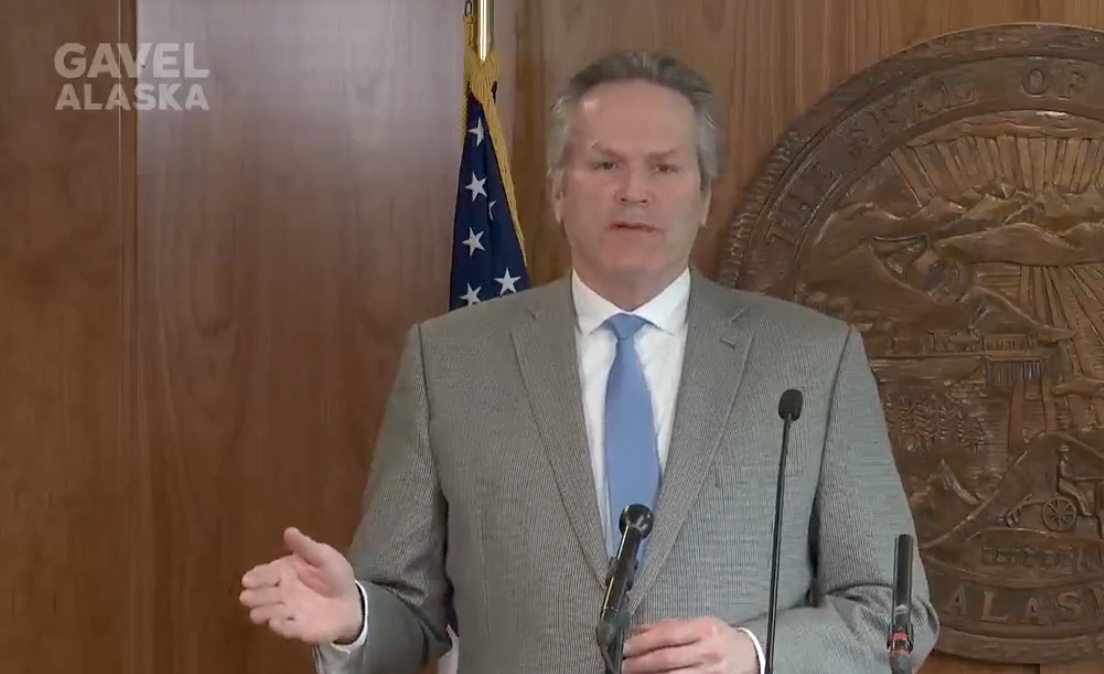
Gov. Mike Dunleavy wanted a smidgen of accountability in the state’s education spending. He didn’t get it from the House and Senate Democrats, who did the bidding of education industry unions and stripped all accountability from the education spending bill, House Bill 69.
On Thursday Dunleavy vetoed HB 69, as he had repeatedly warned the Legislature that he would do. The Democrat-led House and Senate have scheduled a joint meeting for Tuesday at 1 pm or 2 pm to try to override the veto.
There were two reasons for the veto, Dunleavy told reporters at a Thursday press availability. One is that the revenue situation has deteriorated a lot since he first offered his proposed budget back in December. The price of oil is significantly lower, under $70 a barrel. Alaska Department of Revenue’s Fall 2024 forecast, released in December, projected an annual average Alaska North Slope crude oil price of $73.86 per barrel for the fiscal year 2025.
“And the second reason for the veto is that there is no policy in the bill,” Dunleavy said.
“For years, I’ve been clear: I support increased education funding, but it must be tied to meaningful reforms that improve student outcomes and give families more choice,” Dunleavy said. “This bill spends money at a level the state doesn’t have and offers no plan to improve how that money helps our students. I agree with leadership of the Senate Finance Committee who voted against this bill on the floor: We can increase funding for our schools, but HB69’s funding increase is not realistic at this time.”
Dunleavy said he will now introduce a new education bill that includes a $560 Base Student Allocation increase, additional targeted funding and policy reforms.
The total cost of his proposed new legislation is comparable to a $700 BSA increase, he said. The bill will include:
- Charter School Reforms: Year-round application windows, faster appeal timelines, streamlined renewals, and protections against unjustified closures—all to make it easier to open and maintain high-quality charter schools.
- Reading Incentive Grants: $21.9 million in performance-based funding to reward reading proficiency and growth for students in grades K–6.
- Correspondence Program Fix: A $13.6 million adjustment to ensure equitable funding for public correspondence students, while preserving flexibility and parental control.
- School Choice Protections: Transparency and accountability in open enrollment, ensuring families have access to the public school that best meets their child’s needs.
There is more than a month remaining in the regular legislative session, Dunleavy pointed out, plenty of time for the Legislature to work with him to get the policies in place that he is prioritizing. Most legislators will be gone from Juneau on Thursday afternoon, as they head home for the Easter weekend.
Sen. Scott Kawasaki of Fairbanks wrote on X that a “veto override is warranted.” But it’s unclear if there are the 40 votes available to get it done.
Watch Dunleavy’s press conference and see how he answers the reporters’ questions at this link.