
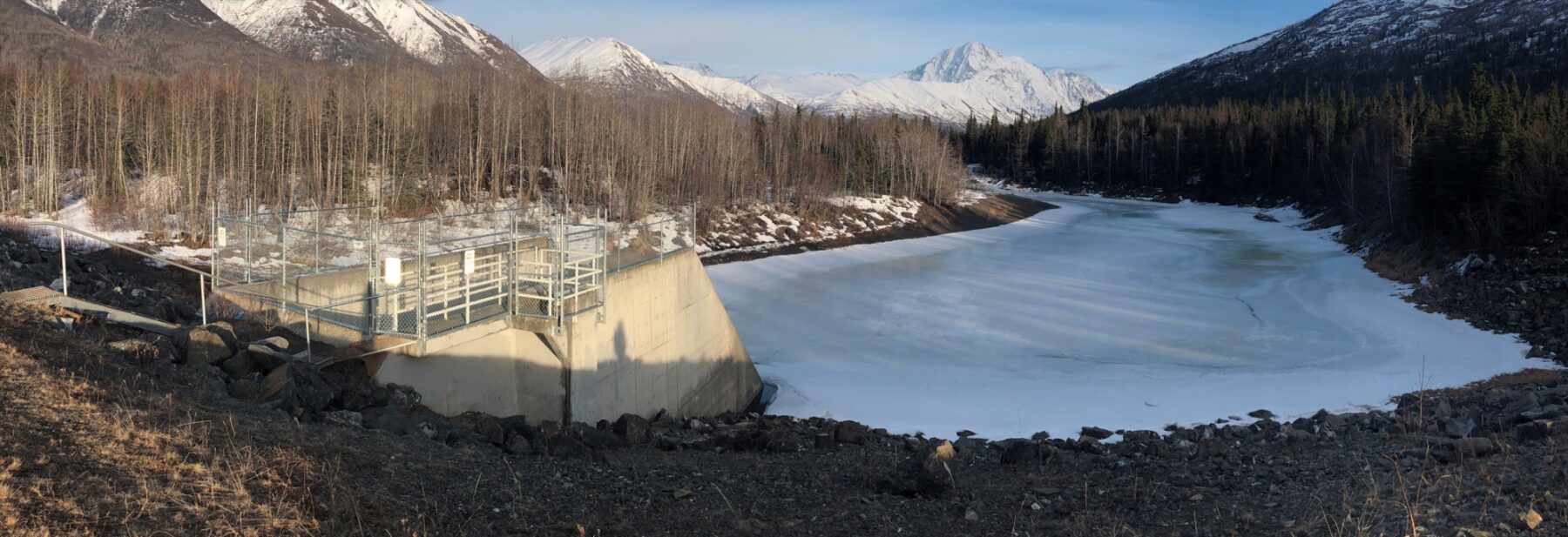
On Monday, Gov. Mike Dunleavy’s staff will hear from all sides about whether the Eklutna Hydroelectric Project and associated dam should be reauthorized. His decision is due no later than Oct. 2.
The Anchorage Assembly last week passed a resolution demanding that Dunleavy delay the decision for two years. On Monday, he’ll hear legal points for why a delay of his decision might be legal or not legal, according to agreements made in the 1990s.
The Assembly wants the delay because it doesn’t want the reauthorization of the dam. The Assembly majority wants to wait until there’s a different governor in office — preferably one that will cave to the demands of the Assembly to take down the dam that holds nearly all of Anchorage’s drinking water and a significant portion of its electric capacity for homes and businesses. The Assembly has gone on record wanting full restoration of the Eklutna River, something that was never envisioned under the terms of the U.S. Fish and Wildlife agreement.
The project was sold in 1997 to the Municipality of Anchorage, Chugach Electric Association, and Matanuska Electric Association. As part of the sale of the project, the three utilities entered into a Fish & Wildlife Agreement in 1991. The agreement requires the project owners to develop and propose to the governor a program to protect, mitigate damages to, and enhance fish and wildlife impacted by the development of the hydroelectric project.
But now in 2024, after selling off Municipal Light & Power to Chugach Electric under Mayor Ethan Berkowitz, the Assembly has no voting role in the matter. The municipality is not an ownership member without ML&P.
The Assembly has been, however, holding government-to-government meetings with the Eklutna Village, which has about 70 people enrolled, and the Assembly has been threatening to sue the governor if he reauthorizes the dam, which was first built in the 1920s and rebuilt in the decades that followed.
The governor has the authority to reauthorize the dam as it is or with a plan developed over a five-year process by the voting members of its ownership group, which is now Chugach Electric Association and Matanuska Electric Association.
“They would threaten the water supply and cost hundreds of millions of taxpayer and ratepayer dollars,” said Power the Future in July. “They believe that other energy solutions (i.e., wind and solar) can more than make up the power produced by the Eklutna system. Ask Anchorage residents what that might have looked like this past January, when the current wind solution would have powered less than 700 homes on the coldest day of the year, while the Eklutna supply powered over 28,000 between Anchorage and the Mat-Su Valley.”
According to the description by Eklutna Hydro, the 1991 Agreement says the governor will review the proposal and issue a final Fish and Wildlife Program giving equal consideration to:
- the purposes of efficient and economical power production
- energy conservation
- the protection, mitigation of damage to, and enhancement of fish and wildlife
- the protection of recreation opportunities,
- municipal water supplies
- the preservation of other aspects of environmental quality
- other beneficial public uses
- requirements of State law
Throughout the process, the owners are required to consult with the U.S. Fish and Wildlife Service, the National Marine Fisheries Service, state resource agencies, including the Alaska Department of Fish and Game, the Alaska Department of Environmental Conservation, and the Alaska Department of Natural Resources, and any other interested parties.
Read more about Eklutna Hydro at this link.


