
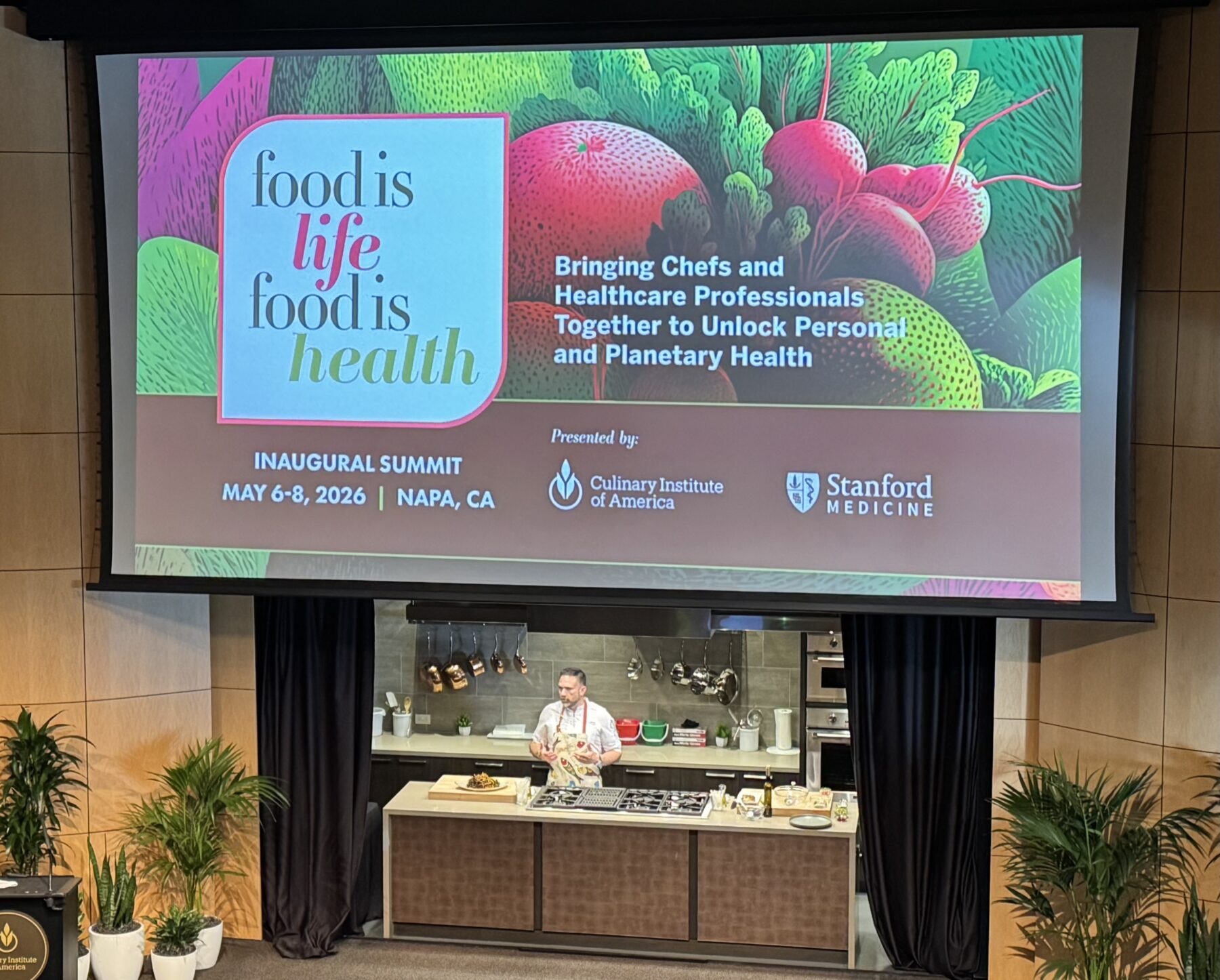
What if the future of healthcare has more to do with the kitchen than the hospital?
That was the underlying message at the inaugural Food is Life, Food is Health summit in Napa, California, where Stanford physicians and researchers joined Harvard nutrition scientists and Culinary Institute of America leadership and faculty in a groundbreaking effort to rethink the role of food in modern medicine.
Hosted through a collaboration between the Culinary Institute of America and Stanford Medicine, the summit reflected a growing movement that no longer views culinary arts, nutrition science, and healthcare as separate disciplines. Instead, discussions focused on how preventive nutrition, microbiome science, culinary education, and food preparation may become increasingly central to chronic disease prevention and long-term public health.
For many Alaskans, the summit’s core message was familiar. Across the state, food has long been connected to culture, resilience, community, and health— whether through salmon and halibut fishing, subsistence hunting, berry picking, foraging, or traditional methods of food preservation, such as drying and fermenting.

But the summit approached these ideas through a scientific lens. Harvard T.H. Chan School of Public Health nutrition leaders Dr. Walter Willett and Dr. Frank Hu, two of the world’s most influential voices in nutrition science and chronic disease prevention, participated in discussions focused on dietary guidance and longevity. Stanford professor of medicine and nutrition scientist Christopher Gardner, widely recognized for his work on the Stanford Twins Study, joined discussions exploring how evidence-based nutrition can be translated into realistic and culturally relevant meals people will actually enjoy eating.
Dr. David Eisenberg, Director of Culinary Nutrition at the Harvard T.H. Chan School of Public Health, moderated discussions exploring how physicians, chefs, dietitians, and farmers can work together to address chronic disease and broader public health challenges.
Presenters emphasized that scientific evidence alone was insufficient if healthy food lacked flavor, cultural relevance, affordability, or practicality. Discussions repeatedly returned to the idea that successful dietary change depends not only on nutritional science but also on deliciousness, sensory appeal, affordability, and long-term sustainability. Culinary arts and flavor development were treated as central components of public health itself.
At the Culinary Institute of America, known as the world’s premier culinary college, these ideas are no longer just theoretical. The school has already begun building programs around the growing connection between culinary arts, nutrition science, and preventive healthcare, including its graduate-level Culinary Therapeutics program, designed to prepare culinarians for emerging roles at the intersection of food, health, and wellness.
Meanwhile, the scientific evidence connecting diet to health and longevity continues to grow.
Among the summit’s standout presenters was Stanford microbiologist Dr. Justin Sonnenburg, one of the world’s leading researchers studying the gut microbiome and its connection to human health.
Sonnenburg explained that the microbes living in the human gut influence far more than digestion alone. His presentation examined connections between the microbiome and metabolism, obesity, immune function, inflammation, and even the central nervous system. He described the human body as “a walking ecosystem,” illustrating the close relationship between human health and microbial life within the gut. Sonnenburg also warned that modern industrialized diets and lifestyles may be reducing microbiome diversity, contributing to chronic inflammation, chronic disease, and poorer long-term health outcomes.
However, Sonnenburg also emphasized that the microbiome may be highly responsive to dietary changes. Growing research suggests that dietary fiber and fermented foods may help support healthier microbiome function and diversity.
Fiber and fermented foods were recurring themes throughout the summit. One session was dedicated entirely to the culinary versatility and nutritional value of lentils. Fermented foods were also recognized for their health benefits and longstanding role in traditional food cultures around the world. Examples discussed during the conference included yogurt, kimchi, kefir, sauerkraut, miso, and koji-based foods.
The summit also highlighted how chefs trained in culinary therapeutics may increasingly serve as translators between complex nutrition science and everyday life. Throughout the conference, chefs were treated not as secondary to the science but as essential partners helping transform evidence-based nutrition into meals people can realistically prepare, enjoy, and sustain over time.
For more information, click on this link: Food is Life, Food is Health
Brenda Josephson is a Haines resident with degrees in culinary arts and food business leadership from the Culinary Institute of America.



