
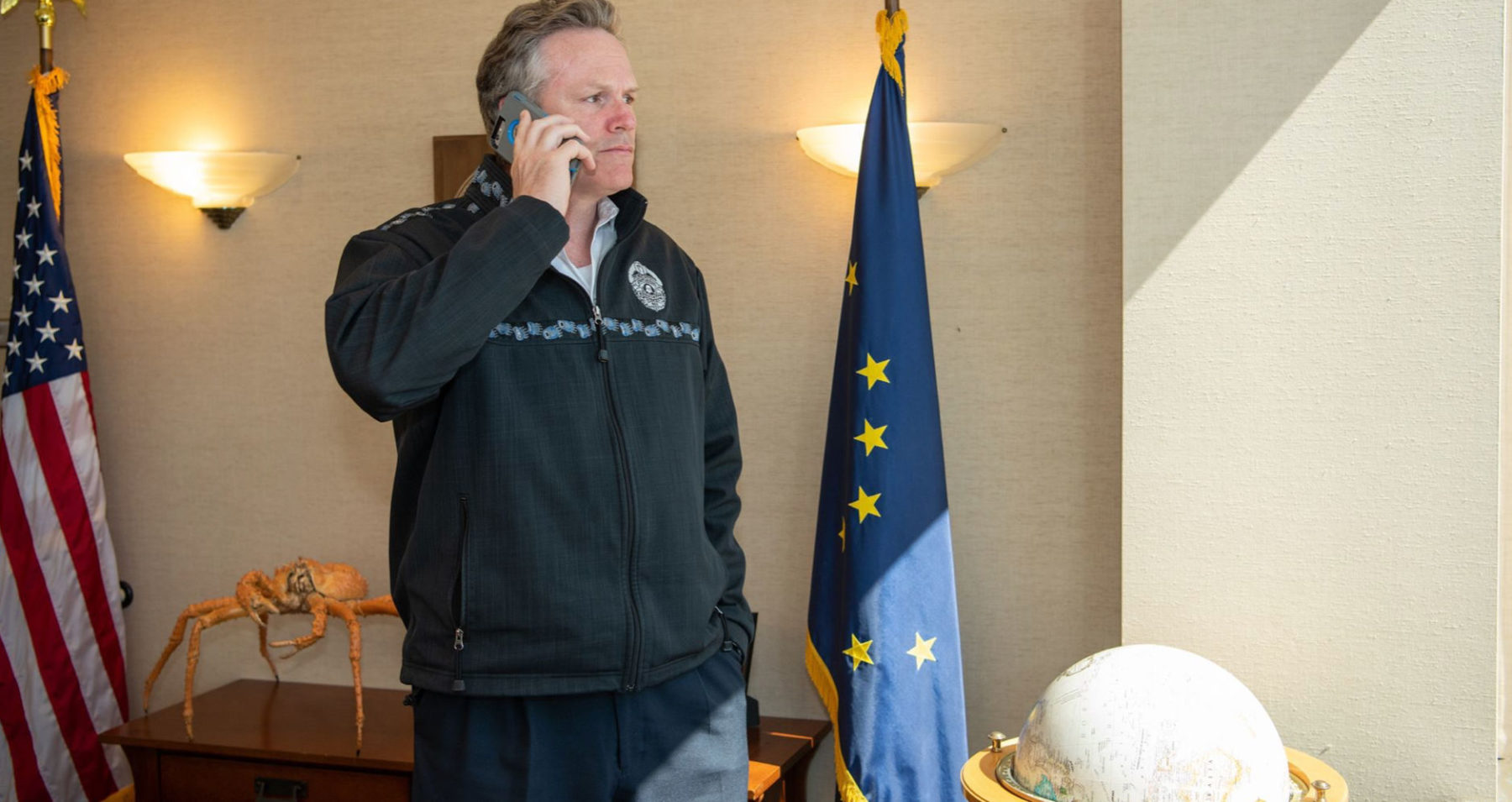
Gov. Mike Dunleavy’s Chief of Staff Ben Stevens this week asked Senate President Cathy Giessel and House Speaker Bryce Edgmon if they plan to extend the health emergency declaration the Legislature passed in March.
The Declaration of Public Health Emergency Disaster, authorized by SB 241, ends on Nov. 15, and it takes legislative action to extend it.
The emergency powers allowed the governor to create orders that at times shut down parts of the economy, as he did early in the COVID-19 outbreak; enact safety measures, such as mobilizing resources to Bristol Bay for the fishing season; and move health resources where they need to go to meet the challenge of the highly contagious virus.
The Dunleavy Administration, for instance, was able to relax regulations so that people on public assistance health programs can access their doctors through telemedicine, something that is normally prohibited.
In a letter exchange between Stevens and the legislative leaders, Stevens reminded them that in two weeks the emergency declaration expire, and asked if they had polled their members to consider convening a Special Session on extending the declaration.
“If so, the Office of the Governor would like to know the outcome of that poll,” Stevens wrote.
They had not. But they shot a letter back immediately saying that that was only because he had not asked them to.
Giessel and Edgmon also wrote they would be “happy” to poll their members but would need the governor’s help to get to the 40-vote threshold needed to call the members back to Juneau.
That’s unlikely to happen. A number of Republicans are not interested in going back to Juneau to allow Democrats to use the time to try to override vetoes.
And it doesn’t appear the governor, by calling for a special session himself, would want to force legislators to travel to Juneau in the middle of November, with COVID-19 cases surging at numbers not seen before in Alaska.
That leaves another option: The governor can let the disaster declaration expire, and then issue a 30-day emergency declaration without the Legislature, which would extend his authority to mobilize resources on a month-to-month basis. This could continue for a while, or at least until the Legislature is back in session in mid-January.
In the original bill for the declaration of public health emergency disaster, the governor asked the Disaster Declaration be extended to March 12, 2021 — a full year. That didn’t fly with the Legislature. The Senate’s version of the bill, under Senate President Giessel, cut the emergency delegation short to Sept. 1, 2020. But Speaker Bryce Edgmon said there were too many unknowns, and the declaration was ultimately extended to Nov. 15.
A new disaster declaration, handled in 30-day increments, could help maintain what is currently in place to slow the spread of the virus, and allow the medical community to meet the needs of patients who need critical care. It would allow the governor to maintain the Emergency Operations Center, testing at airports, and getting testing kits, equipment, masks and gloves to where they are needed most.


