
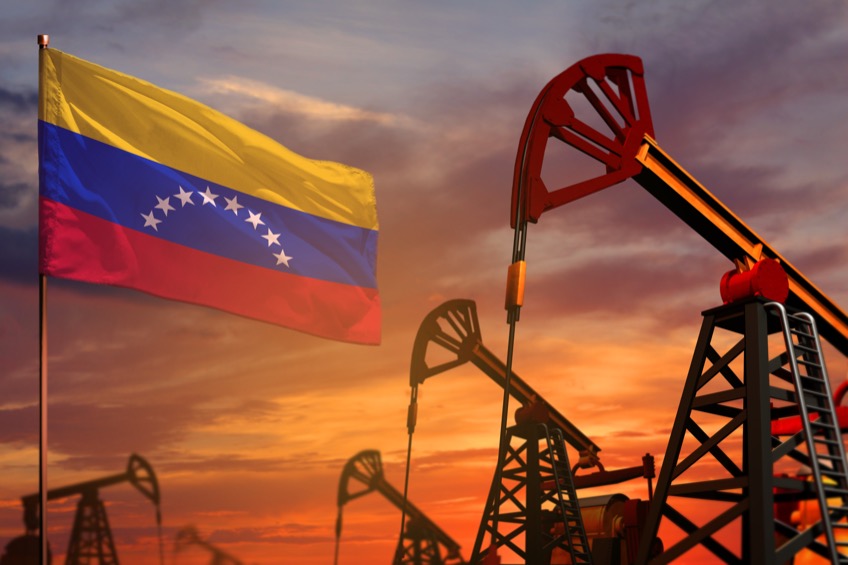
Despite President Joe Biden lifting most sanctions on oil imports from Venezuela on Oct. 18, expectations for a significant surge in oil production by the country remains muted, according to the Energy Information Administration.
While the easing of restrictions opened doors for increased exports of the heavy, sour crude oil — of which there has been a recent shortage and notable price increase —Venezuela has been underinvesting and mismanaging its state-owned oil businesses for years and it is unlikely to be able to supply significant levels of oil to the U.S. in the immediate future, the EIA said.
Venezuela’s crude oil, once a staple in U.S. imports, witnessed a dramatic halt post-January 2019 due to the Trump Administration-sanctions on the socialist state oil company, Petróleos de Venezuela SA (PdVSA).
It was only in November of 2022 that the Biden Administration made concessions by granting Chevron waivers to resume exports from its joint venture operations in Venezuela. Subsequently, crude oil began flowing back to U.S. Gulf Coast refineries by January of 2023.

Earlier this month, Biden lifting most remaining sanctions, in exchange for the promise that Venezuela would have free and fair elections.
U.S. Gulf Coast refineries, particularly those under PdVSA’s U.S. subsidiary, Citgo, are set up for processing the heavy oil type that Venezuela produces. Citgo’s refineries, located in Lemont, Lake Charles, and Corpus Christi, boast a combined capacity of over 800,000 barrels per day.
However, a looming sale of Citgo’s assets on Oct. 23, intended to settle creditor claims against both Venezuela and PdVSA, might reshape the ownership dynamics of these refineries.
Historically, Venezuela’s crude oil production has seen a significant decline, tumbling from 3.2 million barrels per day in 2000 to 735,000 barrels per day in September. The South American nation now ranks as the 10th-largest producer in OPEC despite its abundant oil reserves.
Current EIA data from September indicates a dip in Venezuela’s oil production from its July high of 790,000 daily barrels. The drop is being attributed to a shortage of diluent, essential for processing the heavy oil.
With the sanctions now lifted, increased imports of diluents could offer a modest bump in output. A significant chunk of the anticipated growth is expected from Chevron’s joint ventures, with production forecasts reaching 200,000 b/d by the end of 2024.
Other ventures operated by ENI, Repsol, and Maurel & Prom might collectively add an additional 50,000 b/d in the near future, potentially taking Venezuela’s total output to roughly 900,000 b/d by 2024’s end.
Nevertheless, for Venezuela’s crude oil production to witness a more substantial and consistent increase, an injection of capital and regular maintenance of its aging infrastructure is considered essential. That appears to be unlikely, as Venezuela is not considered a stable investment.


