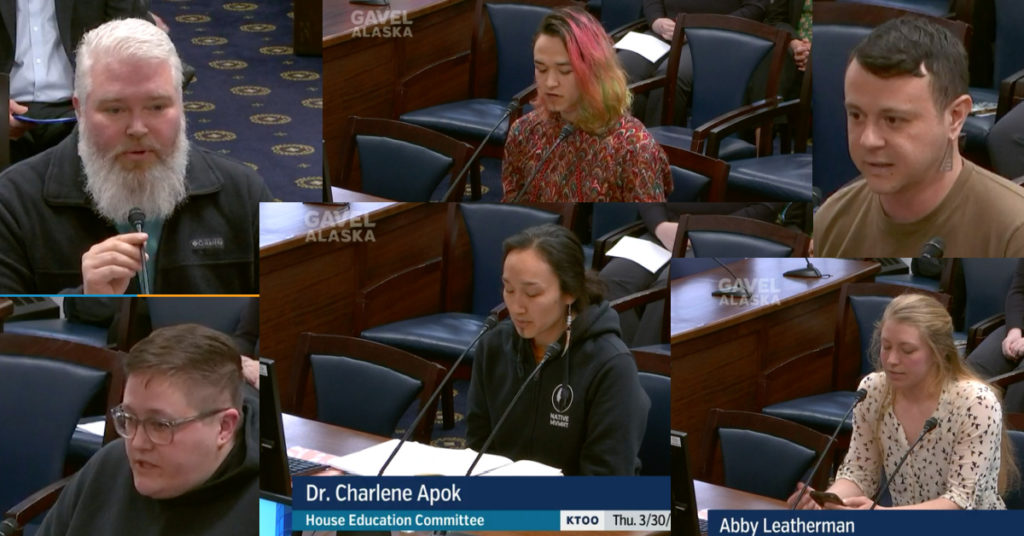
During the first House Education Committee hearing for House Bill 105, the governor’s Parental Rights Act, there was a long line of people testifying — and nine out of 10 of them opposed the bill. The phone lines were packed, with 154 calling in, and 125 getting through to testify. The committee also got 226 emails opposing the bill, and about 125 emails supporting it.
Educators from across the state told the committee that they are the ones who deserve to be able to keep children’s sexual secrets from their parents, because parents cannot not be trusted, and parents may even be harmful for children who are not heterosexual. LBGTQ children could be abused if their parents know about their sexual identity, the teachers said. Educators also said they are the only safe place for these children.
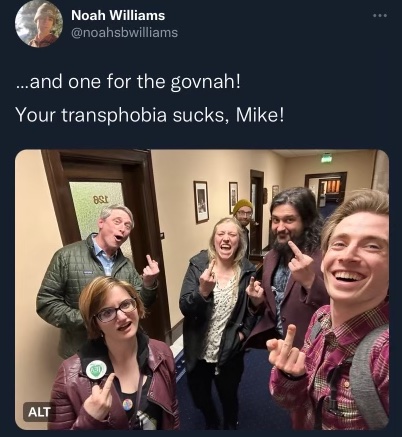
Some of the testifiers roamed the halls of the Capitol and took photos of themselves giving vulgar hand signs intended for the governor. Mainstream media reporters have chosen to call it the “don’t say gay” bill or the “anti-trans bill.”

LGBTQ Alaskans, many who spoke to trauma they had experienced as children, including sexual abuse, also said the bill is wrong. One after another, they told the Education Committee that boys should be able to use girls’ bathrooms and locker rooms if they identify as girls. They may not have actually read the bill, which provides for an any-gender single-use bathroom in schools to handle the needs of children who are gender confused.
Most of the testifiers were polite, and for the most part respected the committee’s role in hearing the public’s viewpoints on the bill. The committee hearing was chaired by Rep. Jamie Allard, who will bring the matter back for more public testimony in coming weeks.

HB 105 would require that schools grant parental access to school records, such as secret names and pronouns that teachers are currently, in some instances, keeping from parents. The bill requires that districts get parents’ permission before instructing them on matters of sex, and gender identity. Currently, there are opt-out laws, but this bill would require an affirmative opt-in by parents before these highly controversial subjects are discussed.
Such debates are taking place all over the country, as parents have been alerted to the changing curricula that is incompatible with many family values.