
The price of oil is down, and while OPEC is throttling back production on its members, other nations are pumping fossil fuels in greater amounts to fill the gap. Russia, although under sanctions, is selling as much as it can — at a discount — to fund its war with Ukraine. All that may mean a lower price for Alaska North Slope crude in coming months and years.
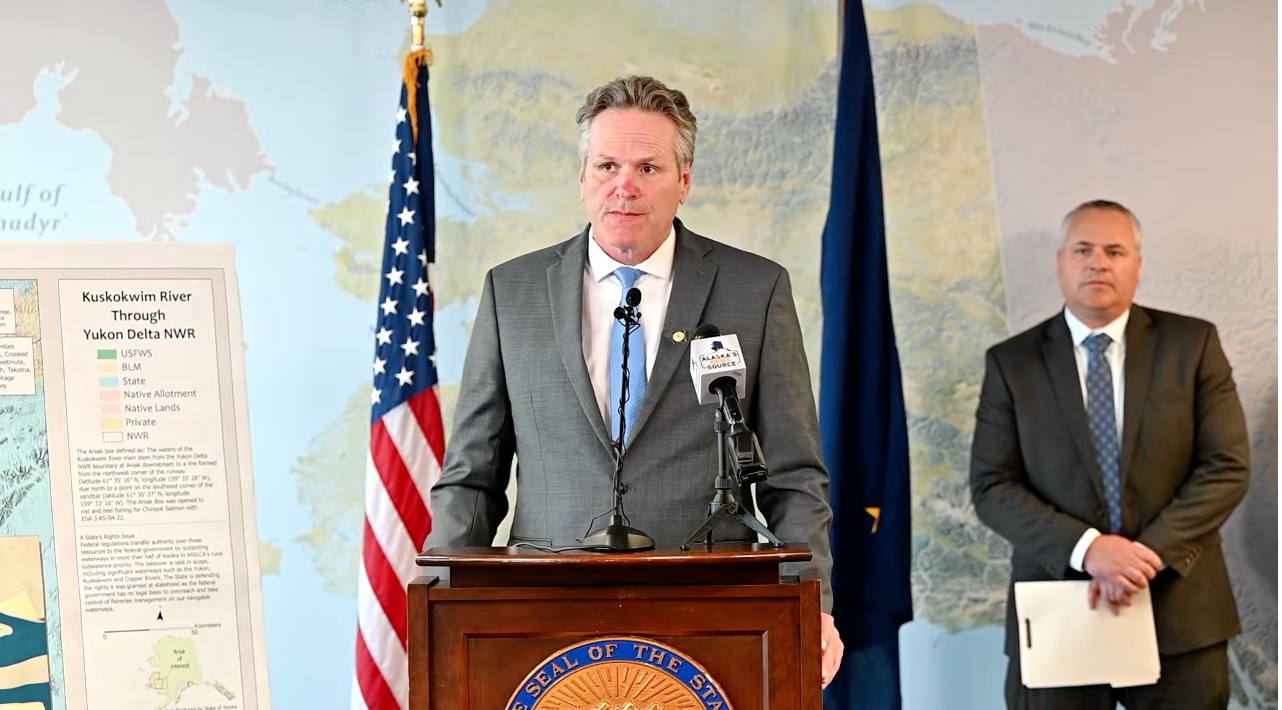
Price of oil is just one factor that will inform the 2025 budget for the State of Alaska, which may be rolled out by Gov. Mike Dunleavy as early as Thursday. Other factors include things like inflationary pressures on state government, with everything costing more, from food for prisoners to ammunition for officers, and paper for the copy machines.
On June 19, Dunleavy signed the state’s 2024 budget into law; he made made $200 million in vetoes to the additions from the Legislature.
That current budget has total expenditures (including capital budget) of $12.3 billion in fiscal 2024, a 10.8% decline from fiscal 2023. It’s an active budget and numbers will change due to supplemental budget additions and other factors.
The 2025 budget, which by statute is due Dec. 15, has been in the works since late summer.
Read the details of the final 2024 budget, as signed and currently in effect, at this link.
Key topics for the 2025 budget:
Oil price trends: Alaska North Slope crude oil was forecasted to average $85.25 per barrel for Fiscal Year 2023, which ended in July, and $73.00 per barrel for FY 2024, which ends June 30, 2024.
Then, price of oil is expected to decline further, settling at $70 a barrel by FY 2032, according to a forecast from the Office of Management and Budget in March. There is also a more immediate risk of a price collapse, according to the Rapidan Energy Group.
Permanent Fund reserves: If soaring inflation and lower oil revenue are two of Dunleavy’s biggest budget challenges, there is some relief for the State of Alaska, in that the way the Permanent Fund is structured, earnings from it now pay for as much as 60% of the state operations. There may be as much as $3.6 billion available from the Alaska Permanent Fund Earnings Reserve Account, according to numbers released earlier this year.
Surplus from FY 24? The state’s Updated Revenue Source Book may show a $440 million surplus, but that may be cut in half by the supplemental budget.
PFD: Gov. Dunleavy has always started out the Permanent Fund dividend discussion by proposing a full PFD for all qualifying Alaskans; the Legislature has cut it down every year. If his pattern holds, he will once again ask the Legislature to follow the law and fund the full dividend. This year’s dividend was $1,312. There was language in the final budget that said if there is a large budget surplus due to high oil prices, there may be an additional PFD issued, but that looks doubtful.
Overall budget: Because of inflation and lower oil revenues, it’s likely the governor will propose a budget that is down as much as $100 million from FY 24, a small trim from last year’s proposal.
Education: Gov. Dunleavy has not supported changing the per-student funding formula called the BSA, but instead has opted for one-time funding infusions for education. It’s likely that he won’t bend to pressure from the National Education Association to propose permanent per-student increases. He hasn’t yielded to the union yet, and so he’s not likely to this year.
Public Safety: The governor started out five years ago needing a lot more troopers, and inheriting a crime wave prompted by SB 91, which he promptly repealed with the help of the Legislature. He filled up the Trooper Academies, and gave $25,000 signing bonuses, and then renegotiated with the public safety union to keep new recruits from just leaving the state after serving a year.
Now, Dunleavy is looking at giving Public Safety more resources to do the job. Sources say that may include an enforcement vessel for Southeast Alaska and a Pilatus aircraft for Troopers, which would allow officers to get into 90% of the runways in Alaska, much more than the current DPS King Air can manage. He may also increase the number of Village Public Safety Officers, and has already appointed a VPSO director, making the VPSOs essentially a new division in the Department of Public Safety.
High cost of living: Dunleavy has said he is concerned about general affordability in Alaska. He may have initiatives he will announce this week that address overall cost of living and ideas that his administration has to make life more affordable for Alaskans.
A budget is an expression of several things. The old saying, “show me your budget and I’ll show you your priorities,” is relevant, but budgets are also expressions of limits — there are never enough funds to meet all the wants, needs, and desires of citizens.
Therefore, the tug-of-war will begin as soon as the budget hits the inboxes of legislators, lobbyists, municipal governments, and nonprofit boards around the state, as each entity vies for a bigger piece of what is always a limited pie.
The 2025 Dunleavy budget will probably come out at about the same time the House Majority Caucus meets this week.


