
Alaska Gov. Mike Dunleavy introduced legislation that is his idea for how the state can make money off of the carbon trading market. Senate Bill (SB) 48, SB 49, House Bill (HB) 49, and HB 50, the Dunleavy Carbon Management and Monetization Bill Package, creates statutory and regulatory framework needed so the State can take advantage of this growing sector. The package consists of two bills that would create a carbon offset program; and a carbon capture, utilization, and storage program.
Carbon Offset Program
SB 48 and HB 49 establish a statewide carbon offset program through forest sequestration within the Department of Natural Resources. Many of the forested lands in Alaska are not even commercially viable because of their size or location, but through a carbon offset program, they have the potential to generate additional revenue for the State of Alaska through biologic carbon storage projects that can mitigate a portion of the carbon dioxide emitted into the atmosphere.

Current statutes do not allow for carbon offset projects. The carbon offset program bill seeks to grant DNR the ability to establish a carbon offset program and enable carbon offset projects on state lands. The carbon offset program would allow private entities to lease state land to undertake carbon offset programs to meet their company goals of becoming net-zero for carbon emissions.
Carbon Capture, Utilization and Storage
SB 49 and HB 50 are part of the State’s efforts to get revenue from vast underground storage it has for carbon dioxide that is a byproduct of oil and gas project. The carbon dioxide can be injected into underground caverns and geologic formation and can be used to force out more oil, or just store the carbon dioxide.
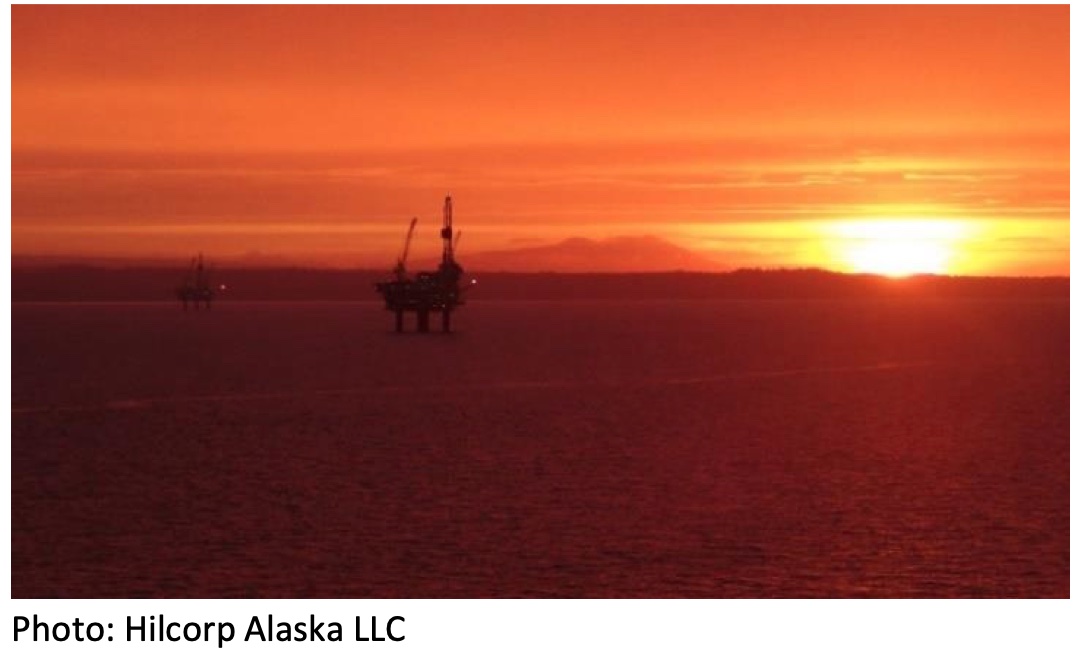
Alaska’s older oil and gas basins, particularly in Cook Inlet, have the right geology to sequester carbon underground. Cook Inlet has been identified as one of the top spots on earth with the ability to sequester carbon underground — with at least 50 gigatons of capacity, the governor’s office said.
This bill specifically creates new authorities for State agencies to license, lease, and administer the State’s pore space for geological storage; administer pipeline infrastructure for transportation of captured carbon to geological storage facilities and administer injection wells and carbon storage facilities; and protect correlative rights of all subsurface owners.
Alaska Native corporations are already making money on carbon trading. “They’ve realized about $350 million on 350,000 acres of land. So that’s a small example, and there’s projects such as this ongoing in the Lower 48 with private landowners as well,” Dunleavy said earlier this month.
“Carbon management will complement—and in some cases enhance—Alaska’s existing industries like forestry, oil and gas, mining, tourism, and outdoor recreation,” said DNR Commissioner John Boyle. “These bills do not lock up State land, rather, they unleash new opportunities. Carbon offset projects will not prevent mineral development, timber harvests, new oil and gas exploration, or infrastructure development. Land within the carbon offset program area will still be available for hunting, fishing, camping and recreational activities for Alaskans and visitors.”Conventional resource development companies operating in Alaska stand to benefit in multiple ways from a strong State carbon management regulatory framework. These companies can use carbon credits to offset their carbon emissions, creating new opportunities.”
“In Alaska, we are blessed with the resources of today, but we’re also blessed with the resources of tomorrow,” Dunleavy said. “With support from the Legislature for our carbon management bill package, we’ll change the conversation about new revenue. We’ve been told by some that we can generate revenue in the billions over 20 years just from our forest lands. This represents the means to fund services, lower the cost of living and improve our quality of life, to create wealth and billions of dollars in economic activity without taxing Alaskans or eliminating the PFD.”
Environmentalists are not on board. Many of them see it as a way of delaying the conversion to renewable energy, and they don’t want to monetize nature.
But for the State of Alaska, getting Alaska’s natural gas to a market like Japan may depend on being able to show the Japan government, which is very sensitive to lowering the nation’s carbon footprint, that Alaska can sell space to store the natural gas byproducts like carbon dioxide, making Alaska a more attractive supplier. Such a framework for carbon storage may be the key to being able to build the Alaska gasline, supporters say, if Alaska can demonstrate that it can also provide the means to mitigate the carbon from natural gas.


