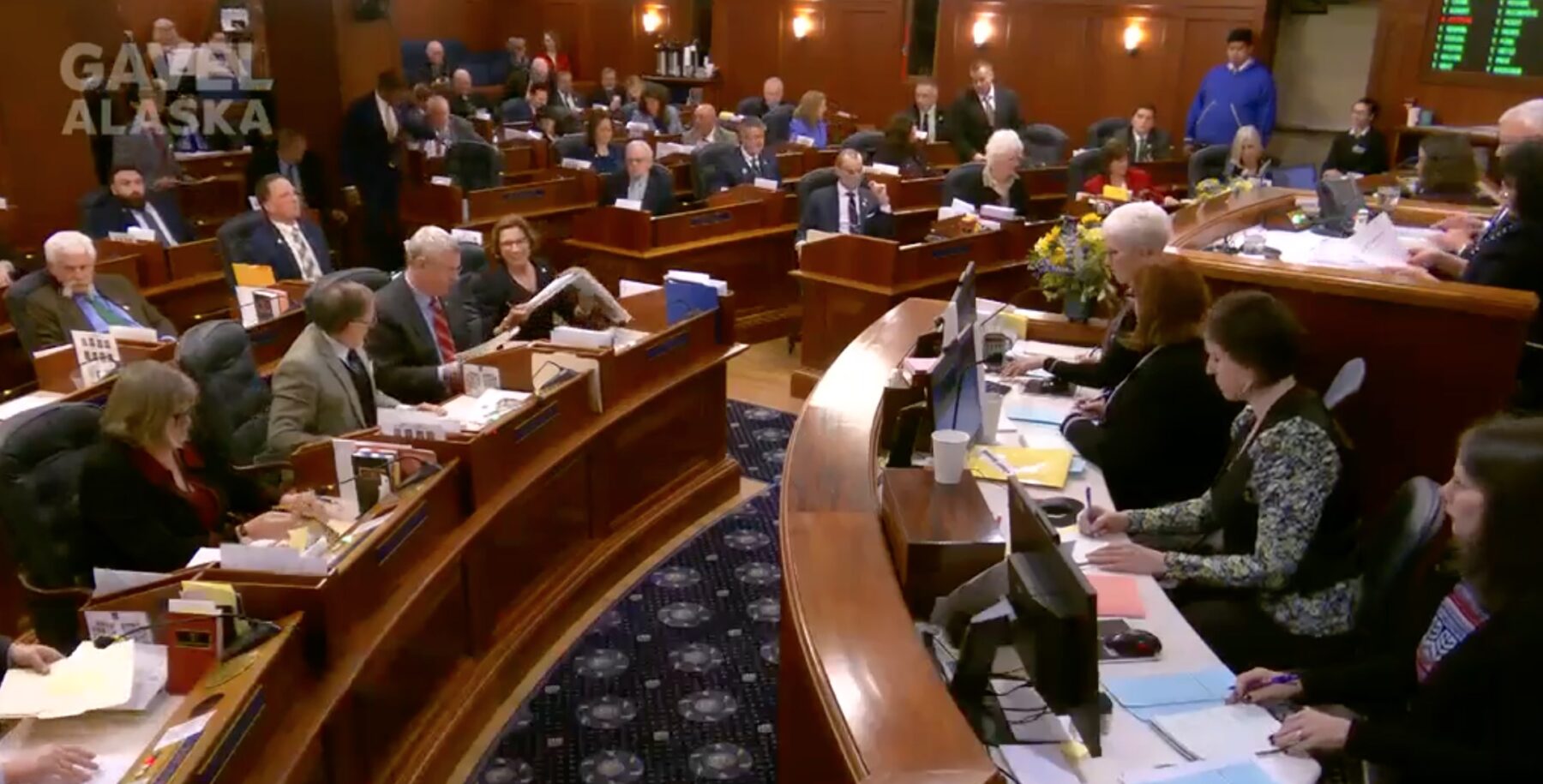
A surprise joint session of the Alaska Legislature was held Thursday night, with only a few hours notice to members.
The session turned out to be a yawner, and within about 10 minutes the two bodies did not override Gov. Mike Dunleavy’s veto of a portion of education funding from last year’s appropriation bills and gaveled out. There was not a single floor speech for or against. All the legislators are able to count, and they all knew what the outcome would be — there would be no override. It needed 45 votes and they didn’t have the votes.
But the drama did create a new and interesting precedent, one that will be tested time and again until it ends up in the Alaska Supreme Court some day.
It started on Tuesday, when Rep. David Eastman said on the House floor that a joint session was “required” by the Alaska Constitution to determine if members want to override the governor’s veto of some of the additional education spending — above and beyond the regular funding formula — that was appropriated in 2023.

It came down to grammar. The Alaska Constitution wording is that “bills vetoed after adjournment of the first regular session of the legislature shall be reconsidered by the legislature sitting as one body no later than the fifth day of the next regular or special session of that legislature.”
It’s never been interpreted to mean that the Legislature must hold a vote. The “shall” is tied to the “no later than” portion, meaning that if they want to override, they need to do it within five days.
Based on the sentence structure in the Alaska Constitution, the words “shall be reconsidered” refer to the clause “no later than the fifth day” — part of the verb phrase and giving direct restrictions to that verb.
“Shall be reconsidered” does not refer to “by the Legislature sitting in one body,” which is a prepositional phrase describing who and how they meet if they meet.
There is no precedent in Alaska history for interpreting it the way Eastman and the House Democrats interpreted it. Additionally, nothing in the Constitution indicates that it intends to force the two bodies together.
A joint session can, after all, only occur with an invitation from one body to the other. Without an invitation, the other body cannot just barge in and force a special session. There are uniform rules for how this takes place and the Constitution in no place forces the House to invite the Senate for an override vote.
But House Democrats pounced and decided Eastman was right. They argued that the Constitution demands a joint session. Legislative Legal disagreed with them but they were undeterred.
Then, Republican Reps. Ben Carpenter and Sarah Vance were swayed by the persuasiveness of Rep. Andy Josephson, a Democrat. They flipped and went with Eastman and the Democrats fo the joint session, and the calculus went from 20-20 to 23-17. That meant the earlier vote to not go into joint session had flipped, and the session was on for 8 pm. It was House Speaker Cathy Tilton’s decision in the end.
Although surprising to see Democrats like hard-core Rep, Alyse Galvin and Josephson agreeing with Wasilla’s Rep. Eastman, who is one of the most conservative members of the Legislature, the Democrats wanted to get everyone on the record so they could later use the vote as a campaign weapon to punish those who voted against the override.
Thus, they were willing to sign on to an argument from Eastman, whom they had tried to remove from the Legislature for two years due to what they said was his attempted insurrection against the U.S. government, due to his membership in Oath Keepers and his attendance at a Jan. 6 2021 rally for President Trump.
Also surprising, if Eastman actually believes his argument in 2024, then he and the Legislature have violated the Constitution for the last several years by not forcing the joint session to consider vetoes.
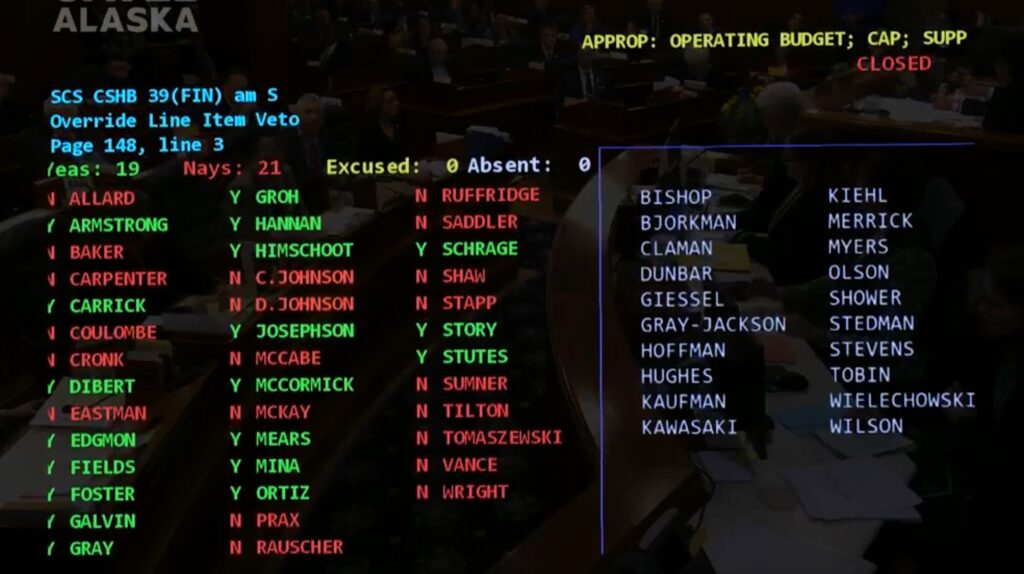
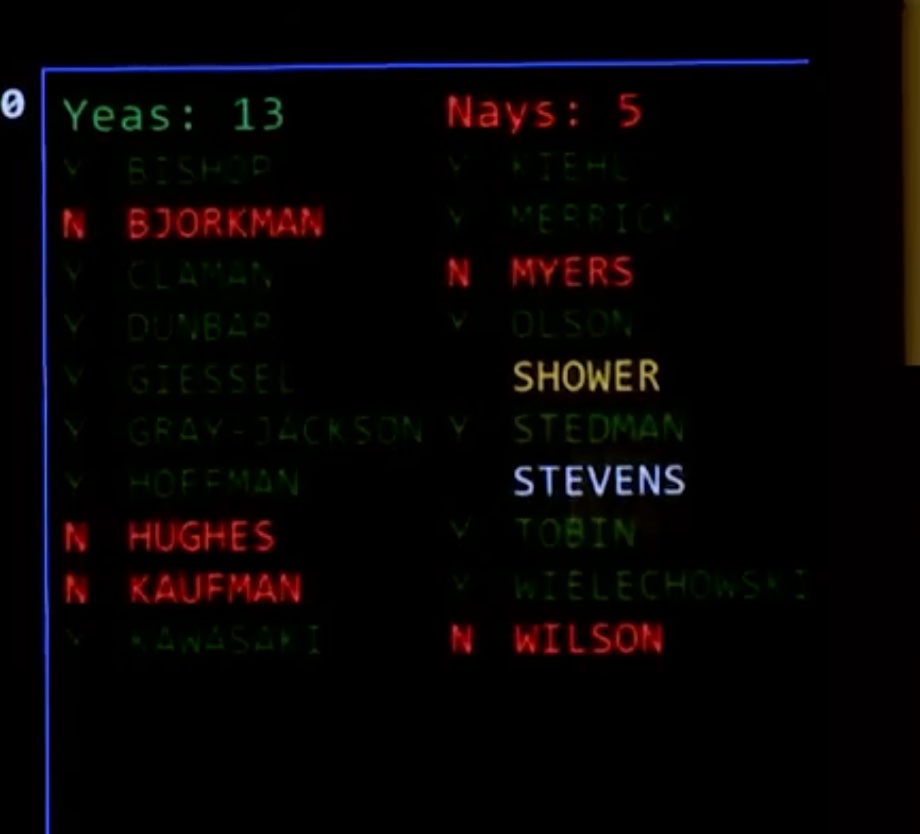
In the end, legislators had 33 to override, and 26 against the override. Most of the Senate, which is dominated by Democrats, voted in favor of the override. Eagle River Republican Sen. Kelly Merrick, along with Republican Click Bishop, Bert Stedman, and Cathy Giessel voted to override.
Republicans in the House generally voted against the override.
And with that, the joint session adjourned.