
The Centers for Disease Control and Prevention on Friday updated the mask and respirator guidelines that will better prevent the transmission of Covid-19. While any mask is better than no mask, the CDC now says cloth masks are not really good enough.
It’s something that many in the public have pointed since early in the pandemic mask-wearing phase that began in 2020, but the CDC has played along with pushing inferior masks until now. Early on, the agency didn’t want members of the public to hoard the better quality masks that are needed by health professionals.
On Friday, the health agency said that fitted N95 masks, sometimes called respirators, are now preferred. If used correctly, they can filter out 95 percent of airborne particulate matter.
The public does not typically wear any masks correctly, however. The respirator masks, just like cloth or surgical masks, need to be changed frequently — several times a day, and need to be removed and disposed of with extreme caution if they are to be effective. If they do block the virus, that means the virus will be on the mask. That difficulty in use for average citizens was not mentioned in the CDC advisory, which gave no guidance on the touching and disposal of masks.
The CDC summarized its new guidelines:
- Masking is a critical public health tool for preventing spread of COVID-19, and any mask is better than no mask.
- To protect yourself and others from Covid-19, CDC continues to recommend that you wear the most protective mask you can that fits well and that you will wear consistently.
- Masks and respirators are effective at reducing transmission of SARS-CoV-2, the virus that causes Covid-19, when worn consistently and correctly.
- Some masks and respirators offer higher levels of protection than others, and some may be harder to tolerate or wear consistently than others. It is most important to wear a well-fitted mask or respirator correctly that is comfortable for you and that provides good protection.
- While all masks and respirators provide some level of protection, properly fitted respirators provide the highest level of protection. Wearing a highly protective mask or respirator may be most important for certain higher risk situations, or by some people at increased risk for severe disease.
- CDC has a list of mask recommendations.
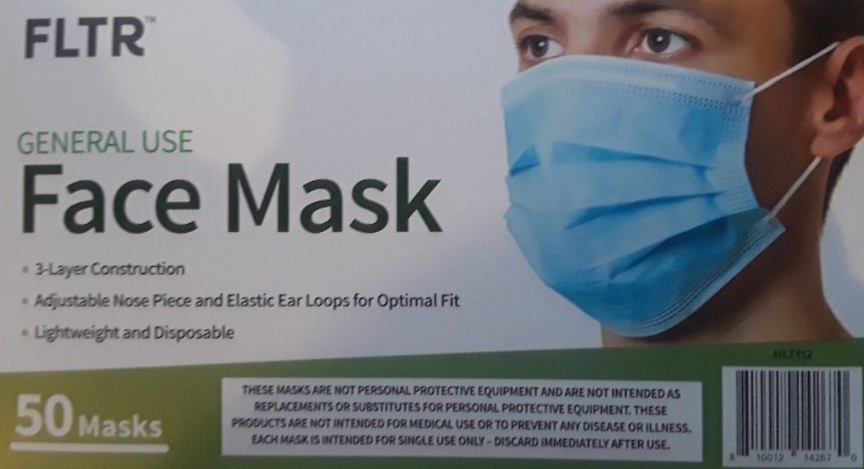
Surgical or “procedural” masks, commonly used in commercial settings, come from boxes with labels that say they will not protect against viruses.
In 2020, the CDC said that cloth masks help prevent the spread of Covid-19 from those without symptoms. The agency said that cloth masks block respiratory droplets that leave a person’s mouth while coughing, sneezing or talking.


