
By DAVID BOYLE
The Anchorage School District knows that it has too many schools for too few students. And the future is bleak for increased numbers of students showing up through 2028.
ASD is not alone with the problem of too few students for too many school buildings. Some school districts take a courageous stand, rightsizing the school system to fit the population while still maintaining room for growth.
The Denver Public School system, for example, is proposing to close 10 of its schools. And the Jefferson County School District in the Denver area has closed 10 schools with another four scheduled for next year due to lower enrollment.
The Anchorage School District has too many elementary schools for far fewer students. It currently has a “program” capacity of 26,432 students in its elementary schools. But there were only 19,484 elementary students in the 2022-23 school year. And fewer this year.
That’s alarming enough. But the future looks even worse. The district projects it will only have 16,826 elementary students in 2027, almost 10,000 fewer students than the district’s school capacity.
People are just not procreating like they used to.
Realizing the excess capacity of elementary schools and the need to reduce costs, the district has developed a comprehensive strategy to close excess elementary schools. This strategy includes the following decision matrix:
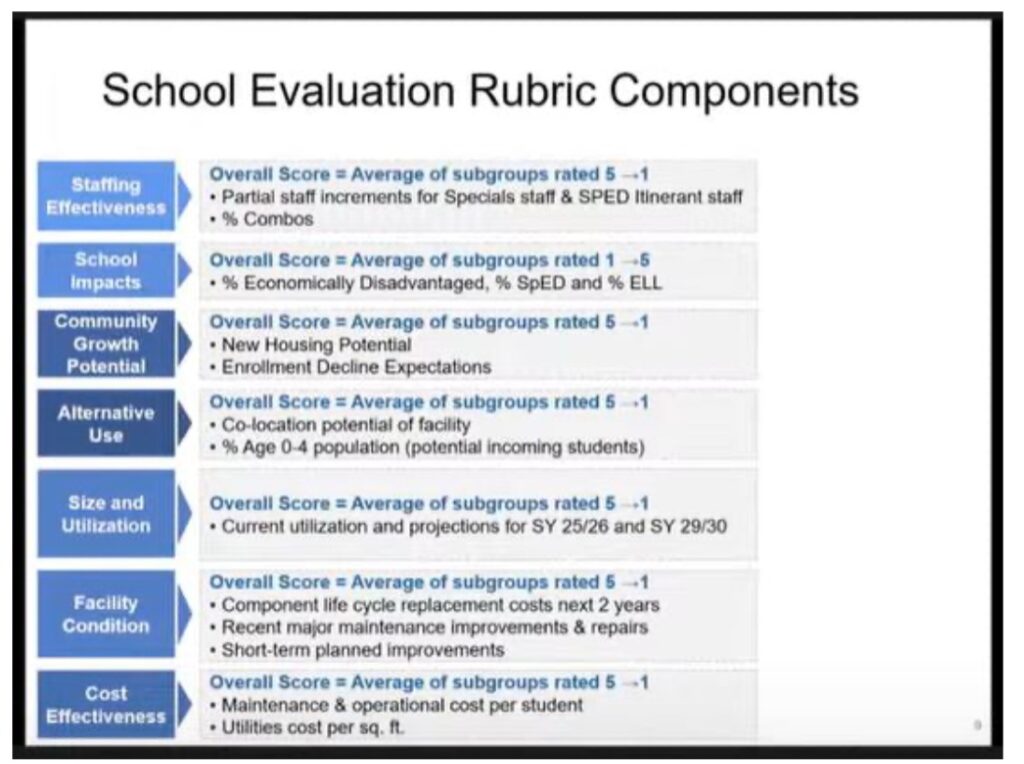
All the above rubric components give a grade from 1 (lowest) to 5 (highest) for elementary schools.
The components are pretty self-explanatory, but the “Staffing Effectiveness” does not really include the effectiveness of the staff. It only shows the impact of the special education staff and other staff such as those that must travel from school to school, such as music teachers.
What it doesn’t show is the effectiveness of the classroom teacher.
That would be a much better measure of “Staffing Effectiveness”.
Here are the AKSTAR standardized test scores of the 8schools that the district has selected for closure:
| School | English Language Arts | Math |
| Baxter | 23 | 20 |
| Bear Valley | 67 | 71 |
| Fire Lake | 31 | 45 |
| Lake Hood | 16 | 12 |
| Nunaka Valley | 33 | 36 |
| Tudor | 32 | 24 |
| Wonder Park | 24 | 21 |
| Anchorage Total (3-9) | 36 | 37 |
Why would Bear Valley be selected for closure if its students have better outcomes than all the other elementary schools? Does it make sense to break up a successful team of students and teachers, regardless of the building condition?
The school building seems to matter little when it comes to student achievement.
Here’s Eagle Academy Charter School in Eagle River which is housed in a former automobile showroom:
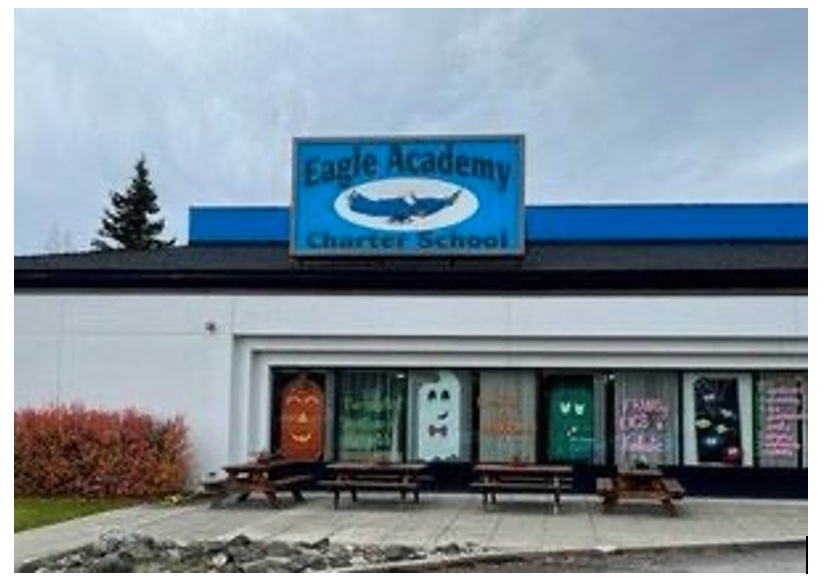
And guess what? Eagle Academy Charter School is the top performing school in the district! Seventy-seven percent of its students are proficient in reading and 80% of its students are proficient in math.
Here’s another outstanding charter school: Aquarian Charter School:
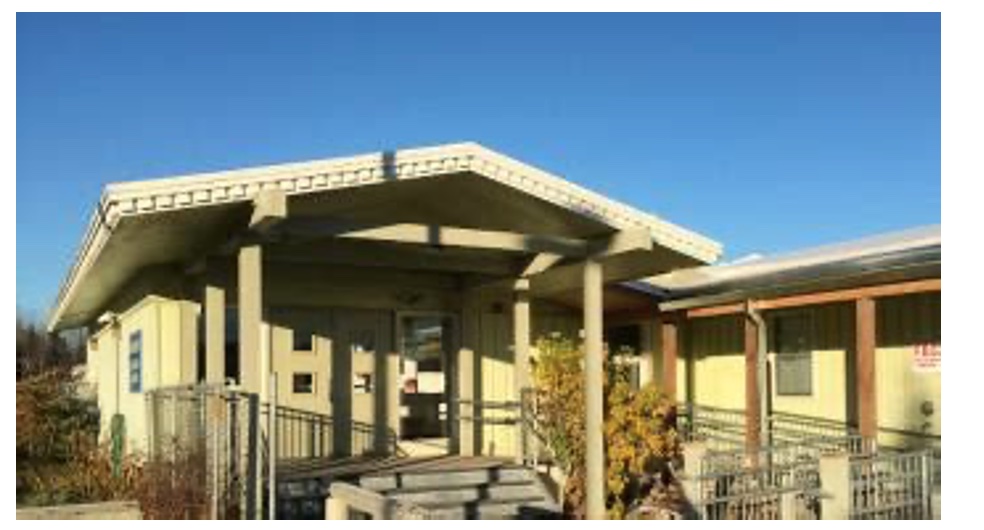
Aquarian Charter School is housed in a former school building that the district discarded many years ago. But the parents and kids don’t care. They want to learn and they have very effective classroom teachers. It shows in the scores: 69% are proficient in reading and 69% are proficient in math.
So, it’s not the school building. It’s effective classroom teachers, plus motivated students, plus an outstanding curriculum.
Board member Pat Higgins voiced that he was focused on academic outcomes that were not stressed enough in the rubrics. Chris Opitz, academic officer, noted that when Abbott Loop school was closed that both math and reading scores increased marginally. And the attendance rate increased as well.
The district proposes to repurpose some of the excess schools to house charter schools, thus saving rent costs. It also proposes to repurpose some schools to house PreK and special programs.
So, it sounds like the schools may be closed; students moved to other neighborhood schools; the buildings repurposed; and no loss of jobs. Wow. That’ll close the budget gap?
That will be for the next chapter in the ASD school closure battle. How much will the district really save?
Here is a link to the ASD “Rightsizing Infrastructure Project.”
The Anchorage School District’s problem in a nutshell:
The total “program capacity” for elementary schools today would hold 26,432 students.
The actual number of students in 2022 was 19,484, a nearly 7,000 student excess capacity.
There is even a further downward trend in the future until the projected number of elementary students is 16,826 in 2027, nearly 10,000 students fewer than the district’s capacity.
A school building is just that and nothing more. What happens in the classroom is what is most important. An effective classroom teacher and an effective curriculum are the keys to student success.
David Boyle is an education writer for Must Read Alaska.


