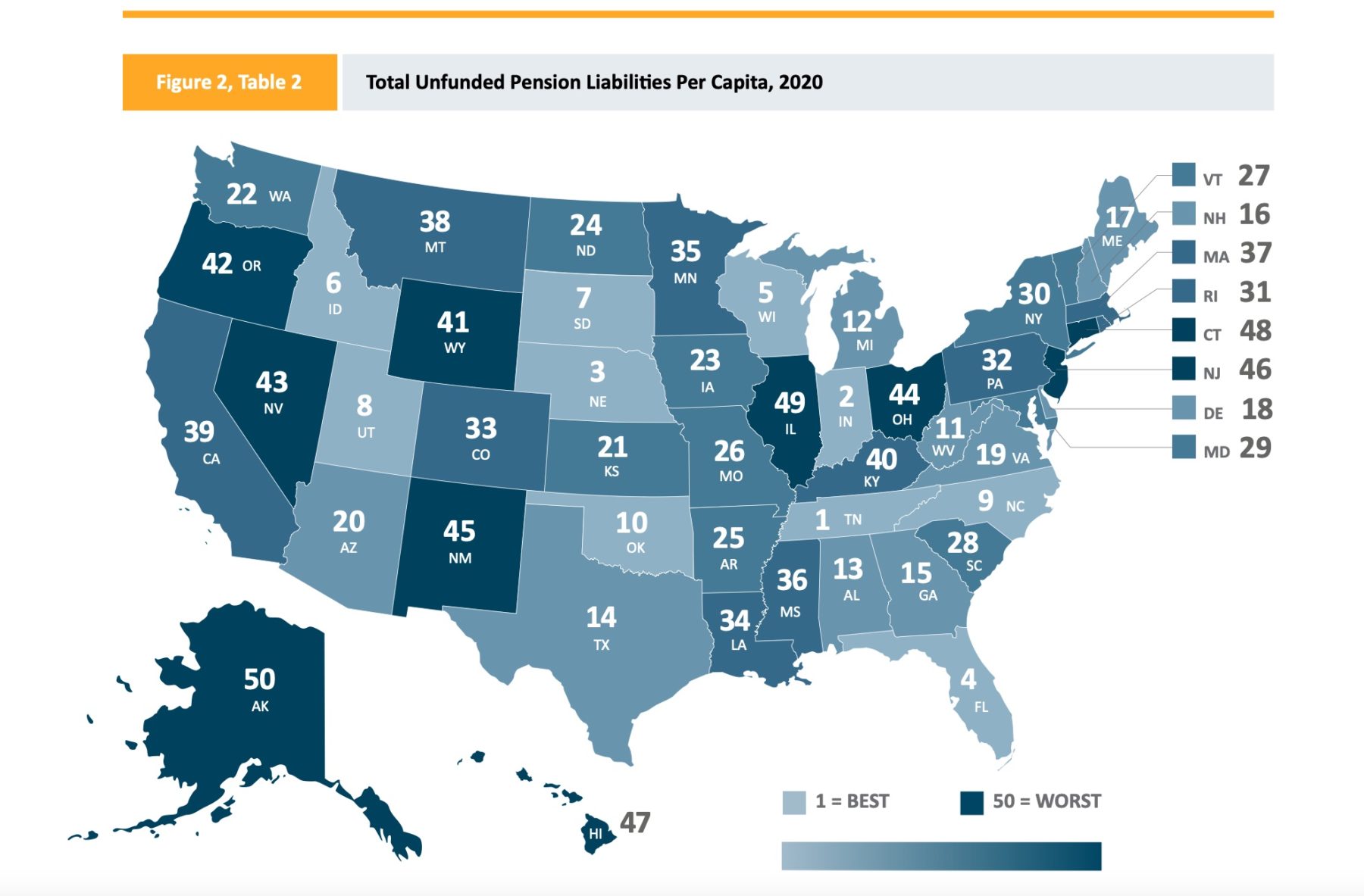
It’s not enough that Alaska has the highest unfunded pension liability in the United States, per capita. A Republican running for Congress now wants to add more debt to Alaskans.
Alaska State Sen. Josh Revak led the charge on Wednesday get a bill out of the Senate Labor and Commerce Committee. HB 55 would give a costly defined benefits package to first responders. It’s the first step to getting defined pensions back for all State employees.
At a time when the Legislature cannot see its way to pay Alaska Permanent Fund dividends still owed to Alaskans, it may force this bill to the governor’s desk during his re-election year.
On behalf of Democrats in the House and Senate, Revak unexpectedly filed a “Rule 48” memo to force the bill into the final committee of referral, the Finance Committee. This is a last-resort measure, but for Revak, it’s a first resort.

Labor and Commerce Committee Chair Mia Costello has scheduled a hearing for Saturday on the bill but is unclear if the signatories in the Rule 48 memo are available for the committee hearing.
Most in the Capitol believe Revak’s action is a play is to get the public safety union endorsement for his anemic congressional campaign. Revak filed for Congress after Congressman Don Young died.
The Alaska Policy Forum and Americans For Prosperity both oppose HB 55, saying there are ways to create defined benefit plans that are fiscally neutral, but this is not the way.
Across the country, state pension plans are bankrupting governments. There have been repeated efforts in Congress to allow governments to declare bankruptcy in order to reneg on the pension benefits that are promised to state workers.
In Alaska, the now-defunct pension plan has $5.4 billion to $31 billion in unfunded liabilities as of 2020, depending on how the sources determine assumptions. On a per-capita basis, it’s the highest unfunded liability pension in the nation, according to ALEC, the American Legislative Exchange Council. Pew Research shows Alaska is 67 percent unfunded in its existing pension debt.
Those favoring HB 55 say that a pension for first responders will help with worker retention.
Those opposing the bill say it will bring with it huge financial risk for the state, that it has not gone through rigorous stress testing, and that it will add to unfunded liabilities that the state may not be able to pay to future first responders, especially as no new oil is coming online in Alaska, and Alaska is increasingly relying on the Permanent Fund to pay for government.
Other critics of the bill point out that 86 percent of police stations around the country face retention issues and yet most of them are in a traditional pension systems, like the one Revak is pushing to restart in Alaska.
When Alaska had a pension plan for public employees, the state’s debt skyrocketed, from $1 billion to $4.5 billion in a two-year period between 2007 and 2009. Alaska has moved to a 401K program to be more fiscally responsible, but the state is still saddled with paying off the old pension plan obligations.
Sponsors of HB 55 are Democrat caucus members Reps. Andy Josephson, Chris Tuck, Adam Wool, Matt Claman, Zack Fields, Liz Snyder, Bryce Edgmon, Ivy Spohnholz, Andi Story, Harriet Drummond, Daniel Ortiz, Cal Schrage, and Republicans Sara Rasmussen and Kelly Merrick.
In the Senate, the sponsors of the bill are all Democrats: Tom Begich, Elvi Gray-Jackson, and Bill Wielechowski.
For political reasons involving union endorsements, Sen. Revak has joined the Democrats to lead the effort and move the bill to a vote.
A five-year cost analysis report by consultant actuary Buck Global on behalf of the Legislature raised serious concerns: “Adverse plan experience (due to poor asset returns and/or unexpected growth in liabilities) or changes to more conservative assumptions will increase the plan’s unfunded liabilities, which results in higher Additional State Contributions.”
It also said that the impact of HB 55 on projected Additional State Contributions “depends on how large the unfunded liabilities become. If the Actuarially Determined Contribution rate for HB 55 members’ pension and healthcare benefits exceeds 9%, then HB 55 will lead to larger increases in Additional State Contributions compared to what would have happened without HB 55…By shifting active P/F members (and all future P/F hires) from DCR to DB, the State will be taking on greater risk of higher contributions in future years.”
The Buck Global report warns that analysis that HB 55 would commit Alaska to unpredictable long-term costs in the future.