
Updated: The lawsuit referenced in this story has been filed by the Birch Horton Bittner and Cherot law firm. The plaintiffs are Sunny Guerin, of Anchorage, who is a Doyon shareholder; Vera Lincoln of Fairbanks, an Arctic Slope Regional Corp. shareholder; and Elizabeth Asisaun Toovak, ASRC shareholder living in Utqiagvik. The case has been assigned a number: 3AN-22-06795CI, and the first hearing to schedule a hearing has been set for 3:30 p.m. Thursday, June 23 in Anchorage Superior Court, Judge William Morse presiding.
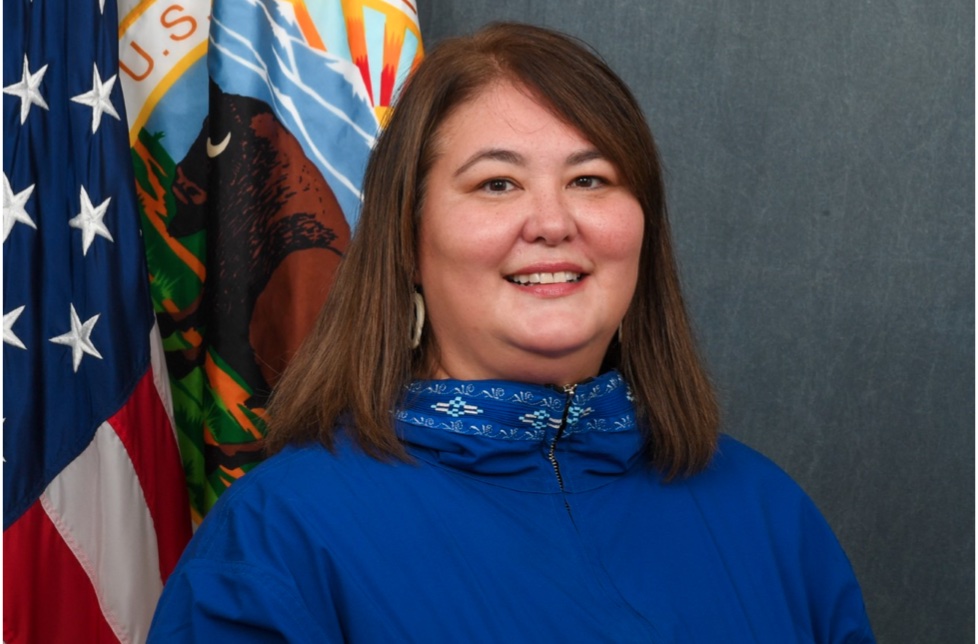
Although congressional candidate Tara Sweeney received less than 6% of the votes cast in the recent congressional special election primary election, there is a chance that the courts will place her on the “final four” ballot in August.
A group of rural Alaskans associated with Sweeney filed lawsuit Thursday against the Division of Elections, whose director has ruled that Alaska Statute provides no path for a fifth-place finisher to move up to the final four ballot, even if one of the four drop out.
The Alaska election laws were muddied up by Ballot Measure 2 authors, and the authors of the ballot measure appear to be behind the lawsuit, which itself has the possibility of further mucking up Alaska elections.
Al Gross suddenly dropped out of the race earlier this week, claiming he had no path to win as a candidate without a party. He was the third-place finisher, behind Sarah Palin and Nick Begich. The fourth place finisher was Mary Peltola of Bethel.
Sweeney was fifth with 5.92% of the vote. The lawsuit will assert that she should be moved into the final four, since there is a vacant spot.
The Alaska Republican Party has endorsed Nick Begich and the Alaska Democratic Party has endorsed Mary Peltola. Both Palin and Sweeney, both Republicans, have not gone through the Republican Party’s vetting process.
Sweeney issued a statement saying that Begich, the only male in the top four, was trying to block women from being on the ballot and “his desire to limit the choices for women everywhere, including Alaska.” She said she is not part of the lawsuit but believes she should be on the ballot. Gross has endorsed both her and Peltola.
Begich’s campaign had filed a request with the Division to clarify the law pertaining to moving people onto the ballot who had not won a spot.
The Division of Elections will have to consider whether it will still be able to make the Aug. 16 general election schedule. The decision would be a hasty one from the Superior and then the Alaska Supreme Court, presumably in time for the June 25 certification of the election. This likely means a weekend decision from the Alaska Supreme Court.
This is a rapidly developing story.
Sweeney’s statement is here:
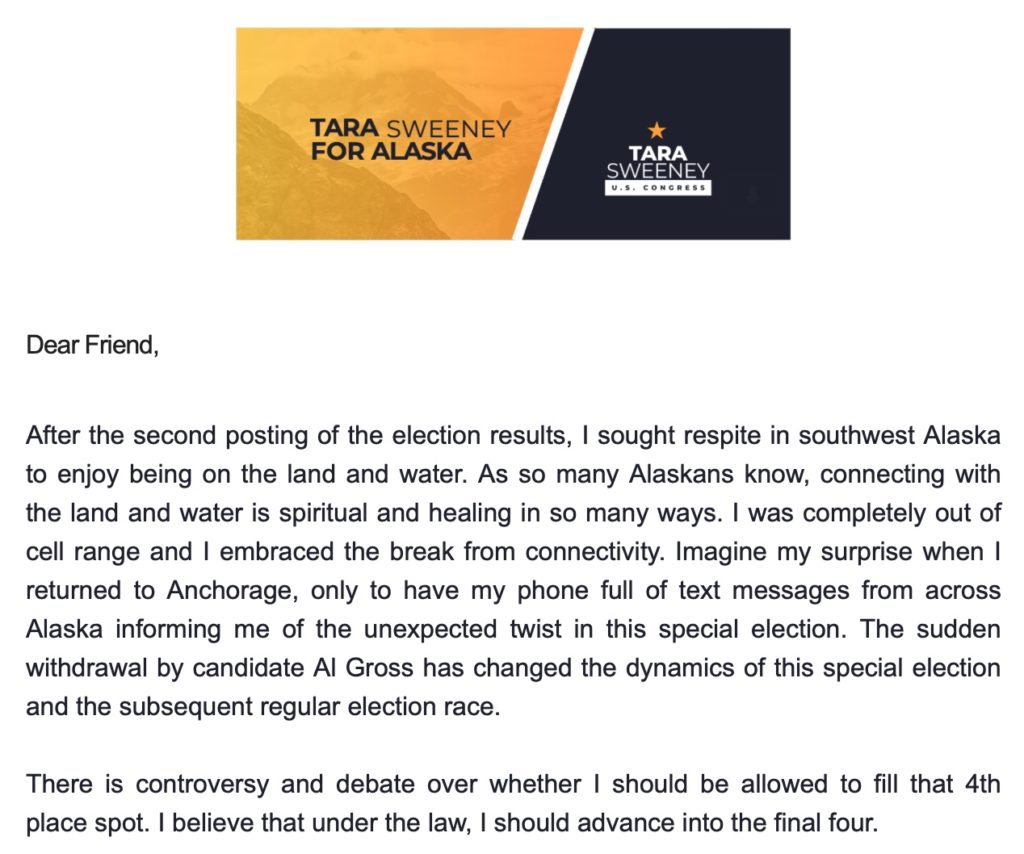
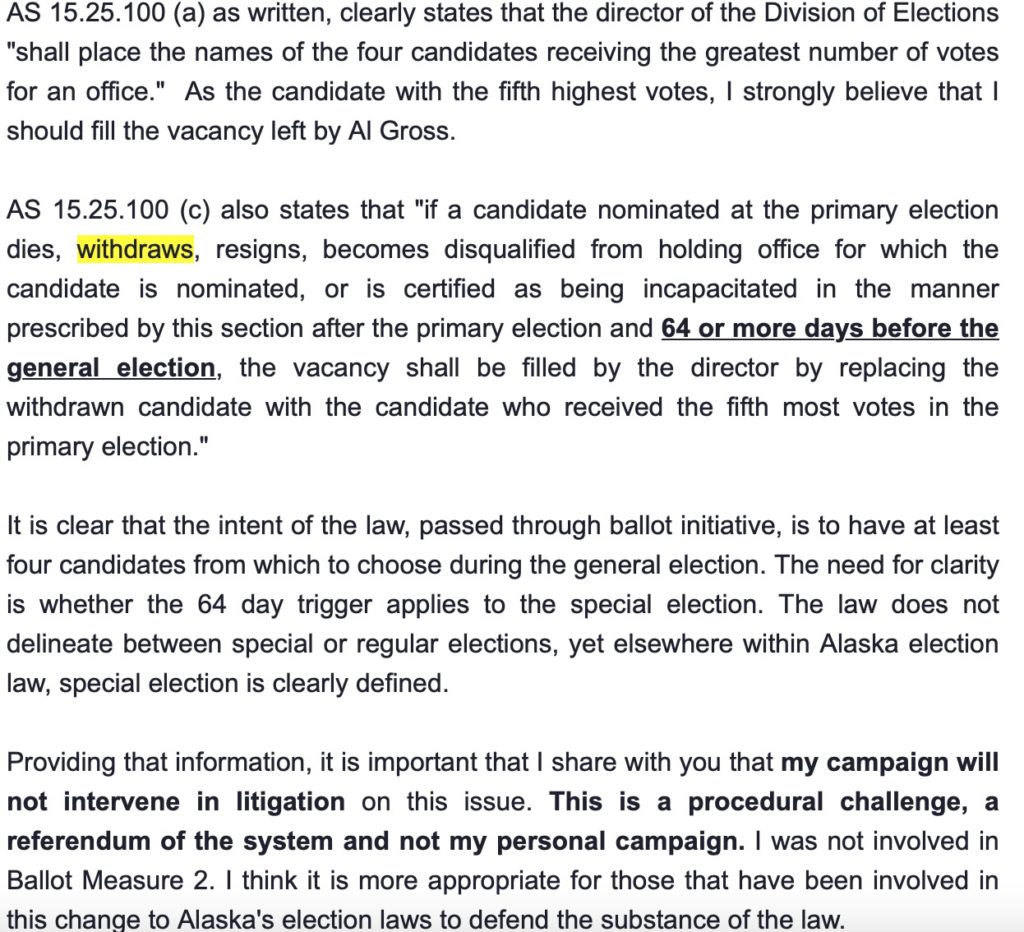
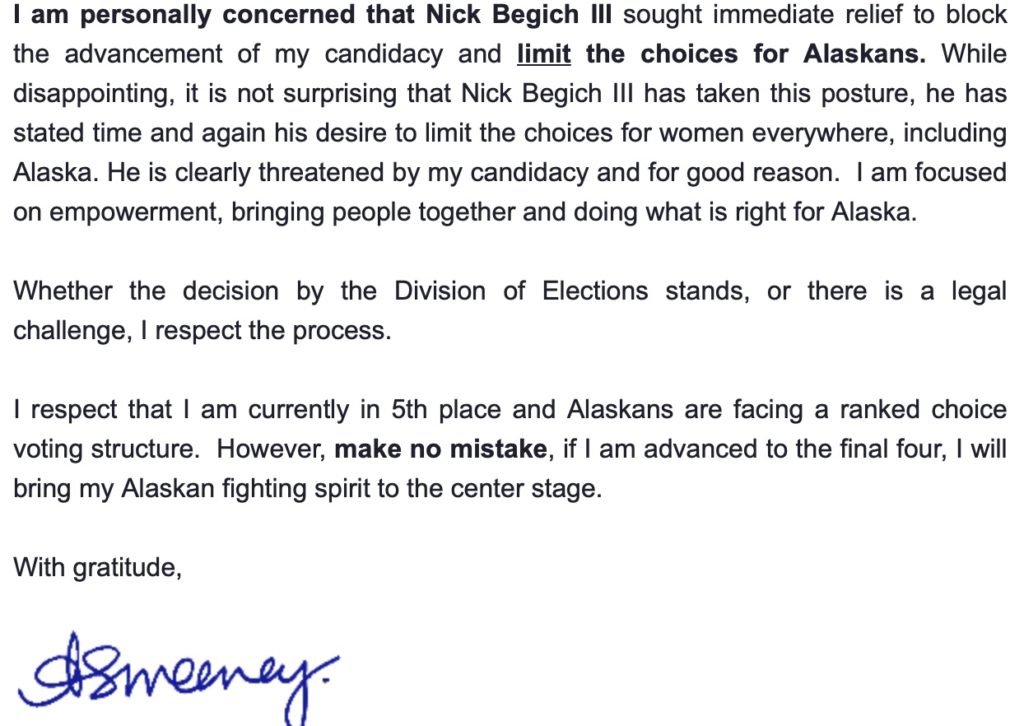
After the lawsuit was filed, the Sweeney campaign issued another statement:
“Like many Alaskans, including those that filed this challenge, I agree that under the law, I should be able to advance into the final four for this special primary election. The law is clear that Alaskans deserve a choice amongst four candidates, no less.
“I’m confident the intent of the law will prevail and Alaskans will have at least four candidates from which to choose during the general election.
“It is concerning to me that Nick Begich sought immediate legal action to block the advancement of my candidacy to limit the choices for Alaskans.He is clearly threatened by my candidacy and for good reason – I’m focused on empowerment, bringing people together and doing what is right for Alaska and Nick Begich is only concerned about his political ambitions.
“If I advance to the final four, I can promise you I will bring my fighting Alaska spirit to center stage. This election is critical and we need an effective leader fighting for Alaska in Congress, and I know I’ve got what it takes.”


