
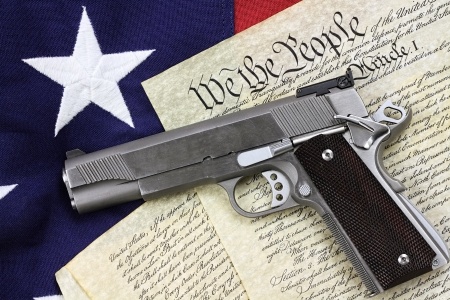
By a vote of 6-3, the U.S. Supreme Court has invalidated a New York law that limits who can get a permit to carry a concealed handgun in public.
New York required people wanting a license to carry a concealed handgun outside their home to show “proper cause,” which the New York courts determined had to be something more than a simple desire to protect themselves or their property. Applicants had to prove that they had a heightened need for self defense, such as that they were the subject of repeated physical threats. Other states with similar laws include California, Hawaii, Maryland, Massachusetts, and New Jersey.
The New York law has been on the books for a century until two men in New York challenged it after their applications for concealed-carry licenses were denied.
The opinion in New York State Rifle & Pistol Association v. Bruen was authored by Justice Clarence Thomas, with the court’s three liberal justices — Elena Kagan, Sonia Sotomayor and Stephen Breyer — dissenting.
The court wrote that Americans have a right to carry “commonly used” firearms in public for personal defense and that the Second Amendment is not “second class” constitutional right that is subject to greater restrictions “than other Bill of Rights guarantees,” he wrote.
Earlier this week, the U.S. Senate advanced legislation that would create stricter gun laws across the states, including allowing states to enact red flag laws, which provide legal paths for removing firearms from people deemed by authorities to be unstable. The proposed law would also require mental health checks of 18- to 21-year-olds who are buying firearms and the law has numerous other provisions.


