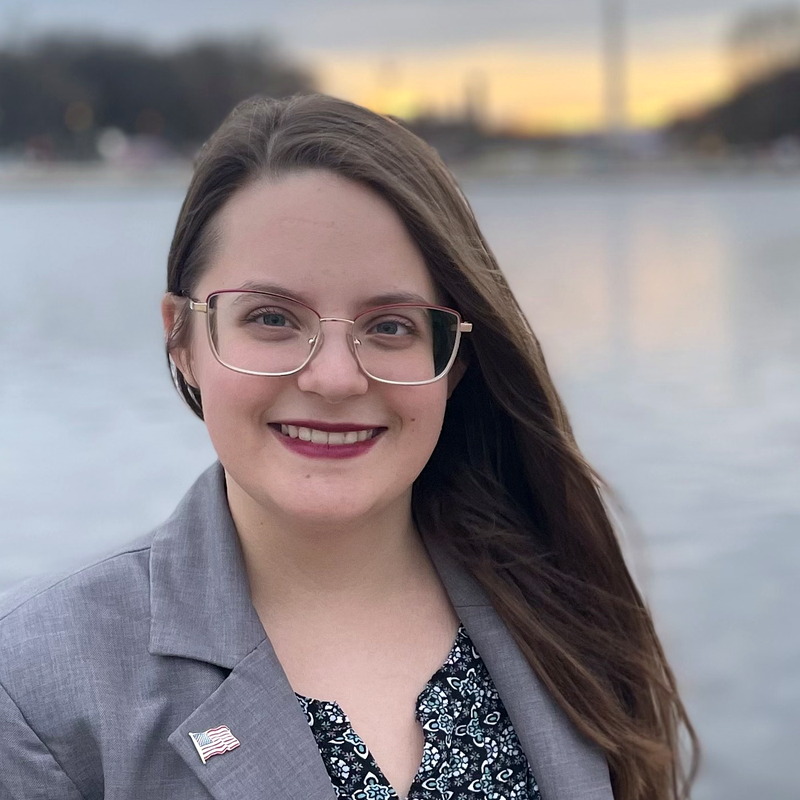
Former Alaska Attorney General Treg Taylor appeared on Bob Bird’s “Talk of the Kenai” radio show last week to discuss his campaign for governor, Alaska’s resource potential, and how to pragmatically address the Kenai grand jury issue.
“Bullish on Alaska”
Taylor opened by noting he served four and a half years as attorney general—the third-longest in state history and well above the typical 18-to-19-month average. He said he has lived in Alaska for 27 years, that his wife, Jody, is a lifelong Alaskan, and that they are raising six children as fourth-generation Alaskans. A six-month-old granddaughter, he said, has sharpened his worry that the next generation will not have the same opportunities.
“Alaska has been really good to Jody and I. It’s provided a lot of opportunity, and I worry that our kids aren’t going to have the same opportunity,” Taylor said. He followed that with an optimistic pitch: “I am bullish on Alaska’s future.”

He pointed to minerals, rare earths, gas, oil, and timber as the basis of that future and said the state needs to “get it out” and develop it. As evidence, he cited the Red Dog Mine, where he said poverty rates dropped by 60 percent, and the North Slope Borough, where he said poverty fell by 50 percent and life expectancy rose by 12 years. “When people have hope and they have economic opportunity… things change in those communities,” he said.
Federal land and state sovereignty
Taylor tied much of his attorney general record to the Biden years, saying he defended Alaska against what he called federal overreach. He referenced Sen. Dan Sullivan’s tally of “seventy executive actions targeting Alaska and our way of life,” and criticized the federal “30 by 30” conservation goal, arguing it would be met disproportionately on Alaska’s vast federal estate.
“We need to be allowed to determine our own destination as Alaskans. We can’t have that dictated… by Washington D.C. bureaucrats,” he said.
Bird pressed him on Article XII, Section 12 of the Alaska Constitution, the clause in which the state and its people “forever disclaim all right and title” to property belonging to the United States. Bird, who has long argued for a constitutional convention to repudiate that language, asked what Taylor would do about it as governor. Bird also argued the federal government exceeds the U.S. Constitution’s Property Clause in its land holdings.
Taylor said Bird was “exactly right” that the provision is one way Alaska has been harmed by federal control. He called the Alaska National Interest Lands Conservation Act (ANILCA) “the largest land grab in our nation’s history” and said those lands are not managed as working lands the way Bureau of Land Management holdings are in other states. He offered the Tongass National Forest as an example, describing it as larger than West Virginia while Alaska’s timber industry is a fraction of New Hampshire’s. “That’s how bad that the federal government has had their foot on our necks for so long,” he said.
Bird noted that, to his knowledge, no candidate had campaigned explicitly on repudiating Article XII, Section 12. After a break, Taylor pointed to the equal-footing doctrine and a Utah case Alaska had supported with an amicus brief seeking productive management of federal lands. That case failed, he said, but “there’s aspects of that that we can definitely attack as Alaska.”
Judges, court orders, and a sharp disagreement
The sharpest exchange came on the courts. Asked whether Alaska has three co-equal branches, Taylor said the judicial branch is “out of whack” because the selection process no longer works as the framers intended and the governor’s role has been undercut.
He said he supported a Senate joint resolution that would have required the Alaska Judicial Council to forward all qualified candidates to the governor, rather than applying what he called the council’s self-imposed “tallest trees” rule. He argued that standard lets the council filter for ideology. As an example, he described a prosecutor who handles the state’s hardest murder cases but “is not one of the tallest trees, so he never goes to the governor for selection.”
Bird then asked why Taylor treats court decisions as binding, noting other candidates have said they would not follow rulings they consider unconstitutional. Bird pointed to Article III, Section 16, which he reads as giving the governor authority to stop constitutional violations.
Article III, Section 16 of the Alaska Constitution states: “The governor shall be responsible for the faithful execution of the laws. He may, by appropriate court action or proceeding brought in the name of the State, enforce compliance with any constitutional or legislative mandate, or restrain violation of any constitutional or legislative power, duty, or right by any officer, department, or agency of the State or any of its political subdivisions. This authority shall not be construed to authorize any action or proceeding against the legislature.”
Taylor’s answer was consistent with the constitutional phrase “by appropriate court action or proceeding brought in the name of the State,” indicating the need for the Governor to take action within the court system. “I’m gonna agree to disagree with you there, Bob. I think we would… go into anarchy if we just ignored the courts,” he said. The remedy, he argued, is to “fight like mad to change how we select judges.” Bird argued that the courts have already produced anarchy.
The two found common ground on a separate dispute: a case in which Gov. Mike Dunleavy used a line-item veto to cut the court system’s budget and the court ruled to restore the funding. Bird called it an overthrow of the power of the purse. Taylor said he agreed “100 percent,” that the court “got it exactly wrong,” and that such rulings sow distrust. Bird seized on that as the anarchy he had described.
Grand juries
Bird also returned to criticism Taylor faced at a Kenai Peninsula town hall roughly six or seven months earlier over Supreme Court Order 1993 and control of grand jury investigations. Taylor said he wanted to “clear my name,” calling the public narrative “all skewed.” He said the Supreme Court acted only after he pressed the chief justice for a constitutionally compliant system of investigative grand juries. The court rejected his comments, he said, and handed the matter back to him as attorney general, which he condemned as “the wrong decision.”
He said he then built “the most transparent process for asking for grand juries that’s ever existed in the state,” on top of the existing right of a seated grand juror to start an inquiry. “Every grand jury that was requested while I was the attorney general to the best to my knowledge has gone through or is being processed,” he said, adding that all six applications pending when he left office were moving forward— “six more grand juries than we’ve had in the last decade.”
On a suppressed grand jury report, Taylor agreed the court “got that exactly wrong” by not releasing it. He said he had recused himself because the jury was looking at matters inside the Department of Law and had hired an independent attorney to guide it. “The appropriate thing was for me to stay completely out of that, and that’s what I did.”
Callers, ranked-choice voting, and social policy
A listener asked whether an executive must enforce laws he disagrees with, invoking Andrew Jackson. Taylor said the chief executive is bound to enforce the law. Bird cited Gov. William Egan declining to enforce a court order as an Alaska counterexample.
On social policy, Taylor highlighted support for state bans on surgeries for transgender minors and efforts to keep men out of girls’ and women’s spaces and sports. “We’ve got to keep men out of girls’ spaces… women spaces as well,” he said.
He endorsed a “yes” vote on Ballot Measure 2, the Nov. 3 initiative to repeal ranked-choice voting and top-four primaries. He urged conservatives to “rank the red” — naming Bernadette Wilson, himself, and Dave Bronson — so Democrats do not win under the current system. “It’s a little bit like a tax break… you’d be felony stupid not to take advantage… while it’s still there,” he said.
Another caller asked whether Taylor would replace long-serving members of the judicial conduct body. Taylor said he would review appointments and decide based on “what I see is an issue for Alaska.” On health-department vaccine messaging, he criticized past state promotion he had heard, cited his litigation against federal COVID vaccine mandates, and said vaccination “is an individual choice. We should not be pushing it as a state.”
Another caller asked about the governor’s past effort to extend COVID emergency powers. Taylor said that as attorney general his job was to defend the governor’s authority. “Our constitution is clear. The governor has control over the executive,” he said.
Close
Bird closed by praising Taylor’s “forthright answers.” Taylor summarized his attorney general record as wins on parental choice in education, defense of the Willow project, a lawsuit against the ATF on Second Amendment grounds, litigation against federal COVID vaccine mandates, and efforts to “keep pornography out of our school system.” He said he would bring the same approach to the governor’s office.
The broadcast left a clear split on the table: Taylor said he would enforce the law and treat court orders as binding while pushing judicial-selection reform, appointments, and retention as the checks. Bird argued the governor already has a duty to reject unconstitutional rulings.