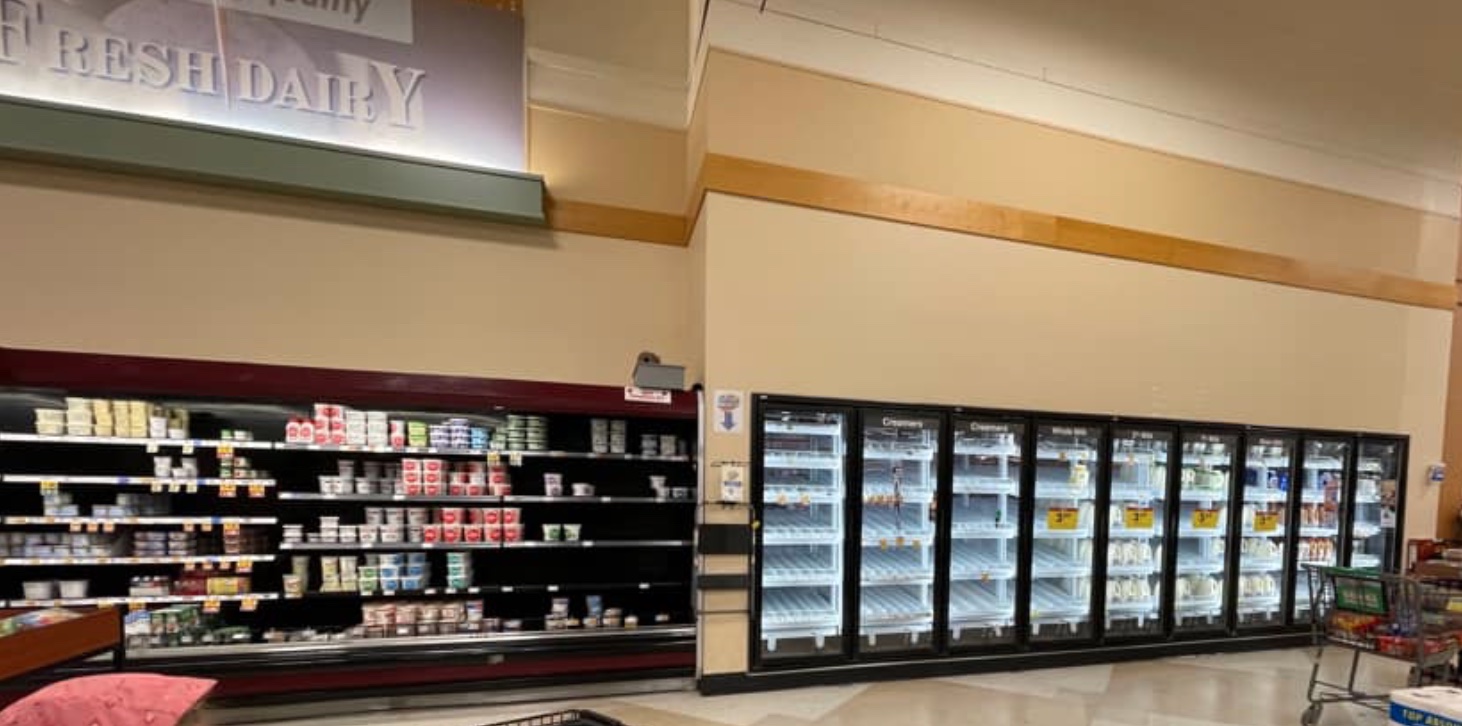
Across Alaska, hundreds of citizens have taken part in the #BareShelvesBiden project created by Must Read Alaska on Facebook. We asked people to post their photos of bare shelves in their communities, and dozens of people already had the photos in their camera phones, ready to participate.
The increasingly bare shelves are on. many Alaskans’ minds. The MRAK “group project” had over 500 comments in two days, many with photos and descriptions of food shortages they are witnessing in stores.
Alaska is at the end of the supply chain. Those in the trucking field say that Anchorage, for example, only has a three-day supply of food on hand at any given time. And while food supply issues have always plagued rural Alaska, with delayed shipments, and sometimes stale provisions, those on the Railbelt and in Southeast haven’t seen it like this since the 1960s.
The problem is not exclusive to Alaska. From Memphis to Milwaukee, news organizations are reporting on shortages on the shelves. In Seattle, the mainstream media said the problem is currently due to weather. But flying over Seattle in December, it was clear to this writer that even then, the shipping containers were stacked up at the port and on barges for miles, as the supply chain has been stalling for months. There were 20 container ships waiting for their turn to pull up to the dock. It’s not looking much better in January.

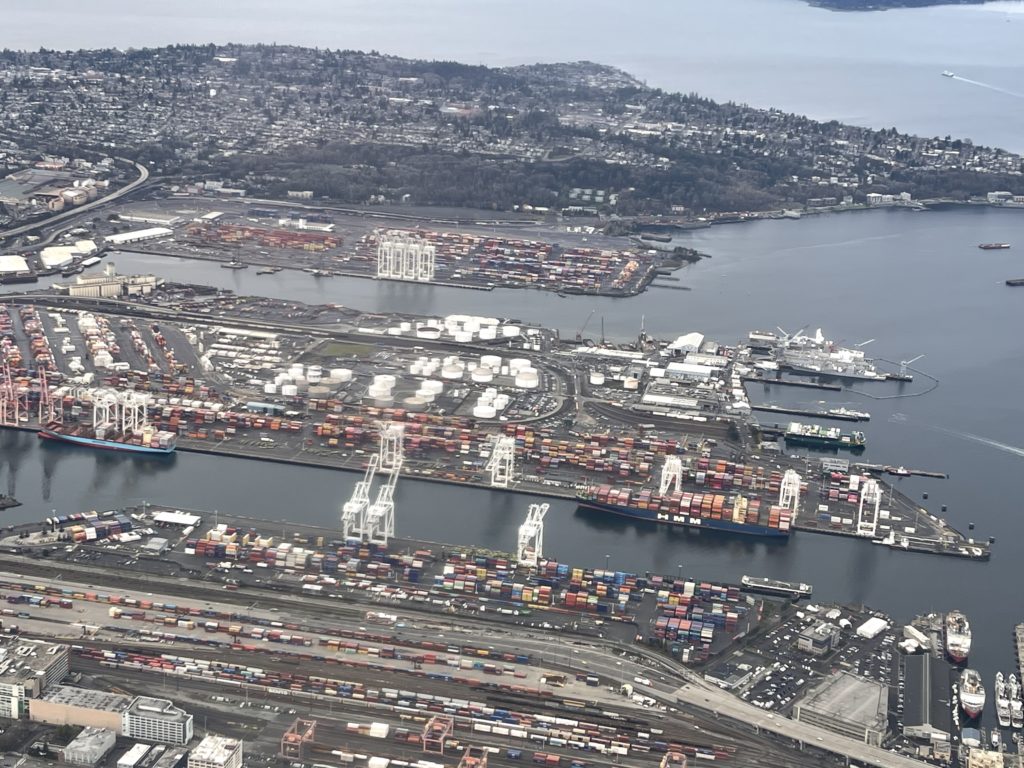
The shortage problem has seemed to be more widespread in recent weeks, and the mainstream media blames it on the Omicron variant of Covid, labor shortages, and now the weather.
Nationwide grocery shortages of produce, meats, and dairy are especially noticeable, while things like dog kibble and packaged cereal also missing at times. Right now, the unavailability rate of grocery goods around the country is about 15 percent, according to a Seattle Times report that quoted Consumer Brands Association President and CEO Geoff Freeman.
Some industry experts say that tuckers are a big factor and that there are between 20,000-80,000 fewer long-haul truckers now than there were before the Covid pandemic.
Labor unions dispute that, and say that there is no shortage of truckers, but many just don’t like the working conditions.
“There’s no trucker shortage; there’s a trucker retention problem created by the poor conditions that sprung up in the industry in the wake of 1980s deregulation. Turnover for truck drivers in fleets with more than $30 million of annual revenue was 92% at the end of 2020, meaning roughly 9 out of every 10 drivers will no longer be working for that company in a year, reported Time Magazine in December.
“There’s no shortage of workers, that’s the narrative that gets propagated by industry leaders,” said Mike Chavez, the executive director of the Inand Empire Labor Institute, according to the magazine. “We still have a lot of positions that can’t be filled because of the working conditions.”
Truckers can’t get to Alaska through Canada without proof of vaccination for Covid, another hurdle for the state.
Food security is on the radar of Gov. Mike Dunleavy. He asked for and received from the Legislature $4 million in food security money in 2021 to help sustain communities on the Yukon when salmon runs failed and there was no point in putting nets in the water.
In the 2023 proposed budget, the governor has a $25 million ask from the Legislature for a food security agriculture incentive program, to enhance the grow-our-own, farm-to-table safety net, encouraging new farms and bettering storage capacity. He wants more Alaskans to get interested in being part of the Alaska farming sector. That item is in his Capital Budget request on Page 5.
Dunleavy is also advancing a bond package that has food security baked into it. In it, there are hundreds of millions of dollars to repair the fragile Port of Alaska in Anchorage, to build out Port MacKenzie, and to upgrade the Port in Seward, all with the intention of creating more redundancy in the shipping sector, in case of a major earthquake or other disaster that impacts the ability to unload cargo containers that supply most of the state.
The Port of Seattle is already working to relieve the congestion of its containers. Just this week, cargo ships began unloading at a new terminal, which will alleviate some of that area’s supply chain problems, and may help Alaska in a few weeks, as the congestion in Seattle eases.
The new Terminal 5 has the largest cranes on the West Coast, and can unload the largest ships. It will increase the port’s capacity by about 40 percent when fully open in two years. Right now, it’s just half open.
The Port of Seattle started unloading cargo ships at a brand new terminal this week. That will help with some of the region’s current supply chain issues. But it won’t solve the whole problem.
For now, the bare shelves in Alaska and across the country continue to worry shoppers, who are watching prices go one way, and availability go the other in the Biden economy.