
By ART CHANCE
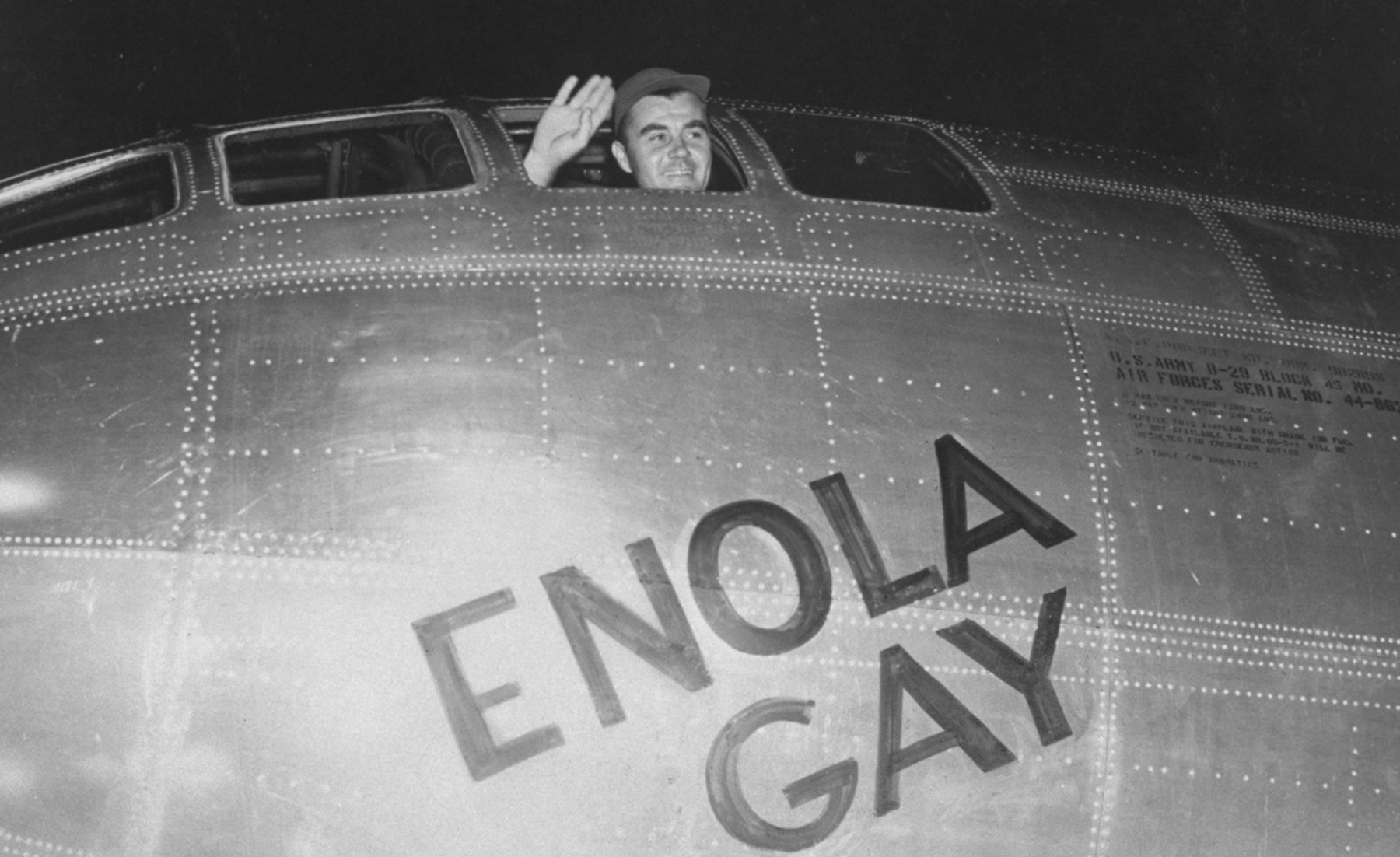
Five thousand years of the plodding progression of Western Civilization ended and a new World was born a little after 8:15 am Japanese Time (GMT +9) on Aug. 6, 1945.
Five thousand years of history and human progress being dictated by the clashes of kings, emperors, tyrants, and Empires ended in a blinding flash 1,600 feet above Hiroshima, Japan. The end was sealed three days later with another blinding flash over Nagasaki, Japan, when the last of the ancient empires, Imperial Russia in the guise of the Union of Soviet Socialist Republics was stymied in its imperial ambitions in Asia.
Little did the Soviets know that the United States was out of nuclear bombs, though the U.S. government was so riddled with Soviet spies that they may have known.
We don’t like to talk about it but the U.S., like England, was a very war-weary nation in the spring and summer of 1945. The ink was barely dry on the German surrender when the British turned out Sir Winston Churchill for “free stuff.”

The U.S. and England had agreed on a “Germany First” strategy. Huge Army and air resources as well as logistical support and military transport had been devoted to the European war and to aid to the U.S.S.R. The U.S. shouldered most of the load in the Pacific with enormous naval resources, including naval air power, but relatively limited use of U.S. ground troops. The U.S. and Commonwealth troops who fought the island-hopping campaign across the Pacific did most of it with tens of thousands of troops, not the hundreds of thousands devoted to the retaking of North Africa and Continental Europe.
But as the Allies neared the Japanese home islands, the butcher’s bill became much, much dearer. Between June of 1944 and June of 1945, the U.S. took a million casualties. Men who had survived fighting from North Africa, Sicily, Italy, and Normandy were looking at being packed into troop transports and sent to the Pacific for the invasion of the Japanese home islands.
Needless to say, morale was poor both in the ranks and on the home front. Years of wage and price controls and rationing had led to unrest and growing labor disputes. The U.S. was considering even drafting women for service in war production industries. The U.S. really needed to end the war.
In late July the Allies held the Potsdam Conference to settle the disposition of German and war-torn Europe and to set policy for ending the war with Japan. During the Conference, President Truman was informed that the first US atomic bomb test had been successful. He let Stalin know that the U.S. now possessed a new and powerful weapon, which of course Stalin already knew. The Allies delivered an ultimatum to Japan demanding its unconditional surrender or face destruction. The Japanese ignored the ultimatum. The U.S. made good on the ultimatum on Aug. 6.
Two days later our gallant Soviet allies denounced their neutrality pact with Japan, turned their armies east and tried to scoop up as much Japanese held territory in Asia as they could, including much of China. We owe the existence of communist China, communist North Vietnam, and North Korea to that adventure.
So, you can get a good debate about whether the Nagasaki bomb was “dropped on Tokyo or Moscow.” It is a valid argument that the Hiroshima bomb had not persuaded the Japanese militarists to surrender, so the Nagasaki bomb was added persuasion.
It is an equally valid argument that the Nagasaki bomb was dropped to demonstrate to the Soviets that the first one wasn’t a freak. Imagine if you will the Soviets turning their vast following in the U.S. left against further prosecution of the war.
Much of academia, media, and organized labor were sympathetic to if not allied with Soviet communism. An “End the War” campaign in England and the U.S. would likely have led to accepting terms with Japan that would have made Asia into Soviet chattel.
In less cynical terms, as a practical decision, the two atomic bombs saved millions of lives. The U.S. was estimating taking as many casualties in taking the Home Islands as it had taken while restoring Europe. Most of our literature and history about the Pacific war understates the ruthlessness of that front.
We remonstrate a bit about the Japanese cruelty to prisoners and such, but generally Allied troops asked no quarter and gave none. The atomic bombings of Hiroshima and Nagasaki are barely in the top 10 list of civilian casualties from conventional bombing of German and Japanese cities. If necessary, the U.S. could and would have burnt every structure in Japan to the ground; in one night a B-29 low-altitude raid using incendiary bombs leveled most of Tokyo that March of 1945.
Just burning things down didn’t have quite the drama of a single big bang and a bright flash. The world is better for Aug. 6.
Art Chance is a retired Director of Labor Relations for the State of Alaska, formerly of Juneau and now living in Anchorage. He is the author of the book, “Red on Blue, Establishing a Republican Governance,” available at Amazon.
Photo: Air Force Col. Paul Tibbetts waves from the cockpit of the Enola Gay moments before takeoff on Aug. 6, 1945. A short time later, the plane dropped the first atomic bomb in combat. Armen Shamlian/US Army Air Forces



