

By DAVID BOYLE
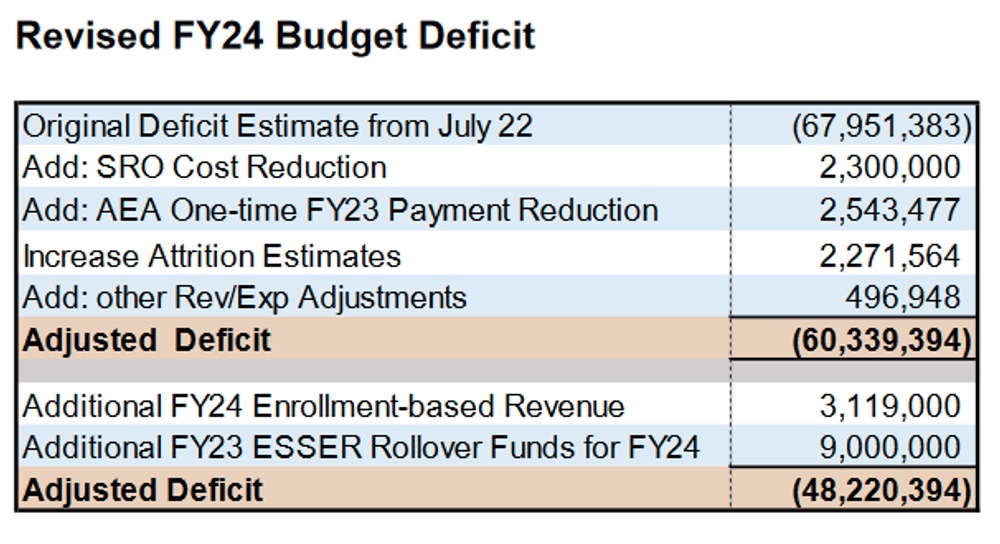
And just like that, the Anchorage School District was able to reduce the former $68 million deficit by $20 million. Now the deficit for the next year’s operations is only $48 million.
How were they able to do this?
- – The mayor and the Assembly majority agreed to fund the School Resource Officers at $2.3 million.
- – The school district has a credit of $2,543,477 due to a decrease in one-time payments to the teacher’s union which was supposed to be used to recruit for hard-to-fill positions.
- – $2.2 million comes from attrition of personnel.
- – The district has an increased student count, so it expects an additional $3.1 million from the State and the municipality. This increase includes an additional 44 intensive needs students at $77,480 each. These intensive needs dollars are not earmarked for those specific students, however. They go into the general fund.
- – Finally, the district uses $9 million of one-time federal Covid-19 money to reduce the deficit.
Here is the ASD chart showing the specific reductions in the fiscal gap:
Next year, the district also loses the “hold harmless” dollars it has received for the past three years. Those state dollars are given to the school district, which holds the district harmless for losing students. If a district loses more than 5% of its students, then it receives funding for 75% of those lost students in the following year. This decreases to 50% and then 25% over the next 2 years.
For the current school year, the district receives $6.44 million for the 722 students it no longer has. Despite the increase in student enrollment this year, the district still gets monies for students it previously lost.
The Anchorage School District spends about 86% of its general fund on salaries and benefits.
Those salaries and benefits are projected to increase by $52.5 million (15.97%) in the next fiscal year, 2024.
Most of that cost increase is due to school board-approved union contracts.
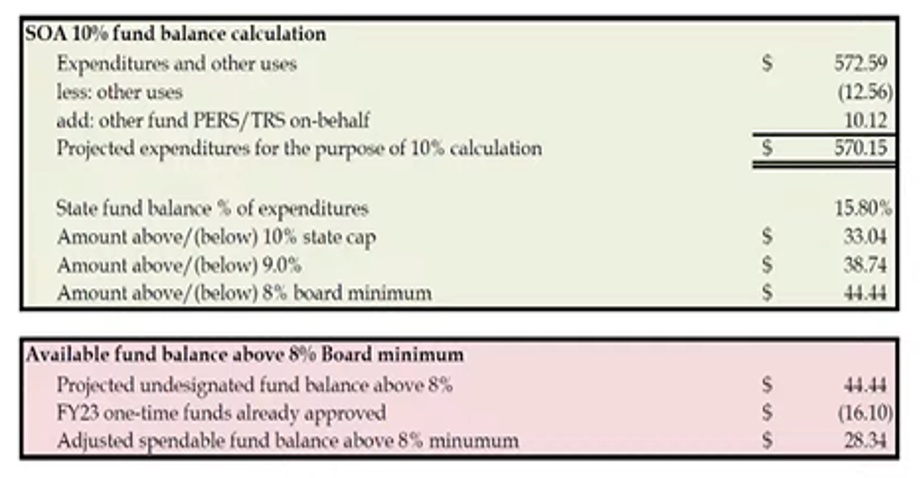
The district also has access to several fund balances—leftover money. It currently has a fund balance of $33.04 million above the State’s cap.
The district may use part of this fund balance, which is like a “rainy day” fund, to fill its budget gap this next fiscal year. It may also reduce the fund balance to a minimum 8% of expenditures level. That is $44.44 million extra money to use.
This would allow it to use $28.34 million to fill the budget gap as shown below.
The school board has dug this budget hole even deeper by using one-time federal Covid money to pay for recurring costs, in spite of being warned by the State to not do this.
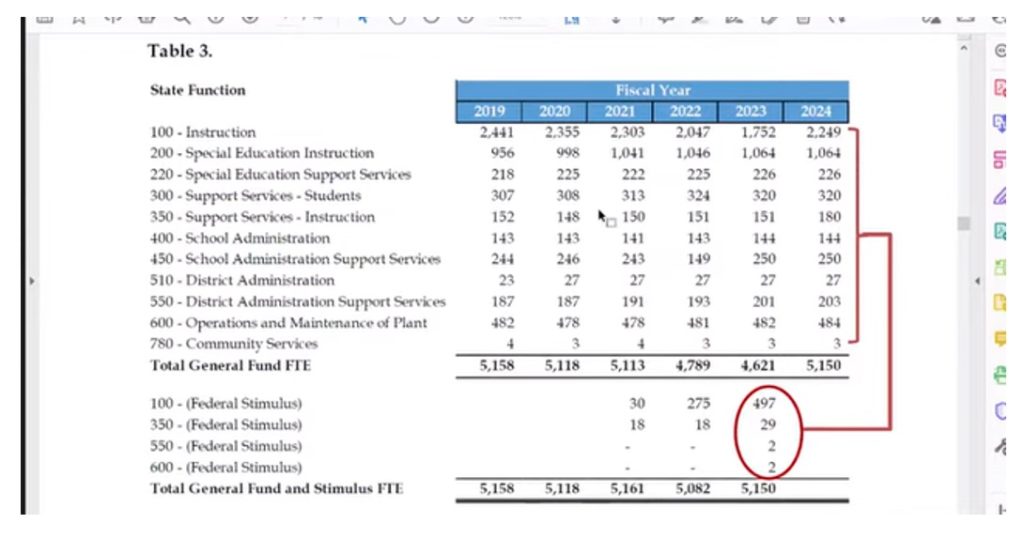
The one-time money has been used to pay for 529 full-time equivalent positions at a cost of more than $60.7 million.
Here is the district’s chart showing these positions:
Whatever the school board decides, readers may recall that the State Department of Education and Early Development warned every district not to use one-time federal Covid money to pay for recurring costs.
Apparently, the Anchorage School Board either did not listen or did not heed the State’s advice.
Now it wants the State Legislature to pay for its choice to ignore the warning by increasing the per student funding—the Base Student Allocation.
And the Legislature, in its current makeup, may look at your Permanent Fund dividend, which the governor has proposed to be set statutorily about $4,000, to pay for a poorly performing school district.
David Boyle is the education writer for Must Read Alaska.


