
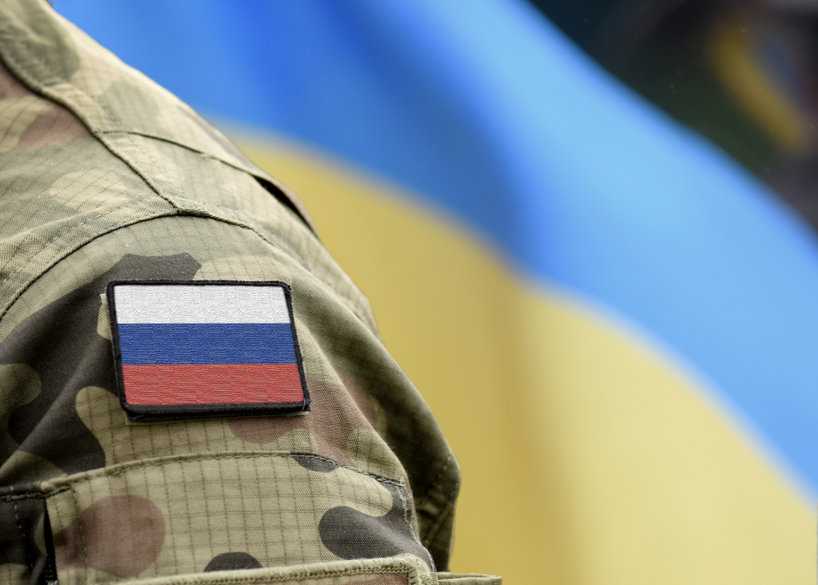
In 2020, voter outreach was largely done with Zoom, but back in the now-ancient days of 2014 people knocked on doors the old-fashioned way as part of a statewide effort to defeat a new oil tax. In an upscale Juneau neighborhood, a house was rented by three men from Ukraine; they were not voters in Alaska.
The campaign volunteer that day, opposing oil tax increases, was surprised the Ukrainians had a fluency with the U.S. Constitution that easily matched that of a well-educated American. They had an adoration for the Constitution of the sort you might encounter in someone who enjoyed talking baseball statistics, a particular genre of music, or some variety of cuisine. But their reverence was far stronger.
“I believe that they also could have flawlessly recited the Declaration of Independence, each taking one line after the other. It was somewhat humbling to me. We all can too easily take for granted what is handed to us,” the campaign volunteer said this week.
Who were these Ukrainian men? They were in Juneau as fish processing laborers. It’s not unusual for people from eastern Europe, the Philippines, or Mexico to come to Alaska in groups to work in the seafood industry. They liked the work, they said, but would soon leave for home at the end of their current contract rather than begin a new contract as.
Why? “The Russians are killing our women and babies.” These were articulate, educated men, not the kind you would not expect to back down from a fight.
“I cannot help but think of them at this time,” the Alaskan campaign worker said to Must Read Alaska this week.
In Eastern Europe, the distinction U.S. media have established between strong-man dictatorships is that there is the National Socialist German Workers’ Party, (NAZIs and fascism) at one end, and Bernie Sanders/Karl Marx Socialism-Communism at the other.
People who have directly suffered and/or people who have fought to keep those regimes at bay see them as one-in-the-same. These survivors are correct: If you were to have visited Berlin and Moscow on May 1, 1939, the banners, parades, military demonstrations, and symbols would have been pretty much exactly the same as the ones we see now from the Left; only the languages, German and Russian, were different.
Russia, or the Soviet Union, and Hitler’s Third Reich invaded Poland together; they only split when each wanted the same spoils and territory.
People in Ukraine, like the men who worked in Juneau, have suffered because of Putin — and Stalin, Hitler, Khrushchev before him — and any distinctions between ideologies is no more important to them than is the difference between the .30 caliber bullets from Russian Moisins (and now AK rifles), and the Third Reich .32 caliber bullets coming out of 8X57 Mausers.
All of Eastern Europe is expecting to be scathed to one degree or another. Even Finland has boosted its military readiness as international tensions rise over Russia’s armed build-up near Ukraine; the swearing in of Finnish volunteers has traditionally always been done with the oath being sworn as the volunteer turns and faces Russia.
Ukrainian women from 18 to 60 have been called up for the draft and will comprise at least 15 percent of people being put on the front lines to confront Russia. Between 15,000 and 30,000 volunteers from foreign countries have come to Ukraine to serve in defense roles.
It’s a safe bet that some Alaskans are there already, serving in different branches of the military.
The Russians have said that if they attack, all communications and navigation in Ukraine will be stopped. This will be done by Russia, North Korea or China, or even accomplished by a non-governmental proxy.
That destruction of technologies could slop over to Alaska. Air and marine navigation that depends on satellites could be impacted or even curtailed. Communication technology that utilizes satellites could be threatened by China both as a way to warn the U.S. and to support Russia. Utilities could be interrupted by Russian hackers. Government and industrial activities could be impacted by hacker mischief, or by hostile government action that would be blamed on hackers. Potential interruptions in barge and air traffic could occur if either is threatened in any way by Russian, Chinese or N. Korean actions.
The U.S. is already plagued by supply chain interruptions that implicate China. One look at the Port of Seattle waterfront tells the story for the Northwest, with hundreds, if not thousands of containers stacked on shore and on barges in Puget Sound.
Alaskans can be prepared for possible changes, even if those changes seem today to have little likelihood of happening. Keeping a battery-operated short wave radio ready is not an outrageous idea. Stocking up on supplies of commodities not produced in Alaska is also timely. What we have learned from the Covid pandemic early days is big box stores in Alaska have their inventory out on shelves. There are no warehouses to resupply. Holding onto 500 rounds seems prudent. Currency and currency substitutes could come in handy by the second month of any general supply disruption.
Anyone who believes that the Russian armed forces can quickly roll over the top of Ukrainian resistance easily need only look at what the Taliban accomplished with little more than rifles, improvised mines, and motorbikes in Afghanistan. This could go on for a while — a long while. Ukrainians and Russians have been fighting for generations, and they’re good at protracted conflict.
It’s not lost on Alaskans that Putin made his one very successful move on Ukraine while President Barack Obama was in office, and now Putin seems poised to move again, just when we have a weak and possibly demented man in the White House.
The ignominious way the Biden Administration departed from Afghanistan last year may have emboldened strong-man dictators throughout the world, including in Russia, N. Korea and China.
Putin was largely contained during the Donald Trump years even though the media would have us believe all sorts of theories and conspiracies regarding Trump and Russia. The chess board between Russia, China, Ukraine, and President Biden has very real implications for all of us.
Suzanne Downing is editor of Must Read Alaska.


