
By ALEX GIMARC
Given the ongoing discussion about renewables forced by the Alaska Center (for the Environment) and Renewable Energy Alaska Project (REAP), I thought it useful to explore or remind readers of previous energy proposals briefly considered and discarded on our way (however unwillingly) to a “net-zero” future.
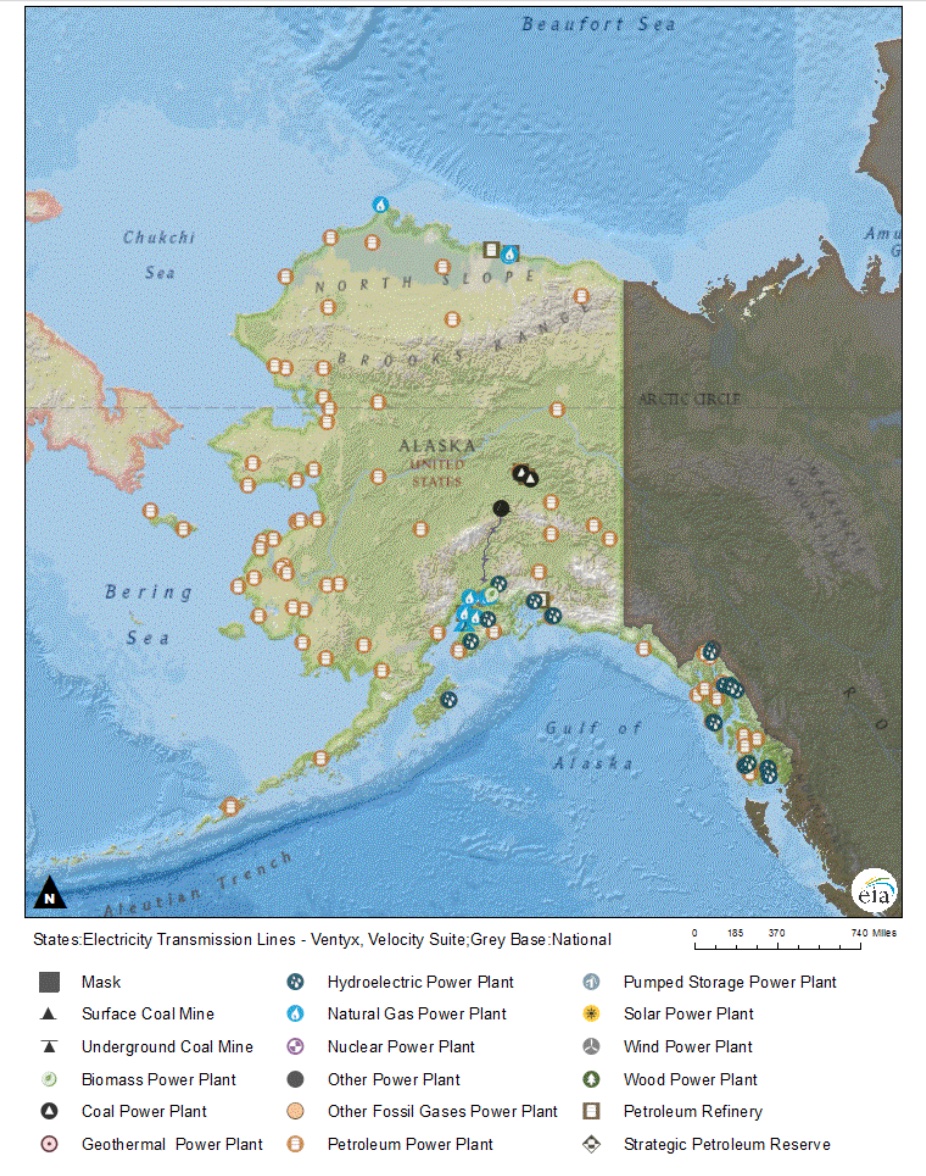
On the generation side, there are a pair of recent hydro proposals. One takes water from Lake Chakachamna across Cook Inlet. The other is a dam across the Snow River above Kenai Lake. Either or both would provide constant, reliable, renewable, carbon free electricity to the Railbelt.
The proposal for power at Chakachamna is similar to that of Eklutna Power Station: Drill a tunnel that taps the main lake, pipe water 12 miles through the mountains, and use it to run a power station. TDX Power applied for a Federal Energy Regulatory Commission license in 2006. The proposed power station is 330 MW, about a third of total Railbelt generation needs today. The cost as of 2008 was $1.7 billion. This has been studied since at least 1983.
A second hydro project was a 2017 proposal by Chugach Electric for a 75 MW series of dams across the Snow River above Kenai Lake. The project was dropped in the face of public opposition by locals in Moose Pass and Cooper Landing.
Note that the original reason for dams was flood control. The Snow River regularly floods as glacial lakes release. The most recent of these was 2023. While these don’t impact Moose Pass, they certainly do at Cooper Landing, occasionally flooding parts of Primrose and Quartz Creek and boat docks on Kenai Lake and the upper Kenai River.
Chugach, among others, took a close look at possible geothermal at Mount Spurr. Several exploratory wells drilled by Ormat Technologies between 2008 – 2015 found volcanic heat but did not find suitable geology to support geothermal generation. The company dropped its leases in 2015. There has been renewed interest over the last couple of years.
One of the things Southcentral Alaska has is coal, lots of coal. There have been multiple proposals to use that coal for energy production. ANGTL (Alaska Natural Gas To Liquids) pushed Fischer Tropsch (gas to liquids and coal to liquids) technology for many years. The Mental Health Trust looked at leases for a coal mine upstream from Tyonek along the Chuitna River for a few years. PacRim Coal suspended all permitting for this project in 2017. There was interest in coal bed methane in the MatSu around 2007. Former MEA CEO Wayne Carmony proposed multiple coal plants in the MatSu in 2007, something that probably got him run out of the state.
DoD has authorization and approval for a 5 MW GenIV reactor at Eielson. If they can figure out how to legally award a contract, it might actually get built.
Finally, we have the Big Dog in the discussion, the ever-popular Watana Dam, capable of powering all of the Railbelt for the next half century by itself.
Why haven’t any of these come to pass? For some reason, we here in Alaska have gotten really good at the NIMBY (Not in My Backyard) and BANANA (Build Absolutely Nothing Anywhere Near Anything) game. There is always environmental opposition, generally based on some perceived threat to fish populations. Yet nobody is ever able to point out specific numbers of fish at risk, much less discuss any mitigation strategy. But the arm waving and whining are heart rending and make for good media coverage.
If we want to keep the lights on here in the Railbelt, at least considering some of the possibilities listed above should be the first item in the discussion. I am fully aware that this is not going to be a fact-based, reasonable, rational discussion. Rather, it is a persuasion based one, and persuasion needs to be the first tool used in any discussion, getting the attention of the inattentive.
Environmental grift is well paying grift these days, with environmentalists making a very nice living opposing hydro, coal, natural gas, oil, nuclear and even geothermal, all in favor of the very most environmentally unfriendly, largest footprint, most expensive, least reliable solutions, Big Wind and Big Solar.
Maybe someone ought to ask the Alaska Center (for the Environment) and REAP why that is so. Perhaps like the Homelessness Industrial Complex, they are too busy banking their donations to explain.
Alex Gimarc lives in Anchorage since retiring from the military in 1997. His interests include science and technology, environment, energy, economics, military affairs, fishing and disabilities policies. His weekly column “Interesting Items” is a summary of news stories with substantive Alaska-themed topics. He was a small business owner and Information Technology professional.


