
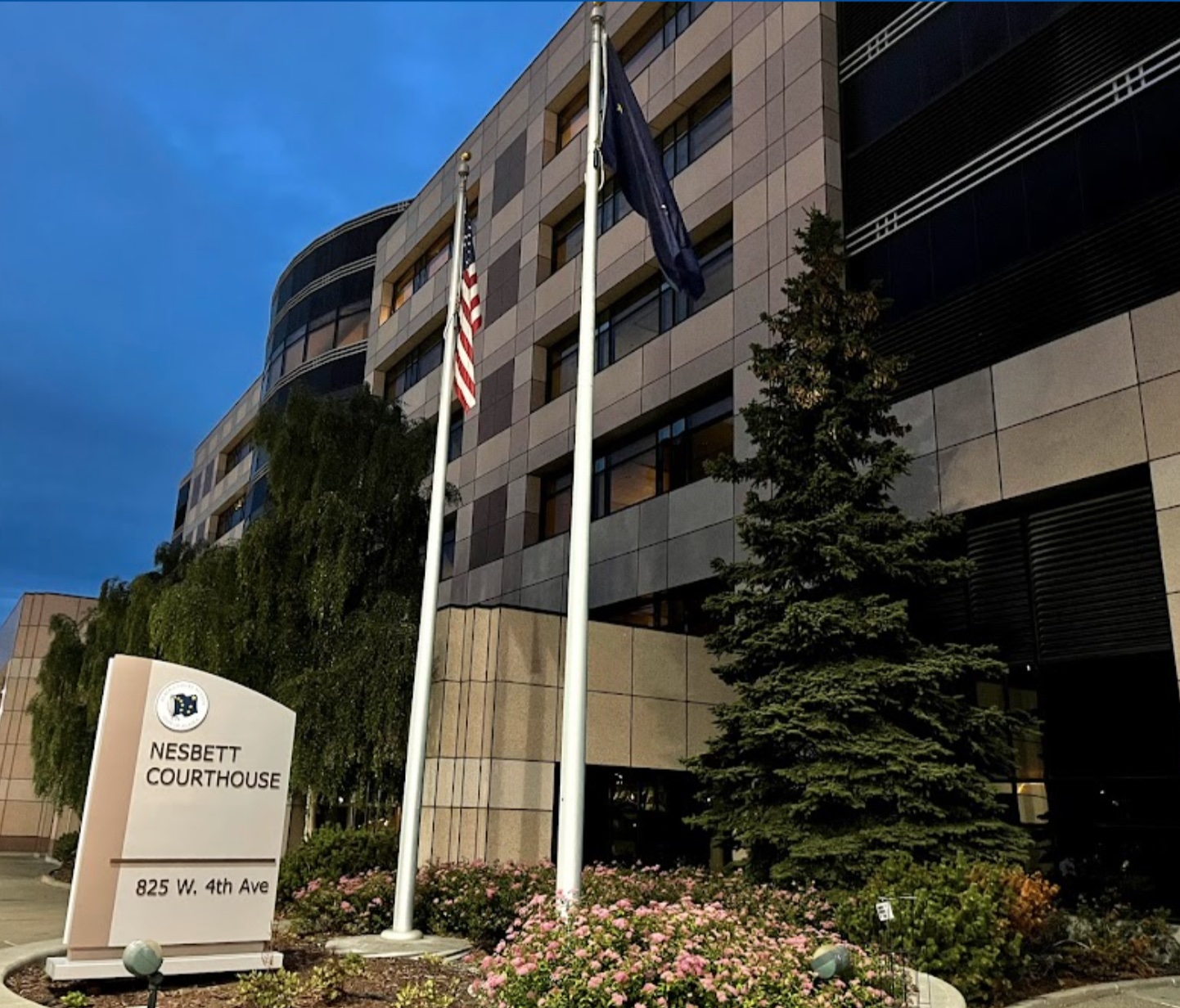
Alaska Supreme Court Advances Judicial Conduct Code Overhaul

9

On September 18, 2025, the Alaska Supreme Court issued Order No. 8064, Eleventh Amendment, appointing a special committee to revise the state’s Code of Judicial Conduct, last updated in 1998. Led by Retired Senior Justice Daniel E. Winfree, the committee has proposed a modernized Code aligning with the American Bar Association’s 2007 Model Code while addressing Alaska’s unique judicial needs. The revised Code, now open for public comment until November 20, 2025, introduces clearer rules and enhanced accountability for judges, aiming to boost public trust in the judiciary.

The proposed Code restructures the existing Canons into four Articles focusing on judicial independence, impartiality, competence, and ethical extrajudicial conduct.

Specific Changes for Alaska

The revised Code includes several provisions tailored to Alaska’s unique judicial context, departing from or supplementing the ABA Model Code as detailed in the Rule Comments:

  • Disqualification (Rule 2.11): Incorporates AS 22.20.020, mandating disqualification for personal bias, involvement of close relatives, campaign contributions over $150 from parties, public statements prejudging cases, or prior roles as a lawyer, witness, or judge in the matter; includes waiver options.
  • Senior Judges (Administrative Rule 23 revisions): Clarifies application to senior judges, with enhanced disqualification requirements.
  • Workplace and Community Standards: New rules like 1.3 (Abuse of Judicial Office), 2.12 (Supervisory Duties), and 2.15 (Responding to Judicial Misconduct) align with Alaska Court System policies (e.g., Healthy Workplace Policy and Commitment to Civility). Rule 2.7 emphasizes community size in disclosure and disqualification decisions, relevant for Alaska’s smaller jurisdictions. These ensure the Code addresses local issues like judicial conduct in remote areas and workplace harassment.

The draft Code, comparison documents, and a cross-reference table are available at https://courts.alaska.gov/rules/index.htm#cjc. Public comments can be submitted to [email protected] or mailed to the Alaska Court System in Anchorage. The Alaska Commission on Judicial Conduct will discuss the proposal on November 14, 2025, from 9:30–11:00 a.m. AKST, with public comments from 10:40–11:00 a.m., accessible via Zoom or in Anchorage (details at acjc.alaska.gov).

9 COMMENTS

  1. The best thing to do is align with the US Constitution as written. That is what will last. The Republic stands. Judicial branch has the subject matter and personal jurisdiction over court rules. All political power belongs exclusively with the people.

  2. How about judges who rule against the law, like the one who said we didn’t have to follow the law when it came to write-in candidates? Or what about the judge who decided, without any recourse to the hundreds of thousands of Alaskans it affected, that the Alaska Legislature could break Alaska statute? Or what about the judge who decided that a mere 2 people complaining about finding signatures for absentee ballots merits breaking voting law? Or what about the judge who allowed certification of an election to proceed when an entire district was disenfranchised about their voting location (right after the absentee ballot case, no less)?

    Luckily, the people of Alaska already took care of that judge who decided a sexual assault on an unconscious woman was actually a sexual assault despite his ruling by voting NO to retain him, but Alaskans rely on judges to accurately interpret and follow the laws, and too often, this is NOT happening.

  3. What about requiring something like “Maintaining the Integrity of the Profession” as is written in the Alaska Bar Association “rules”? It is unfortunate that the Alaska Bar pretty much ignores the full intent of this section of their rules and chooses instead to allow a lawyer to behave in any and every way that he enjoys regardless of the consequences to others. Maybe the hypocritical “anything goes” attitude displayed by judges is just fine, too?

    My former tenant, a Department of Law lawyer, broke his lease, totally trashed my Juneau rental property, and refuses to take responsibility for the mess and huge expense he caused for me. The broken window on the third floor and accompanying window sill damage was particularly expensive ($2,000.00). But hauling his trash, broken furniture, and my destroyed refrigerator that I paid to haul to the dump was even more expensive ($4,400.00). His “chain of command” (I’m looking at you Treg Taylor) and the bar association were fine with all of this. A PFC in the Army would be required to show more integrity than my former tenant.

    Judges and state attorneys should be held to the highest standards in all aspects of their lives.

  4. Naughty kids will always be naughty kids and make up their own club rules. Whatever their standards are. Its a fact!! This attempt to look good is just that.

  5. Seems reasonable to ask whether this is just noise meant to deflect attention from what David Haeg wrote on November 7, 2025:
    .
    “Recently a source provided inside information on what is contained in the sealed 2021-23 Kenai Grand Jury report/recommendation, that they wrote after their 2-year investigation into organized judicial corruption in Alaska: ‘(the report) documented corrupt government activity…judges appeared to be covering for each other and the system itself.
    .
    This confirms citizen fears that Alaskan judges sealed the report/recommendation to cover up for corrupt judges and organized judicial corruption.”
    (“Chapter #1: Alaska’s Organized Government Corruption: How to Expose and End It”)
    .
    Until the Kenai Grand jury report is published in its entirety, without redactions, what else can Judicial Conduct Code Overhaul be except a cynical joke about which we, the butt of the joke, can do little except ask the federal Department of Justice to intervene?

  6. Too little, too late. Justice is coming for every last one of these black robe brood of vipers, who love to market their righteousness, but inwardly they are lawless and full of rot. Every perversion in this state and nation can be traced back to these Judges who set precedent in the Courts of Rot.

    Military Tribunals for every last one of you, including the retired ones. Do you think the families you destroyed for your globalist agenda will simply forget what you all have done to this state and nation?

    At the Core of it is TREASON. Hegseth already fired a warning shot last Friday. Who runs the government bureaucracy of rot? The Judicial Branch, that is who.

    Tic Tok.
    Tic Tok.

  7. When a judge doesn’t faithfully follow the laws (Canon 3) then that judge must be removed. There is no wiggle room to misconstrue the word “shall” by a judge or attorney.

    Former Deputy AG Svobodny intervened, filed a complaint with the ACJC regarding a judge that violated ex parte communications. Judge was removed.

    Is it to late for Governor Dunleavy to do what is right and protect the constitutions, laws and the publics constitutional rights? No.

    November 10, 2025 In the news… “This is deeply concerning,” Cox posted to his X account on Nov. 9. “Public officers have to uphold and defend the U.S. Constitution. I took such an oath on my first day. Alaska law requires school board members to sign—and swear to support and defend—the U.S. Constitution.”

    Alaska Constitution Article III Section 16. The governor shall be responsible for the faithful execution of the laws. AS 44.23.020 (b) The attorney general shall (1) (b) defend the Constitution of the State of Alaska and the Constitution of the United States of America;

  8. The real issue behind this judicial conduct overhaul isn’t just new language in the Code—it’s how Alaska’s judicial disciplinary system actually operates.

    Multiple citizens, including myself, have experienced a pattern of dismissals, closed-door decisions, and manipulated public access inside the Alaska Commission on Judicial Conduct (ACJC). This includes:

    – Being invited to an ACJC meeting, signing in, and then being told “no one has signed up” when I attempted to speak, even though staff had my name.
    – Complaints supported by transcripts, documents, and direct admissions being dismissed without investigation, as detailed in the November 10, 2025 letter from Thomas A. Garber.
    – Opaque committees revising the very Canons judges are held to, with no disclosure of who participated.
    – A long-standing perception that the ACJC functions more like a protection unit for the judiciary than an accountability body for the public.

    Before any new Code of Judicial Conduct has real meaning, Alaska needs transparency:
    – The public must know who sat on the Supreme Court’s “special committee.”
    – ACJC must comply with the Open Meetings Act.
    – Complaints must be investigated, not pre-dismissed.
    – And judicial oversight must serve the people, not the institution.

    Alaskans deserve a system that enforces Canons 1, 2A, and 3A(4)—not one that ignores them.

    Judicial ethics reform is overdue, but unless the enforcement structure is accountable, transparent, and free from manipulation, new canons won’t fix the deeper problem.

    Liberty Ed

LEAVE A REPLY

Please enter your comment!
Please enter your name here

This site uses Akismet to reduce spam. Learn how your comment data is processed.