
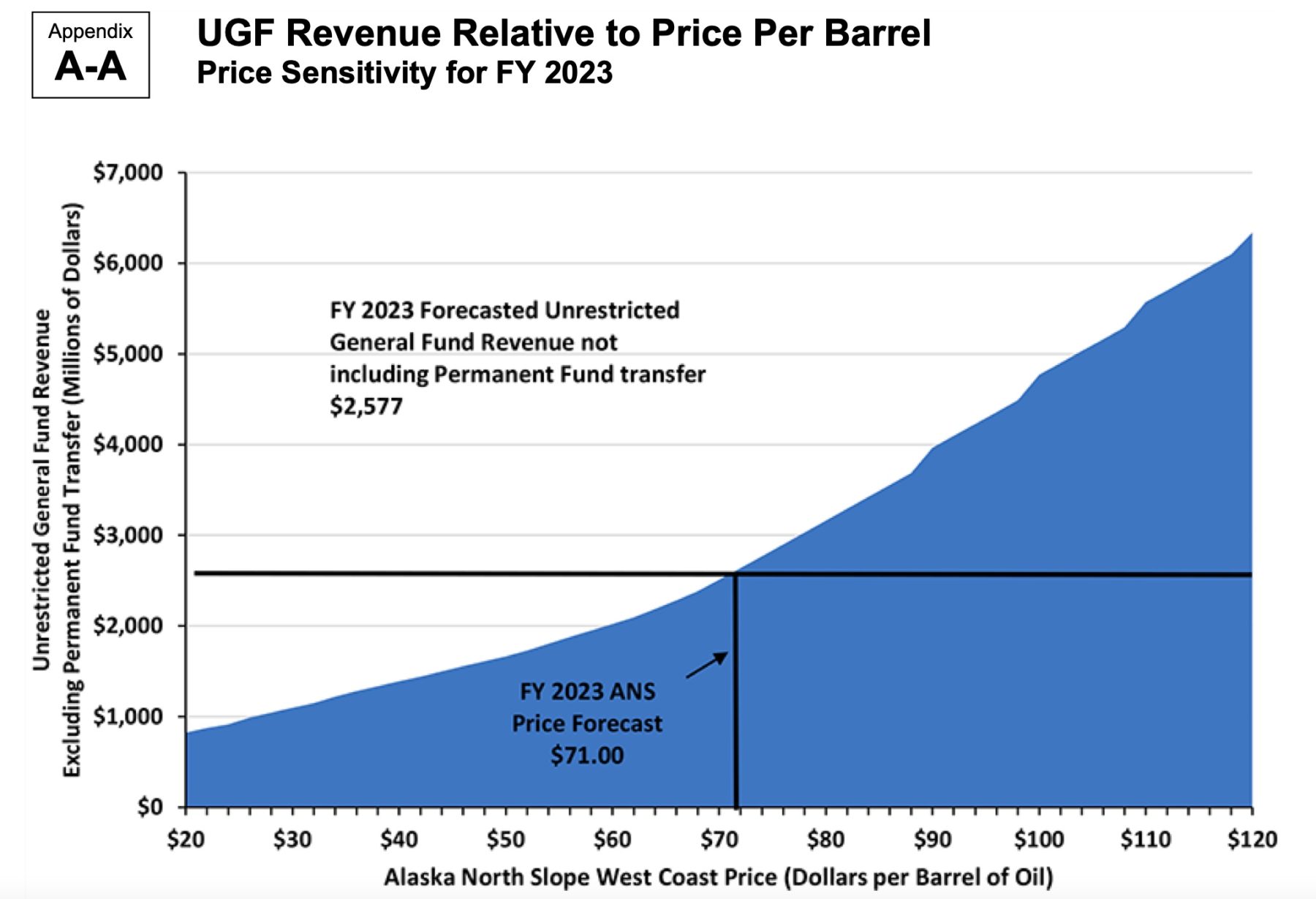
For the first time since the price crash of 2014, oil from Alaska’s North Slope is selling for more than $90 a barrel. Today’s posted price is $90.51.
While commodities fluctuate with supply and demand cycles, the trend has been upward for a few years. Alaska oil hit a low point of about $30 a barrel in 2016, and had climbed to $55.56 in January of 2021.
The State’s fall forecast for the 2023 budget, which is the spending plan that starts in July, had a prediction of $71 a barrel.
In the January, 2022 Short-Term Energy Outlook published by the U.S. Energy Information Administration, predicted crude oil prices will sag later in the year, although they show no sign of doing so.
“We forecast that the price of Brent will average $75/b in 2022 and $68/b in 2023,” the agency wrote on Jan. 12.
The predicted decline in prices will be driven by a shift from global inventory declines last year to inventory increases in 2022 and 2023.

The Alaska Legislature is keeping an eye on the price of oil, as it crafts the budget for the coming year and looks to balance the desire from special interests for higher spending on state projects and programs, with the looming requirement that the Constitutional Budget Reserve must be restored. The Legislature has been “borrowing” from that fund for several years, and is required by statute to pay it back.
Statute also requires a Permanent Fund dividend, to be paid by a lawful formula. There will also be pressure from Alaskans for the Legislature to return to the lawful formula and pay the Permanent Fund dividend in full this year.
The public may see the State of Alaska reaping all the benefit from the higher oil prices, while families watch their incomes being eroded in real time and not getting help from lawmakers to pay for heating oil and gas for their vehicles.
The Alaska Legislature also has to confront something it hasn’t done in a decade: How to handle having more money coming in than going out. When the money wasn’t there, legislators were able to lean on the argument that there is a structural deficit with a Permanent Fund dividend of any size, and therefore the lawful dividend was unsustainable.
Now, with a surplus of money, pro-dividend Alaskans wonder if they are getting the shaft, while the Legislature protects its profits during what will likely be an “up year” for oil prices.
Even with the high price of oil, income tax bills are being considered this year by Democrats, including Senate Bill 154.



